Table of Contents
High energy density batteries are truly transforming many industries. From robots and drones to electric vehicles and medical devices, nearly all products requiring longer battery life, lighter weight and smaller size rely on them. There is one core reason: Pack more energy into a smaller, lighter unit. This directly brings clear advantages: Longer device runtime, lighter structure, and easier performance upgrades.
What is a High Energy Density Battery?
To put it simply, a high energy density battery stores more power per unit weight or per unit volume.
We use two key indicators to measure it:
- Wh/kg: Watt hours per kilogram of weight
- Wh/L: Watt hours per liter of volume
For batteries with the same capacity, a higher energy density means lighter weight or smaller size. This matters a lot for real products. Especially for mobile devices, drones, wearables and robots. Once the structure is fixed, a slightly bulkier battery can ruin the whole design. Higher energy density means longer runtime, without adding extra weight or size.
How to Calculate Energy Density?
Gravimetric Energy Density (Wh/kg)
Gravimetric energy density measures the amount of energy stored per kilogram of battery. It helps assess how much energy a battery provides relative to its weight, which is crucial for mobile and airborne applications.
Formula: Gravimetric Energy Density (Wh/kg)=Battery Capacity (Ah)×Nominal Voltage (V)/Battery Weight (kg)
Example:
- A 3.7 V Li-ion battery with a capacity of 2,500 mAh (2.5 Ah) weighing 0.045 kg:
Energy Density=2.5×3.7/0.045≈205.6 Wh/kg
Volumetric Energy Density (Wh/L)
Volumetric energy density measures the amount of energy stored per liter of battery volume. This is important for devices with space constraints, such as compact robots or wearables.
Formula: Volumetric Energy Density (Wh/L)=Battery Capacity (Ah)×Nominal Voltage (V)/Battery Volume (L)
Example:
- If the same 3.7 V, 2,500 mAh battery has a volume of 0.00006 m³ (0.06 L):
Energy Density=2.5×3.7/0.06≈154.2 Wh/L
Major Types of High Energy Density Batteries
Currently, the widely used and recognized high energy density batteries mainly fall into the following types. Different chemical systems have totally different strengths. Always choose based on your actual application scenario.
1. Lithium-ion Batteries
- Energy Density: 150–300 Wh/kg
- Key Advantages:
- High energy density and mature technology
- Widely used in industrial robots, drones, electric vehicles, and portable electronics
- Lightweight and compact design
- Limitations:
- Aging faster under high temperatures or frequent high-rate discharge
- Requires proper Battery Management System (BMS) for safety
- Ideal Applications: Industrial robots, autonomous systems, EVs, drones
2. Lithium Polymemr Batteries
- Energy Density: 150–300 Wh/kg
- Key Advantages:
- Flexible form factors and lightweight
- High discharge rate, making them ideal for mobile robots, drones, and compact devices
- Can be custom-shaped to fit tight spaces
- Limitations:
- Sensitive to overcharging, puncture, or physical stress
- Slightly lower energy density than the best Li-ion cells
- Ideal Applications: Service robots, delivery robots, drones, wearable devices
3. Solid-State Batteries
- Energy Density: 250–500 Wh/kg (projected for commercial versions)
- Key Advantages:
- Extremely high energy density and enhanced safety
- No liquid electrolyte, reducing risk of leakage or fire
- Potential for compact, lightweight designs with long cycle life
- Limitations:
- Still in R&D or early commercial stage
- Higher cost and limited availability compared to Li-ion/LiPo
- Ideal Applications: High-end drones, EVs, aerospace, next-generation robotics
Why Lithium Batteries Have High Energy Density?
It is not because manufacturers have clever design. It is determined by the physical properties of materials and the electrochemical system itself. In other words, lithium batteries are ahead of many traditional batteries from the very start.
🔹 Lithium is ultra-light and has an extremely high electrochemical potential
Lithium has the smallest atomic weight and lowest density among all metals. This means at the same weight, lithium can support more electrochemical reactions. More importantly, lithium has an extremely low standard electrode potential, around -3.04 V, making it highly active in electrochemical systems.
These two features combine to bring a clear result: Per unit weight, lithium can release much more energy.
So when you look at Wh/kg, what you actually see is material advantage, not manufacturing skill.
🔹 Higher cell voltage amplifies energy density
The energy calculation is simple: Energy (Wh) = Voltage (V) × Capacity (Ah)
A single lithium battery cell runs at 3.6–3.7 V, while NiMH is only 1.2 V and lead-acid around 2 V.
What does this mean?
To reach the same total energy output:
- Fewer lithium cells are needed
- Simpler series and parallel structure
- Less material for connectors, casing and insulation
At the system level: Inactive structural materials take up less proportion, further raising overall energy density.
🔹 Evolving electrode materials unlock more usable lithium
Lithium battery energy density keeps improving over time. Most breakthroughs in the past decades come from electrode upgrades.
Cathode: From early LCO, to NCM/NCA ternary materials, and optimized LFP structures.
Anode: From traditional graphite to silicon-carbon composite materials.
All these upgrades share one core goal:
Let more lithium ions participate in charging and discharging without adding extra size or weight. Every material upgrade increases the effective energy stored per unit volume and weight.
🔹 Lightweight structure brings extra system-level advantages
Besides material performance, lithium batteries also win in structural design.
Compared with lead-acid batteries — heavy plates, large liquid electrolyte and bulky casing —
Lithium batteries have a much simpler structure:
- less and lighter electrolyte
- thinner current collectors
- flexible packaging formats: cylindrical, prismatic and pouch cells
As a result, structural weight accounts for a smaller share of the whole battery pack and more space is used for energy storage. In energy density calculation, such structural advantages are often more important than single material parameters.
Advantages of High Energy Density Batteries
High energy density batteries provide several key benefits that make them the preferred power solution for robots, drones, electric vehicles, and portable devices. Understanding these advantages helps engineers and manufacturers make informed decisions when selecting batteries for demanding applications.
1. Longer Runtime in a Compact Form
This is the easiest change to understand and notice in real use.
With the same battery size and weight, higher energy density means longer working time on a single charge.
In practical applications, it brings direct benefits:
- Longer flight time for drones
- Higher task completion rate for robots in one cycle
- Less frequent charging for wearable devices
For end users, the experience gap is far more obvious than data differences.
2. Reduced Weight and Improved Mobility
In mobile systems, weight reduction means far more than just feeling lighter to carry.
Lower weight brings a whole chain of ripple effects:
- Reduced load on motors
- Lower power consumption
- Less heat generation
- Better control stability
Especially for drones and mobile robots, every gram saved improves endurance, stability and reliability.
3. High Power Output for Demanding Applications
Many applications demand more from batteries than just longer runtime. They need reliable performance at critical moments.
For example:
- High current surge when drones take off
- Shock load during robot startup or emergency stop
- Short-term peak power demand from motors
High energy density batteries feature a stable voltage platform and strong current output capability.
They avoid voltage drop and performance fluctuation under heavy loads. This is critical to overall system stability.
4. Enhanced Efficiency and Device Performance
In many projects, the battery is often the last component that engineers have to compromise on.
But higher energy density changes everything:
- Use a smaller battery to free up space for other parts
- Boost capacity within the same space without modifying the structure
- Adjust battery shapes to better fit the product design
This means the battery no longer just gets squeezed into the device. It becomes an active part of overall structural and performance optimization.
5. Compatibility with Advanced Battery Management Systems
High energy density batteries usually require more precise management. When paired with a mature BMS system, they deliver:
- More accurate charge and discharge control
- Reliable temperature and voltage protection
- Clear monitoring of battery health status
The final result:
A better balance among safety, service life and performance. This is why in high-end devices, the battery and BMS are always designed as one integrated unit.
Which Devices Are Best Suited for High Energy Density Batteries?
High energy density batteries are ideal for devices that require long runtime, compact design, and reliable performance. Their combination of lightweight, high power output, and efficient energy storage makes them especially suitable for a variety of modern applications:
1. Wearable Devices
For wearable devices, the battery is almost the most demanding component.
On one hand:
- It must be tiny in size
- It has to be lightweight
- Its thickness is strictly limited
On the other hand:
- Users expect one or multiple days of use on a single charge
- Stable power output is required during operation
This is where high energy density batteries show great value:
They extend usage time without adding extra bulk or weight. That’s why wearables almost always adopt high energy density lithium battery systems, with few other alternatives.
2. Robotics
Robots have more complex battery requirements than regular consumer electronics.
▸ Service Robots
Delivery robots, cleaning robots, mobile assistants and other service robots focus mainly on finishing as many tasks as possible on a single charge.
If the battery energy density is insufficient:
- Working time will be shortened.
- Frequent recharging is needed.
- Overall operational efficiency drops greatly.
High energy density batteries extend single-cycle working time without adding much size or weight, and improve the practicality and commercial value of the whole device.
▸ Industrial Robots
Industrial robots care more about stable power supply, controllable performance and long-term reliability.
On automated production lines, batteries need to:
- Operate continuously for a long time
- Withstand frequent startup and load changes
- Maintain stable output under heavy workloads
Matched with a mature BMS, high energy density batteries deliver stable and predictable power performance — a key advantage highly valued in industrial scenarios.
3. Drones and UAVs
For drones, the battery practically determines everything. Flight time, load capacity and flight stability all depend directly on how much energy the battery can provide per unit weight.
If energy density is insufficient:
- Short flight range
- Low payload capacity
- Extra devices will heavily weaken overall performance
High energy density batteries bring clear advantages:
- Longer flight time with the same weight
- Higher payload with the same flight duration
That is why the drone industry pursues higher energy density batteries endlessly.
4. Medical Devices
Medical device battery requirements go far beyond performance— they center on safety and reliability.
This is especially true for portable and wearable medical devices:
- Size and weight directly affect patient comfort
- Stable runtime supports continuous monitoring and treatment
- Sudden power loss may lead to serious consequences
High energy density batteries deliver longer operation within a compact structure and reduce charging frequency. Combined with strict battery management and protection design, they greatly improve overall system reliability and safety.
Challenges and Considerations of High Energy Density Batteries
- Safety Risks: High energy density batteries, especially Li-ion and LiPo, store a large amount of energy in a small space. Overcharging, short circuits, or physical damage can lead to thermal runaway, fire, or explosion.
- Thermal Management: High energy density batteries generate more heat during charging and discharging due to high power output.
- Cycle Life and Aging: Batteries with higher energy density may experience faster capacity loss over time, especially under high discharge rates or extreme temperatures.
- Cost Considerations: High energy density batteries, particularly Li-ion and emerging solid-state types, tend to be more expensive than standard batteries like NiMH or lead-acid.
How to Extend the Lifespan of High Energy Density Batteries?
Avoid Extreme Temperatures
Temperature is the most direct and obvious factor affecting lithium battery life, yet often overlooked.
High temperature speeds up electrolyte decomposition and electrode aging. Long-term operation under high heat greatly shortens cycle life. Low temperature may not cause permanent damage, but it sharply reduces capacity and output performance.
More importantly, high energy density batteries store concentrated energy and are more sensitive to temperature changes. Therefore, during use, charging and storage, always keep the battery within the manufacturer’s recommended temperature range. This is extremely critical.
Implement Proper Charging Practices
Keeping lithium batteries fully charged at 100% for a long time, or draining them to empty frequently will both damage the battery significantly. When fully charged, electrodes stay under long-term high stress.
Deep discharge easily causes irreversible capacity loss. Frequent extreme charging and discharging will speed up aging greatly.
Without affecting daily use, keeping the battery level in a moderate range best protects its lifespan. That’s why many devices set system limits to control the charge and discharge range by design.
Maintain Moderate Discharge Rates
High-rate discharge usually comes with high heat generation.
Occasional high current output rarely causes problems.
But if the battery constantly runs near or over its rated discharge rate:
- Internal temperature stays high for long
- Electrode structures get damaged more easily
- Effective capacity fades much faster
Simply put:
A battery that can handle peak loads is not meant to run like that all the time. At the design stage, keeping proper rate margin for the battery is more practical than chasing extreme performance alone.
Avoid Physical Damage
This sounds like common sense, yet it is often overlooked in actual use. High energy density batteries, especially pouch cells, are highly sensitive to mechanical stress:
- Squeezing or bending may damage internal structures
- Puncture can cause short circuits and even thermal runaway
- Long-term slight pressure also leads to hidden damage
Most safety issues do not happen suddenly. They start with seemingly minor mechanical damage. Therefore, reserving enough mechanical protection space for batteries is critical during structural design and installation.
Store Batteries Correctly
When batteries need to be stored for a long time, do not keep them fully charged or completely drained.
The ideal storage condition is usually:
A moderate charge level, in a stable-temperature and dry environment. This can low down electrode aging, lowering risks caused by self-discharge, reduceing irreversible loss during storage. Many batteries that become weak after being stored for a while are damaged mainly due to improper storage methods.
How to Choose the Right High Energy Density Battery?
When selecting a high energy density battery for robots, drones, EVs, or wearable devices, consider the following key factors:
- Capacity vs. Size and Weight
- Choose a battery that meets your device’s runtime and workload requirements.
- Take into account space constraints and weight limits to maintain mobility and efficiency.
- High energy density batteries allow longer operation without increasing bulk.
- Voltage Requirements
- Ensure the battery’s voltage matches your device’s electrical system.
- For multi-cell setups, consider series or parallel configurations to achieve the required voltage safely.
- Cycle Life
- Select a battery chemistry that supports your device’s usage frequency.
- High cycle life chemistries like LiFePO₄ are ideal for devices with frequent charge/discharge cycles.
- Safety Features
- Look for integrated Battery Management Systems (BMS), overcharge protection, and temperature control.
- Safety features are essential to protect both devices and users, especially in industrial and wearable applications.
- Customization Options
- Consider batteries that can be custom-shaped, packaged, or connected to fit unique device designs.
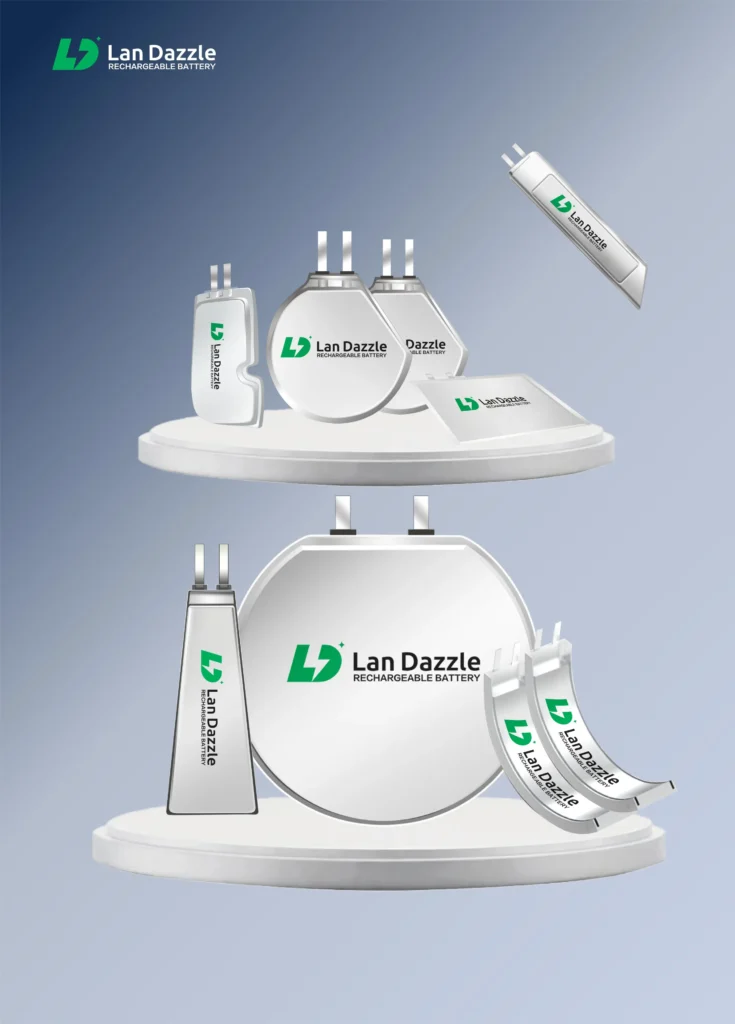
- LanDazzle provides custom high energy density battery solutions, from curved packs for wearables to modular packs for robots and drones, ensuring optimal fit and performance.
Conclusion
High energy density batteries are critical for powering the next generation of robots, drones, electric vehicles, and wearable devices. They offer longer runtime, lighter weight, high power output, and compact design, but choosing the right battery requires careful consideration of:
- Capacity, size, and weight
- Voltage requirements
- Cycle life
- Safety features
- Customization options
By understanding these factors and partnering with a trusted battery manufacturer, you can ensure optimal performance, safety, and longevity for your devices.
LanDazzle specializes in providing custom high energy density battery solutions tailored to your unique requirements. From industrial robots and drones to wearables and electric vehicles, our batteries are designed to deliver reliable power, safety, and efficiency.
Contact us today to discuss your project and discover the custom battery solution for your application.
Email: info@landazzle.com
Whatsapp: +8618938252128