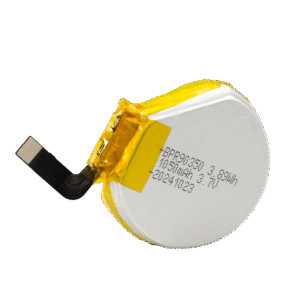
Table of Contents
Hearing aids have become essential companions for millions of people worldwide, helping them reconnect with the sounds of life. But behind every reliable hearing aid lies a small yet powerful component — the battery. Choosing the right hearing aid battery not only affects how long your device runs but also determines its performance, comfort, and convenience.
In this guide, we’ll explore the different types of hearing aid batteries, their key features, and how to choose the best one for your specific hearing device and lifestyle. Whether you’re using a rechargeable model or a traditional zinc-air battery, understanding the options can help you get the most out of your hearing aid every day.
Common Hearing Aid Battery Types
Modern hearing aids rely on compact yet powerful batteries to deliver consistent performance in a very limited space. Choosing the right battery type affects not only how long the hearing aid operates between charges or replacements but also its overall design, weight, and user experience.
Below are the most common types of hearing aid batteries used today, along with their characteristics and ideal applications.
Zinc-Air Batteries
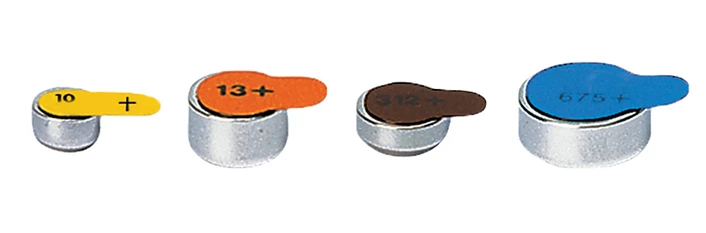
Zinc-air batteries have been the traditional power source for hearing aids for many years. They generate electricity when zinc inside the cell reacts with oxygen from the air, which is why they are often called “air-activated” batteries.
Advantages:
- High energy density for their size
- Lightweight and compact
- Stable voltage suitable for small medical devices
Limitations:
- Non-rechargeable — need frequent replacement (usually every 3–10 days)
- Sensitive to humidity and air exposure
- Shelf life decreases once the seal tab is removed
Zinc-air batteries are identified by their size numbers and color codes:
- Size 10 (yellow) – for completely-in-canal (CIC) hearing aids
- Size 312 (brown) – for in-the-ear (ITE) and receiver-in-canal (RIC) aids
- Size 13 (orange) – for behind-the-ear (BTE) aids
- Size 675 (blue) – for power BTE models
Despite being inexpensive and widely available, these disposable batteries are gradually being replaced by rechargeable solutions due to environmental and convenience concerns.
Rechargeable Lithium-Ion Batteries
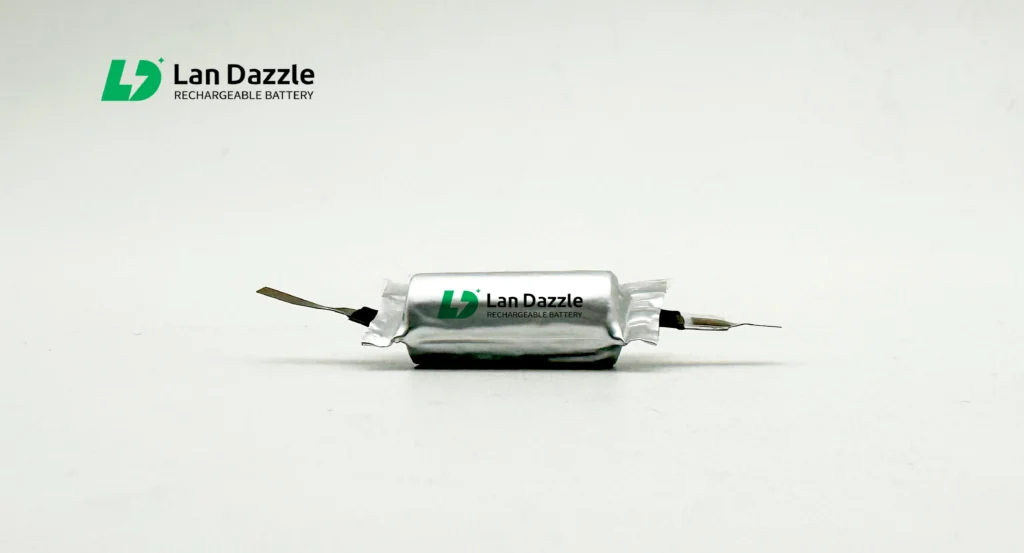
Rechargeable lithium-ion (Li-ion) or lithium polymer (LiPo) batteries are the new standard in modern hearing aid technology. As hearing aids become smarter and more connected—integrating Bluetooth, sensors, and AI—manufacturers need batteries with higher energy density and long cycle life in ultra-small sizes.
Advantages:
- Rechargeable — no need to replace batteries every few days
- High energy density supporting advanced features and wireless connectivity
- Long lifespan — up to hundreds of charge cycles
- Environmentally friendly with less waste generation
Limitations:
- Slightly higher initial cost
- Requires built-in charging circuit and protection system
For hearing aid manufacturers, custom lithium polymer batteries offer unmatched design flexibility. They can be tailored in L-shaped, curved, or ultra-thin formats to perfectly fit compact enclosures while maintaining high performance and safety.
Silver-Oxide and Alkaline Batteries
Before zinc-air technology became dominant, silver-oxide and alkaline batteries were occasionally used in early hearing aids and simple amplifiers. While they are still available, their lower capacity and less stable voltage make them unsuitable for today’s high-performance digital hearing aids.
- Silver-oxide batteries: Provide relatively stable voltage but limited capacity.
- Alkaline batteries: Inexpensive, but voltage drops quickly under load, leading to shorter usage times.
These types are now mostly seen in legacy or low-power devices, not in modern hearing aids.
| Battery Type | Rechargeable | Energy Density | Typical Lifespan | Key Applications |
|---|---|---|---|---|
| Zinc-Air | No | High | 3–10 days | Disposable hearing aids |
| Li-ion / LiPo | Yes | Very High | 300–500 cycles | Rechargeable smart hearing aids |
| Silver-Oxide | No | Medium | Short | Legacy devices |
| Alkaline | No | Low | Short | Temporary/backup power |
How to Choose the Right Hearing Aid Battery?
Selecting the right hearing aid battery goes beyond simply matching the size. It’s about finding a power source that fits your device, your lifestyle, and your listening needs. Here are the key factors to consider:
1. Check Your Hearing Aid Type and Size
Every hearing aid is designed to work with a specific battery size, such as size 10, 13, 312, or 675. Always refer to your device’s manual or consult your audiologist to confirm the correct battery type. Using the wrong size may lead to poor performance or even damage the device.
2. Consider Battery Life
Battery life varies depending on the size, usage habits, and hearing aid technology. For example, smaller batteries (like size 10) typically last 3–7 days, while larger ones (like size 675) may last up to two weeks. If you use Bluetooth or streaming features frequently, opt for batteries with higher capacity or consider a rechargeable model.
3. Choose Between Disposable and Rechargeable Batteries
- Zinc-Air Disposable Batteries: Common and affordable, these batteries are activated when exposed to air. They are ideal for users who prefer simplicity and can easily replace them as needed.
- Rechargeable Lithium-Ion Batteries: These eco-friendly options eliminate the need for frequent replacements. A single charge can last all day, and the batteries can typically last several years before needing replacement—perfect for daily users seeking convenience.
4. Think About Your Environment
Temperature and humidity can affect battery performance. Zinc-air batteries may drain faster in humid or high-altitude environments. If you often travel or live in extreme climates, a rechargeable hearing aid battery may offer more consistent power.l
5. Storage and Shelf Life
Store hearing aid batteries in a cool, dry place. Avoid keeping them in the refrigerator or exposing them to direct sunlight. Unused zinc-air batteries can last up to three years if stored properly, while rechargeable batteries should be cycled regularly to maintain health.
6. Brand and Quality Mattery
Not all hearing aid batteries are created equal. Choose trusted brands or consult your hearing aid manufacturer’s recommendations to ensure stable performance, safety, and longer lifespan. High-quality batteries also reduce the risk of leakage or sudden power loss.
The Rise of Custom Lithium Polymer Batteries for Hearing Aids
The hearing aid industry is undergoing a technological transformation. As devices become smaller, smarter, and more connected, traditional zinc-air and disposable batteries can no longer keep up with the growing demand for longer runtime, higher power output, and compact design flexibility. This shift has led to the rapid adoption of custom lithium polymer batteries as the next-generation power solution for modern hearing aids.
Lithium polymer batteries combine high energy density, lightweight construction, and flexible form factors, making them ideal for ultra-compact wearable medical devices.
Unlike conventional round or coin-shaped cells, LiPo batteries can be engineered in almost any shape or thickness—perfect for hearing aids that require precise internal fitting.
Key Advantages of LiPo Batteries for Hearing Aids:
- Customizable Design: LiPo batteries can be made in curved, L-shaped, or ultra-thin formats to fit the unique structure of in-ear or behind-the-ear devices.
- High Energy Density: Provides longer usage time and supports advanced features like Bluetooth connectivity and AI sound processing.
- Rechargeable and Eco-Friendly: Reduces battery waste and improves long-term user convenience.
- Stable Voltage Output: Ensures consistent audio performance and low distortion.
- Lightweight and Safe: Uses solid or gel electrolytes, reducing leakage risk while maintaining high safety standards.
As hearing aids evolve toward all-day wearable devices with wireless charging, the lithium polymer battery becomes the clear choice for manufacturers seeking innovation without compromising comfort or reliability.
LanDazzle Custom Hearing Aid Battery Solutions
LanDazzle specializes in developing custom micro lithium polymer batteries tailored to the unique requirements of hearing aid manufacturers and medical device designers. Our engineering team works closely with clients from the concept stage to production, ensuring every battery meets both performance and dimensional constraints.
Our capabilities include:
- Custom voltages (e.g., 3.7V, 3.85V) and capacities
- Flexible form factor options — curved, L-shaped, or ultra-thin cells
- Comprehensive testing: overcharge, short-circuit, vibration, and temperature cycling
- Certifications including UN38.3, MSDS, and RoHS compliance
- Integration support for charging circuits and protection PCBs
Whether you’re designing a next-generation rechargeable hearing aid, a smart ear-wearable, or a medical communication device, LanDazzle delivers precisely engineered power solutions that align with your innovation goals.
Conclusion
The world of hearing aid technology is rapidly evolving—devices are becoming smaller, smarter, and more energy-efficient than ever before. As this transformation continues, the choice of battery plays a defining role in shaping the performance, comfort, and reliability of each device. For manufacturers and product designers, the ability to integrate a battery that fits perfectly within a limited space while maintaining safety and stability can make all the difference between a good device and an exceptional one.
If you are developing the next generation of hearing aids and need a trusted partner who understands the balance between innovation and precision engineering—Contact LanDazzle today to discuss your custom hearing aid battery requirements.
Email: info@landazzle.com
Whatsapp: +8618938252128
Related Articles:
Custom Battery Manufacturers for Medical Devices
Batteries Used in Medical Devices-Types, Features, and Custom Solutions