Table of Contents
What is a 6S Lipo Battery?
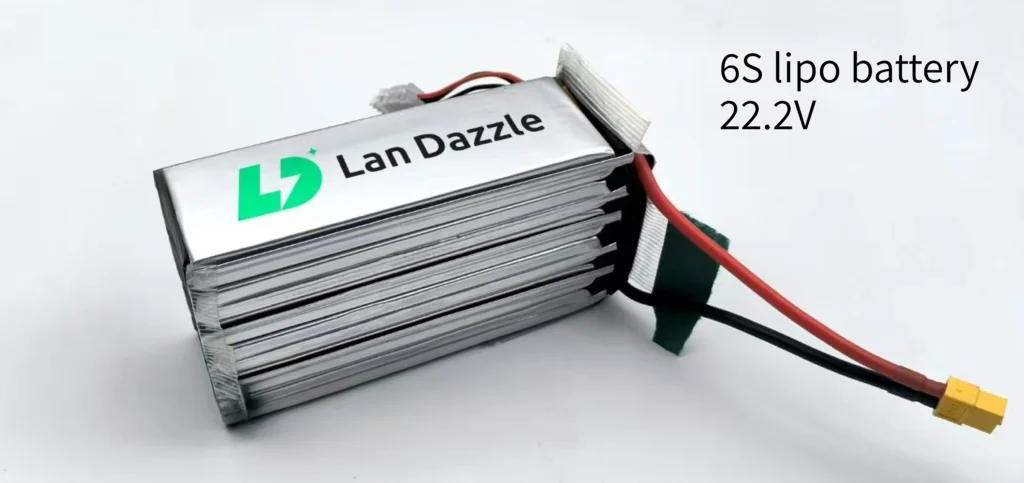
A 6S LiPo battery is a type of lithium polymer battery that consists of six individual cells connected in series. Each cell has a nominal voltage of 3.7V, giving the battery a total nominal voltage of 22.2V and a fully charged voltage of 25.2V.
Unlike traditional cylindrical lithium-ion batteries, 6S LiPo batteries use a soft, flexible pouch casing, which makes them lightweight, compact, and adaptable to various shapes. This design is especially beneficial for devices where space and weight are critical, such as racing drones, RC vehicles, and robotics.
Key Specifications of a 6S LiPo Battery
Voltage
- Nominal Voltage: 22.2V (3.7V per cell × 6 cells)
- Fully Charged Voltage: 25.2V
- Minimum Safe Voltage: 18V (3.0V per cell)
The voltage determines how much power the battery can provide and is critical for compatibility with your device.
Capacity (mAh)
- Common range: 1300mAh – 10000mAh
- Higher capacity → longer runtime, but also larger size and weight
- Choose a capacity that balances flight time and device weight, especially for drones or wearable robotics.
Discharge Rate (C-Rating)
- Typical range: 25C – 100C
- Indicates how quickly the battery can safely release energy
- Higher C-rating → supports high-performance applications like racing drones or RC cars
Weight and Dimensions
- Lightweight and compact, designed for space-constrained applications
- Size depends on capacity and discharge rate
- Crucial for drones and robotics, where weight affects flight time and efficiency
Connector Type
- Common connectors: XT60, XT90, Deans, or custom connectors
- Ensure the connector matches your device to avoid power loss or damage
Applications of 6S LiPo Batteries
6S LiPo batteries are widely used in applications that require high voltage, high power, and lightweight energy solutions. Their combination of compact size, high energy density, and high discharge rate makes them ideal for performance-critical devices.
Drones and Quadcopters
6S LiPo batteries are particularly popular among drone enthusiasts and professional UAV users. They provide the extra voltage and current needed for racing drones, heavy-lift drones, and FPV systems, allowing for faster speeds, longer flight times, and stable performance.
RC Cars, Trucks, and Boats
Remote-controlled vehicles benefit from the high discharge rates of 6S LiPo batteries, which deliver rapid acceleration and sustained power for competitive racing or hobby use. The lightweight design ensures optimal handling and maneuverability.
Robotics
From autonomous robots to robotic arms and small vehicles, 6S LiPo batteries efficiently power motors, sensors, and control systems without adding unnecessary weight. Their flexible form factor allows integration into compact or custom-designed robotic systems.
Other Specialized Applications
6S LiPo batteries can also be used in FPV systems, electric skateboards, UAV payloads, and custom electronics projects where high power and lightweight performance are essential.
How to Choose 6S Lipo Battery
Choosing the right 6S LiPo battery goes beyond simply checking voltage and capacity. To ensure optimal performance, safety, and longevity, consider the following practical tips:
1. Match the Battery to Your Device and Usage
- Drones: If you fly racing or heavy-lift drones, choose a high C-rating (50C+) for quick bursts of power. For photography drones, a higher capacity (5000mAh+) can extend flight time.
- RC Cars/Trucks: Look for batteries with high discharge rates to support rapid acceleration and high-speed runs.
- Robotics or Custom Projects: Consider weight and form factor—choose a battery that fits the design without affecting balance or mobility.
2. Balance Runtime and Weight
- Higher capacity batteries offer longer runtimes, but also add weight.
- For drones, heavier batteries reduce flight time and maneuverability.
- For RC vehicles, excessive weight may affect speed and handling.
3. Check the C-Rating for Your Application
- The C-rating indicates the maximum current the battery can safely deliver.
- If your motors or ESCs draw high current, underestimating C-rating can lead to voltage sag, reduced performance, or even damage.
4. Choose the Right Connector and Form Factor
- Ensure the battery connector matches your device (XT60, XT90, Deans, etc.).
- For tight spaces or custom builds, select a battery with a slim or compact form factor to fit seamlessly.
5. Consider Brand, Quality, and Safety Features
- Use batteries from reputable manufacturers to ensure consistent performance and safety.
- Look for features like reinforced casing, balanced cell wiring, and built-in protection circuits.
6. Maintenance and Charging Requirements
- Check if the battery supports your charger and whether it requires specialized charging settings.
- Always store and charge batteries in LiPo-safe bags and avoid deep discharges.
How to Charge and Maintain Your 6S LiPo Battery Safely
1. Use a LiPo-Compatible Charger
- Always charge your battery with a charger specifically designed for LiPo batteries.
- Avoid generic chargers that may not regulate voltage and current accurately.
- Set the charger to the correct cell count (6S) and charging current.
2. Monitor Charging and Avoid Overcharging
- Never exceed 4.2V per cell when charging.
- Overcharging can cause swelling, overheating, or permanent damage.
- Always supervise the charging process; never leave a LiPo battery unattended.
3. Avoid Deep Discharge
- Never let the voltage drop below 3.0V per cell.
- Deep discharging reduces battery lifespan and may make the battery unsafe.
- Consider using a low-voltage alarm or LiPo voltage checker for devices like drones.
4. Store Properly
- Store batteries at 50–60% charge in a cool, dry place.
- Use LiPo-safe storage bags to protect against accidental short circuits or fire.
- Avoid exposing batteries to extreme temperatures, direct sunlight, or moisture.
5. Inspect and Handle Carefully
- Regularly check for puffing, punctures, or damaged connectors.
- Do not use swollen or damaged batteries—dispose of them safely at a battery recycling center.
- Handle with care to avoid dropping or crushing the battery.
6. Balance Charge for Longevity
- Use the balance charging feature on your charger to ensure each cell is charged equally.
- Balanced cells prevent over-stress on individual cells and extend the overall battery life.
6S vs 4S vs 3S LiPo Batteries: Which One Should You Choose?
When selecting a LiPo battery for drones, RC vehicles, or robotics, understanding the difference between 3S, 4S, and 6S LiPo batteries is crucial. Each type offers distinct voltage, power, and performance characteristics, affecting your device’s speed, runtime, and efficiency.
1. 3S LiPo Batteries (11.1V)
- Best For: Small drones, beginner RC cars, lightweight robotics.
- Pros: Lightweight, affordable, easy to handle.
- Cons: Lower power output; not suitable for high-speed or heavy-lift applications.
- Use Case Example: Mini drones for indoor flying or hobby-grade RC cars.
2. 4S LiPo Batteries (14.8V)
- Best For: Medium drones, larger RC vehicles, hobby robotics.
- Pros: Balanced performance, longer flight/run times than 3S, moderate power.
- Cons: Heavier than 3S; may not provide enough voltage for racing or heavy-lift drones.
- Use Case Example: FPV drones or medium-sized RC cars for recreational use.
3. 6S LiPo Batteries (22.2V)
- Best For: Racing drones, heavy-lift drones, high-speed RC cars, advanced robotics.
- Pros: High voltage and current output, longer flight/running performance, supports high-performance motors.
- Cons: Larger, heavier, and more expensive; requires compatible ESCs and devices.
- Use Case Example: Professional racing drones, heavy-lift UAVs, competitive RC vehicles.
| Battery Type | Nominal Voltage | Best For | Pros | Cons |
|---|---|---|---|---|
| 3S | 11.1V | Small drones, beginner RC | Lightweight, affordable | Low power |
| 4S | 14.8V | Medium drones, hobby RC | Balanced performance | Moderate power, heavier |
| 6S | 22.2V | Racing drones, heavy-lift RC | High power, long runtime | Expensive, heavier, device compatibility required |
Common Problems and How to Solve Them
While 6S LiPo batteries offer high performance, they can encounter issues if not handled properly. Understanding common problems and their solutions will help you maintain safety, extend battery life, and ensure optimal performance.
1. Swelling or Puffing
- Cause: Overcharging, over-discharging, or excessive heat.
- Solution: Stop using the battery immediately. Dispose of swollen batteries safely at a LiPo recycling center. Never puncture or throw them in regular trash.
- Prevention Tip: Always charge with a LiPo-compatible charger and avoid overcharging.
2. Voltage Drop Under Load
- Cause: The battery’s C-rating is too low for the device’s power demands, or cells are aging unevenly.
- Solution: Upgrade to a higher C-rating battery or replace the battery if it’s old.
- Prevention Tip: Choose a battery that meets or exceeds your device’s maximum current draw.
3. Shortened Lifespan
- Cause: Frequent deep discharges, high-temperature storage, or improper charging.
- Solution: Follow proper charging, storage, and maintenance practices.
- Prevention Tip: Store batteries at 50–60% charge in a cool, dry place, and avoid excessive heat or cold.
4. Physical Damage
- Cause: Dropping, crushing, or puncturing the battery.
- Solution: Replace damaged batteries immediately. Damaged LiPos are highly dangerous.
- Prevention Tip: Handle carefully, use protective cases or bags during storage and transport.
5. Cell Imbalance
- Cause: Over time, individual cells may become uneven, causing voltage differences.
- Solution: Use a balance charger to equalize the cells.
- Prevention Tip: Regularly check cell voltages, especially for high-capacity 6S batteries.
Conclusion
A 6S LiPo battery provides high power and performance for drones, RC vehicles, and robotics. Choosing the right battery, maintaining it properly, and addressing common issues ensures safety, reliability, and longer lifespan. For the best results, always use high-quality, compatible 6S LiPo batteries from trusted manufacturers.
What if your project has unique requirements? What if the standard off-the-shelf batteries are the wrong size, lack the necessary power, or need a specific connector?
LanDazzle is your solution.
We specialize in manufacturing high-performance, custom LiPo battery packs tailored to your exact needs. Whether you are a manufacturer, a professional pilot, or a hobbyist with a visionary project, we can help you power it.
- Custom Shapes & Sizes: We can build batteries to fit unconventional or tight spaces.
- Specific Voltage & Capacity: Need a specific mAh or a unique voltage with enhanced performance? We can do that.
- Premium Cells & Connectors: We use top-tier cells and can install any connector you require.
- Rigorous Quality Control: Every LanDazzle custom battery is built with safety and reliability as our top priority.
Email: info@landazzle.com
Whatsapp: +8618938252128
Related Articles:
What is a 3s lipo battery?
2s vs 3s lipo battery: how to choose the right one?