Table of Contents
To be honest in the lithium-ion battery industry: there is no one-size-fits-all solution for cells.
Are you building a drone, a wearable device, or a robotic system? Different products have completely different battery requirements, and choosing between pouch cells, cylindrical cells, and prismatic cells often directly determines your product’s performance, size, and even long-term reliability.
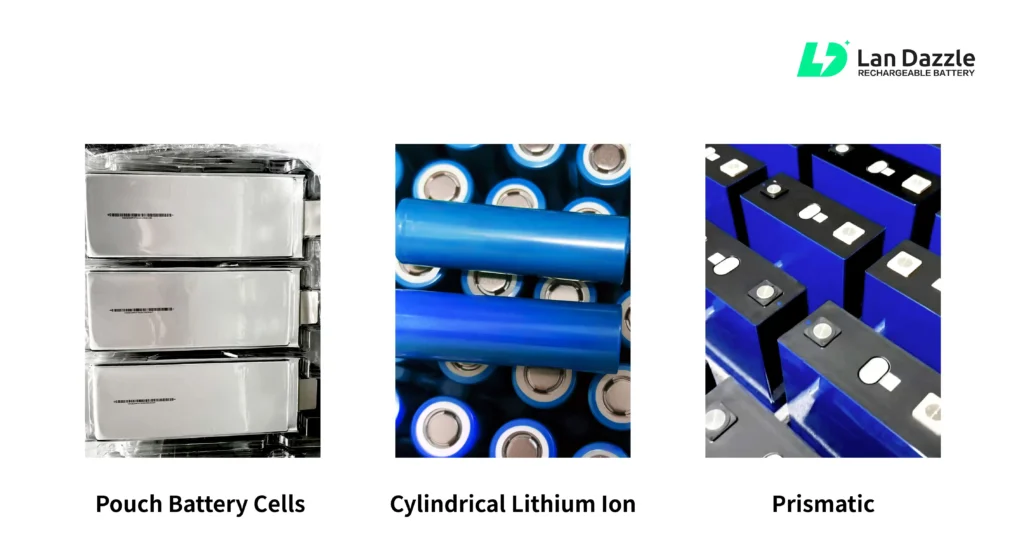
These three types of cells are fundamentally different in structure.
- Cylindrical cells have a strong metal shell and are very durable.
- Prismatic cells focus on regular shape and high capacity.
- Pouch cells maximize space efficiency and design freedom.
As devices get smaller but more powerful, demand for high energy density, lightweight design, and flexible structure keeps growing. That’s why understanding these differences is more important than ever.
In the following, we will compare pouch, cylindrical, and prismatic lithium-ion cells side by side.
We’ll also explain why more and more modern products are choosing custom pouch battery solutions.
What is a Pouch Battery Cell?
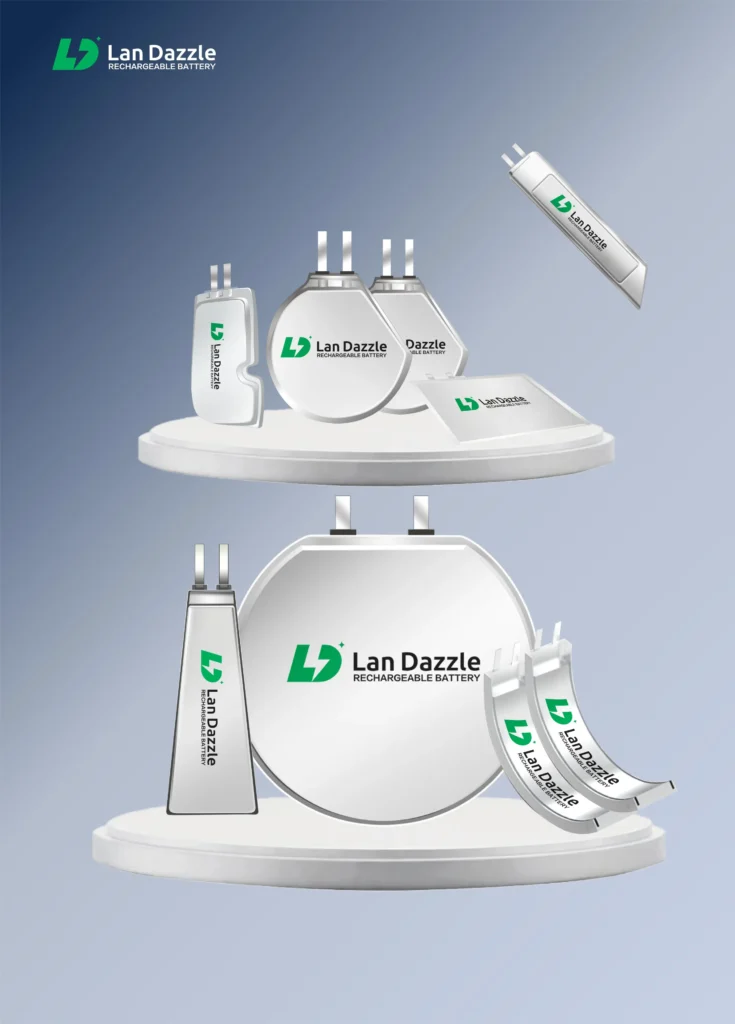
Simply put, a pouch cell — also known as a LiPo pouch cell — is a type of lithium-ion battery that uses a flexible aluminum-plastic film for packaging, instead of a rigid metal case. From an engineering perspective, this “flexible” design is the key advantage. It means the shape is not fixed, and the thickness can be freely adjusted. That’s why devices with compact structures or irregular shapes almost always choose pouch cells first.
Advantages of Pouch Battery Cell
- High energy density
Without the space taken up by a metal shell, more room is available for active materials. This naturally leads to higher energy per weight and volume. - Light weight
The aluminum-plastic film itself is very light, which is extremely important for drones and wearable devices. - Highly customizable shape and size
Thicker, thinner, longer, or even curved — all can be designed to fit your product structure. - Extremely high space utilization
For products that need to be ultra-thin, irregular, or have an optimized internal layout, this is almost a decisive advantage.
What is a Cylindrical Lithium ion Cell?
Cylindrical lithium-ion cells are a long-established choice in the battery industry. Their structure is clear: a metal cylindrical can + internal jelly-roll winding. Models like 18650 and 21700 are widely known.
The main reason they are heavily used in power tools, e-bikes, and some electric vehicles is simple: they are stable, durable, and mature in technology.
The metal shell is not only strong against pressure and impact but also helps with heat dissipation. That’s why cylindrical cells perform reliably under high-rate, high-load conditions. However, the trade-off is obvious: fixed shape, low space efficiency, and many compromises in product design.
Advantages of Cylindrical Lithium-ion Cells
- Good cost controlHigh standardization supports mass production, resulting in low cell cost.
- Very high mechanical strengthThe metal shell withstands crushing, drops, and vibration well.
- Mature technology & high reliabilityProven by years of large-scale use, with stable performance.
What is a Prismatic Cell?
Prismatic lithium-ion cells use a rectangular or square metal case, with a layered electrode structure inside. The core idea of this design can be summed up in one sentence: maximize capacity in a limited space. That’s why you’ll see them widely used in electric vehicles, energy storage systems, and large battery packs.
Advantages of Prismatic Cells
- High space utilization
The rectangular shape fits well into enclosures and reduces wasted space. - Easy to stack and assemble
The flat shape is perfect for building high-capacity battery modules. - Good for thermal management
The flat structure helps with heat transfer and cooling design.
Comparison: Pouch Battery Cell vs Cylindrical vs Prismatic
| Feature | Pouch Cell | Cylindrical Cell | Prismatic Cell |
|---|---|---|---|
| Shape & Structure | Soft, flexible foil pouch | Rigid round metal casing | Rectangular metal casing |
| Energy Density | High | Medium | Medium–High |
| Weight | Lightest | Heavier | Heavy |
| Space Efficiency | Excellent – fits compact or irregular designs | Moderate – gaps between cells | Good – flat and space-saving |
| Mechanical Strength | Requires external protection | Very strong and durable | Strong, but heavier |
| Thermal Performance | Good | Excellent | Good |
| Design Flexibility | Highly customizable in shape and size | Fixed cylindrical size | Limited flexibility |
| Manufacturing Cost | Moderate | Low (mass production) | Higher |
| Cycle Life | Good | Long | Good |
| Best For | Wearables, drones, robotics | Power tools, e-bikes, industrial use | EVs, energy storage systems |
How to Choose the Right Cell Type?
From an engineering perspective, it’s not complicated. The key is to know what your product cares about most.
- Choose pouch cells if: You are making drones, wearables, robots, or medical devices — products that need light weight, small size, and design flexibility. Pouch cells are almost always the best choice.
- Choose cylindrical cells if: Durability, cost, and long-term reliability are your top priorities, such as for power tools and industrial equipment. Cylindrical cells are still a great fit.
- Choose prismatic cells if: Capacity comes first, you have regular space, and you need a large system — like electric vehicles or energy storage systems. Prismatic cells have clear advantages here.
At the end of the day, there is no “best” cell — only the best fit for your product. For applications that need high energy density, compact design, and customization all at the same time, pouch batteries are usually the winner.
Custom Pouch Battery Solutions from LanDazzle
LanDazzle specializes in custom pouch battery solutions tailored to meet your unique device requirements. Whether you need specific shapes, sizes, voltages, or capacities, our advanced design and manufacturing capabilities ensure a perfect fit for your application.
Our custom pouch batteries are ideal for a wide range of applications, including wearables, medical devices, and robotics. By leveraging our stacked-layer (lamination) technology, we maximize energy density while maintaining safety and reliability.
With LanDazzle, you benefit from:
- Flexible design options to match even the most compact or irregular devices
- High-quality cells and strict quality control for consistent performance
- Expert technical support to guide you from design to production

Conclusion
Choosing the right lithium-ion cell—pouch, cylindrical, or prismatic—is critical for achieving optimal performance, reliability, and design efficiency in your device. Each type offers unique advantages: pouch cells for lightweight, compact, and customizable solutions; cylindrical cells for durability and cost efficiency; and prismatic cells for high-capacity, space-efficient applications.
For products that demand high energy density, design flexibility, and tailored performance, custom pouch batteries from LanDazzle provide the ideal solution. Our expertise in advanced lamination technology and quality manufacturing ensures your battery fits perfectly with your device, delivering both safety and efficiency.
📩 Contact LanDazzle today to discuss your custom battery solutions and discover how our solutions can enhance your product.
Email: info@landazzle.com
Whatsapp: +8618938252128