
Low-Temp Battery Solutions
Our custom ultra-low-temperature batteries operate down to -40℃ with high discharge efficiency. They are widely used in applications requiring reliable performance in extreme cold.
Our Low Temperature Battery Features
- High discharge efficiency in freezing conditions
- Customizable for a wide range of applications
- Extended cycle life at low temperatures
Low Temperature Battery Applications
- Subsea and underwater equipment
- Medical devices used in cold environments
- Aerospace and high-altitude systems
- Polar and outdoor exploration equipment
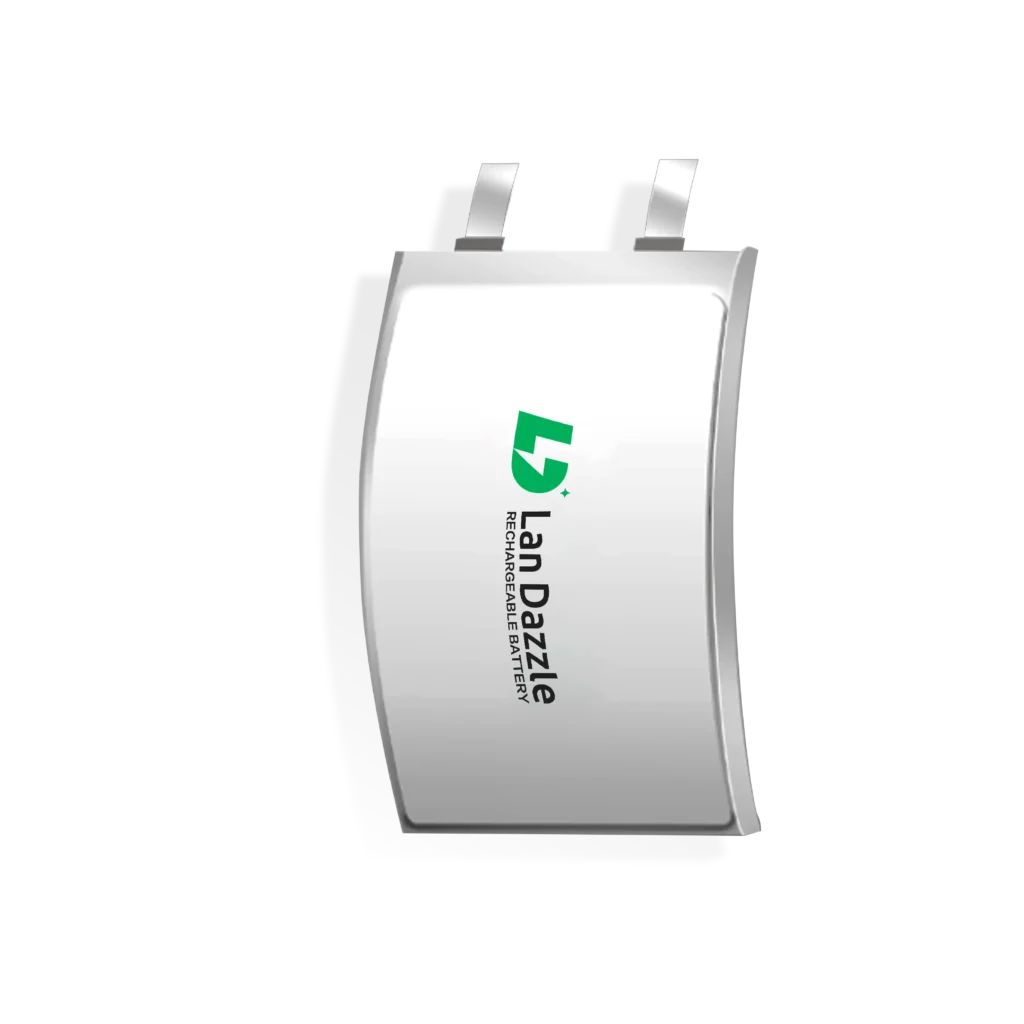
Our Low Temperature Battery Solutions
Shape Advantages
- Supports ultra-thin, curved, and irregular shapes through advanced stacking technology
- Maximizes internal space utilization for compact and space-limited designs
- Maintains stable low-temperature performance even in customized form factors
Performance Advantages
- Retains over 60% capacity at –40°C and up to 80% at –30°C
- Operates reliably across a wide temperature range of –40°C to 60°C
- Certified with UL, CE, and UN for safety and reliability in harsh environments
Weight Advantages
- Lighter than LiFePO₄ batteries at the same voltage and capacity
- Pouch-cell design eliminates heavy metal casings
- Ideal for portable and weight-sensitive applications
Powering Critical Equipments in Harsh Climates
Our low-temperature battery solutions deliver stable performance in extreme cold, supporting critical equipment across outdoor, medical, marine, and industrial applications.

Proven Discharge Performance in Sub-zero Conditions
Actual voltage discharge platforms at 0.2C rate across multiple operating temperatures (-40°C to +25°C).

Optimized Solvent Formula
Reduces internal electrolyte viscosity at sub-zero temperatures, enabling rapid lithium-ion transport.
Ultra-Low Internal Resistance
A special cathode coating layer minimizes voltage drop during initial high-rate discharge at -40°C.
Zero Lithium Plating Risk
An engineered anode surface helps prevent lithium plating and dendrite formation during cold-temperature charging cycles.
Every cell batch undergoes 100% environmental simulation and impedance screening before shipment.
Thermal Test Chambers
Programmable temperature chambers simulating rapid thermal cycling from -50°C to +85°C.
Thermal Test Chambers
Programmable temperature chambers simulating rapid thermal cycling from -50°C to +85°C.
Thermal Test Chambers
Programmable temperature chambers simulating rapid thermal cycling from -50°C to +85°C.
Thermal Test Chambers
Programmable temperature chambers simulating rapid thermal cycling from -50°C to +85°C.
Power That Performs in Extreme Cold
Designed for devices that need reliable battery performance in sub-zero environments. We optimize cell chemistry, internal resistance, and battery structure for demanding low-temperature applications.
What Happen When You Submit the Form?
- Initial Response Within 24 H
- Technical Review & Quotation
- Engineering Sample From 6 Weeks
Frequently Asked Questions
How do low temperature batteries perform in extreme cold?
Our low temperature batteries are designed to deliver stable output in sub-zero environments, maintaining reliable capacity and discharge performance at temperatures as low as –40°C.
What technologies enable reliable low-temperature performance?
We use optimized electrolyte formulations and low-temperature electrode design to reduce internal resistance and improve ion mobility in cold conditions.
Are low temperature batteries safe for harsh environments?
Yes. Our batteries are engineered with enhanced safety design and comply with international standards, ensuring safe and reliable operation in extreme environments.
Can low temperature batteries be customized for specific applications?
Yes. We provide customized low temperature battery solutions, including shape, size, capacity, voltage, and operating temperature range, to meet specific application requirements.