A recent tech news has drawn wide attention, signaling something far more profound: Meta is set to release prescription smart glasses under the Ray-Ban brand for users with corrective lenses.
Though it appears to be merely a smart hardware update, from a battery engineer’s viewpoint, the trend is obvious:
smart glasses are evolving from experimental tech toys into mass-market daily-use devices, pushing battery design to the center of product development.
Why the New Prescription Smart Glasses Matter
According to reports, Meta is no longer simply letting users add prescription lenses to existing frames. Instead, it is building the eyewear form factor from the design stage specifically for people who wear corrective lenses, making these what the industry calls prescription-optimized smart glasses.
The upcoming models are codenamed “Scriber” and “Blazer”, featuring rectangular and rounded-corner designs respectively. They are said to be sold through traditional optometry and eyewear retail channels, with support for Wi-Fi 6 UNII‑4 bands, ensuring more stable wireless connectivity and reliable real-time video performance.
Meta CEO Mark Zuckerberg has publicly noted on multiple occasions that billions of people worldwide require vision correction, and envisions these glasses becoming one of the most commonly worn smart devices in daily life.
While this may seem like a standard expansion of the smart glasses lineup, from an engineering perspective, it represents a genuine shift.
Shift in Wearing Habits: From “Occasional Use” to “All-Day Wear”
When we design wearable device engineering, the first thing to solve is not functionality, but wearing habits.
In the past, the user scenarios for most smart glasses products were more like:
- Wearing them when going out for fun
- Wearing them for travel and event shooting
- Wearing them when needing to show them off
But the real scenario for users of prescription glasses is completely different: this is a device worn all day long.
From getting up in the morning, commuting to work, working, being outdoors, to returning home at night, wearing glasses has become a habitual behavior for nearsighted users.
This means two key engineering realities:
🔹 Cannot be casually taken off to charge midway
Once you have to wear glasses all the time to see the world clearly, the setting of “I’ll charge it later” is simply not feasible in real use.
🔹 Battery life must far exceed the standard of short-term experiential devices
It is not just “lasting a few hours”, but at least covering a full day of regular use.
If the glasses need to be charged “after using for a while” like a smart watch, they will end up being “bought by those who like them and abandoned by those who hate them” — for people who rely on them to see the world clearly, this experience is unacceptable.
And these two points will completely upgrade the battery from an “optional component” to a “core component that determines whether the product is viable.”
Why Battery Design Has Become a Critical Issue in Smart Glasses
To understand this, we need to look back at the design logic of smart glasses.
Traditionally, our understanding of batteries is:
A battery is a standard component that can be used directly; its adequacy depends on parameters. This is understandable because in products like mobile phones and fitness trackers:
- There is relatively ample space
- The weight tolerance is higher
- Power consumption needs can be solved with large-capacity batteries and large casings
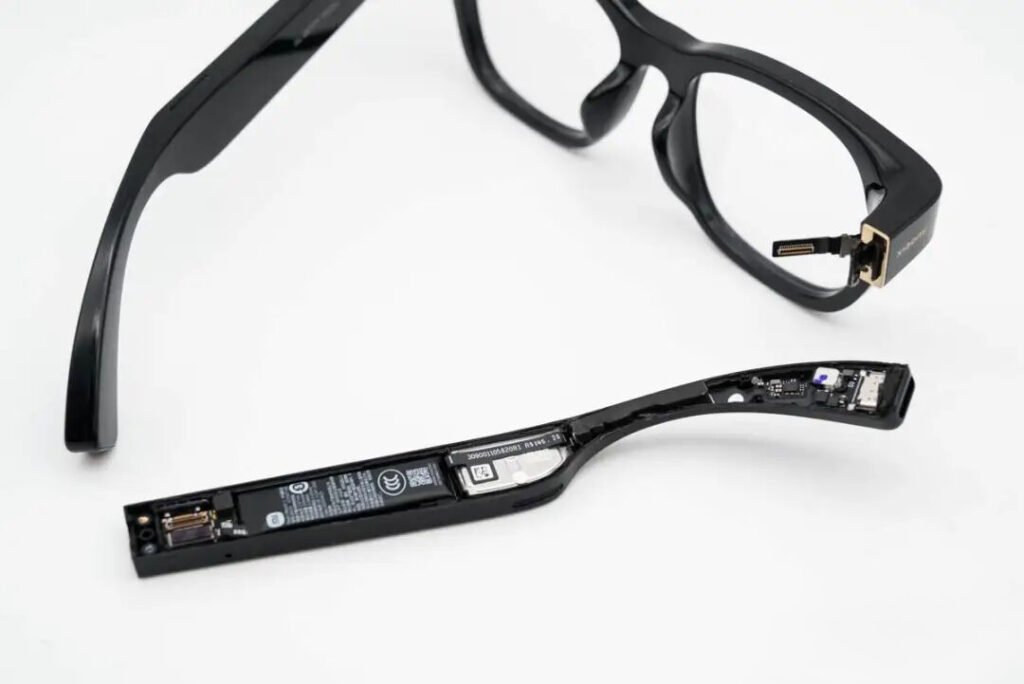
But smart glasses are different. The core constraints of glasses are actually ergonomics and structural limitations:
- Very limited space
- The weight must not be too concentrated or unbalanced
- Must be integrated with the temples and nose pads as a whole
- The appearance must be like traditional glasses
What happens if you stuff a “large battery” into glasses?
Thick temples, unbalanced weight, unstable wearing, slipping, and nose pressure—all are real problems.
This has never been a matter of “insufficient battery capacity”, but rather:
The form of the battery does not take into account the structural limitations of glasses at all.
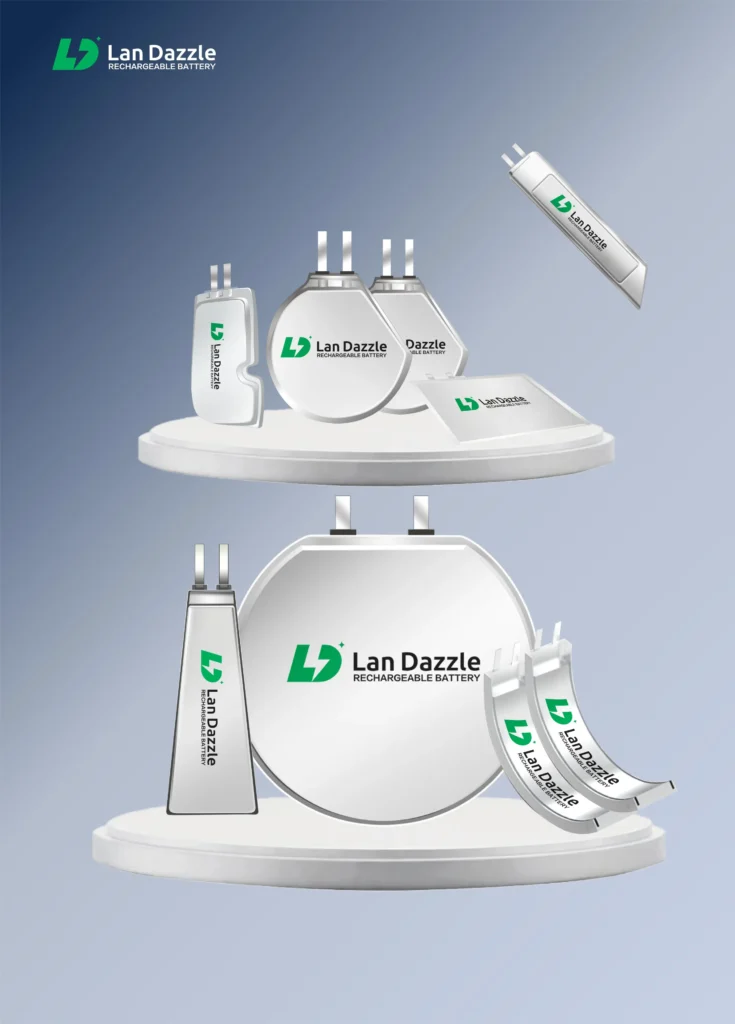
In other words, in such products, the battery cannot be just a “standard part”; it must be part of the product structure.
This Is Where Special-Shaped Batteries Can Deliver Value
The so-called special-shaped battery is not a marketing term, but an engineering solution.
Its core logic is:
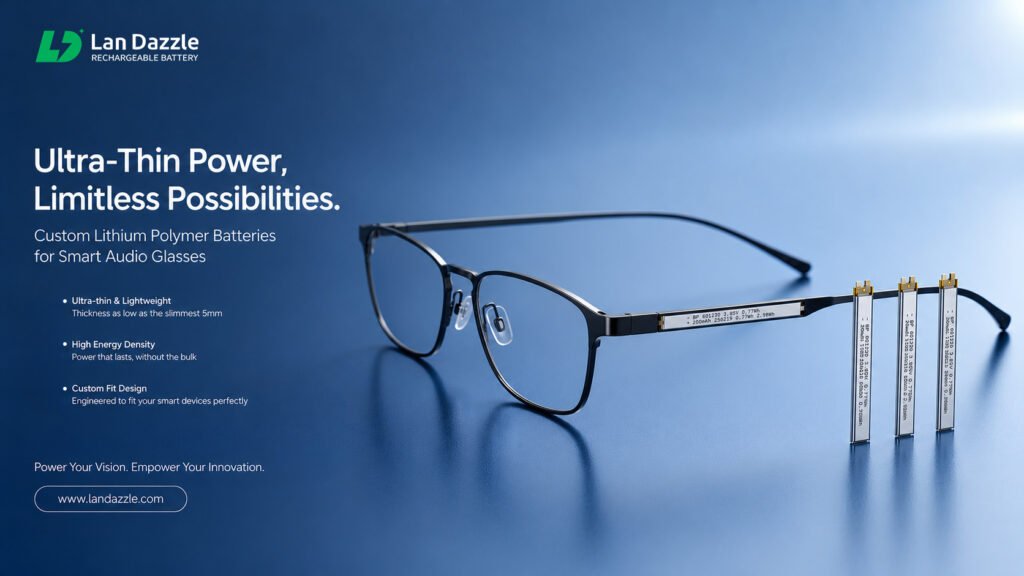
Integrate the battery’s form with the product structure, rather than stuffing the battery into the structure.
In products like smart glasses, form is much more important than parameters:
- Distribute battery cells within the “naturally available space” of the temples
- Avoid weight concentration on one side or the rear
- Maintain overall wearing balance
- Make the battery “invisible but present”
- Coordinate with the frame material, bending angle, and thickness design
If you imagine the glasses structure as an irregular three-dimensional space, a standard battery is a regular cube, while a special-shaped battery is a “filler that fits the structure.”
In such a highly constrained space, a battery solution that fits the structure is more effective than simply stacking capacity.
We have truly experienced this in the research and development of many wearable devices:
With the same weight budget, if the battery form is reasonably distributed, the wearing experience is often much better than that of a single “large-capacity battery block.”
All-Day Wear Poses Another Strict Requirement: Stability
When smart glasses enter the stage of “being worn every day” and “not being frequently taken off for battery charging,” the question is no longer just:
How long can the battery last?
But:
Can the battery stably support the entire usage scenario?
Stability has two important aspects for batteries:
① Thermal Management
The temperature near the eyes must not be too high, otherwise it will affect wearing comfort and even safety. Placing a larger battery in a confined space makes heat dissipation more difficult.
② Discharge Consistency
When the battery capacity is larger but the local distribution is uneven, some battery cells may be over-discharged while others still have remaining power, which will affect battery life and safety.
These issues are easily overlooked in ordinary electronic products, but in close-fitting devices like glasses, they must be carefully solved by engineers.
Therefore, the battery is not just about “whether the capacity is sufficient,” but rather:
It must be able to output stably continuously, not affect wearing comfort, not become a heat source or fatigue point, and be able to work in coordination with the structure and thermal design.
This is a great challenge for traditional standard battery solutions; customized special-shaped batteries are currently one of the most direct and effective solutions.
The Future of Smart Glasses May Be “Structure Before Function”
In the past, the design sequence for many products was:
Determine core functions → Insert the battery → Adjust weight and optimize experience
This approach has no problem in products like mobile phones and fitness trackers, but in products like glasses:
If the battery solution is not feasible, no matter how good the functions are, it is meaningless.
Because:
It cannot be used when out of power; it has to be taken off because it is tiring to use; unbalanced weight affects wearing; heat makes people uncomfortable. These experience issues will directly turn a device that should be widely used into a product that “I tried, but couldn’t keep using.”
And Meta’s launch of specially designed glasses for prescription users this time actually implies a trend:
Smart glasses are evolving from “tech gadgets” to “real daily life tools.”
Once entering this stage, the quality of product experience no longer depends solely on what AI can do, but on whether it can allow users to truly wear it for life, work, and movement.
This puts unprecedented requirements on battery engineering:
- Flexible form
- Efficient power consumption
- Structure must match wearing experience
- Stability must take priority over single parameters
It’s Not Just a Capacity Issue: It’s About the Premise of Product Viability
At this point, some people may ask:
“So is it just a matter of making the battery larger?”
The fact is not.
In scenarios like smart glasses,
A larger battery means bigger size, heavier weight, more difficult heat dissipation, and harder to make into truly comfortable glasses.
Therefore, what really needs to be solved is not “making the battery larger,” but:
👉 Coordinate the battery’s form and position with the glasses structure to maximize the available energy density while ensuring the wearing experience.
This is more difficult than simply stacking capacity and requires more engineering capabilities.
In the next five to ten years, as more and more smart glasses products enter daily life, this point will be increasingly recognized by the industry.
Conclusion
The emergence of prescription smart glasses is not just a signal that a single manufacturer is expanding its product line; it is more like a reminder to the entire industry:
Smart glasses are evolving from “optional wearable devices” to “functional glasses that must be worn all day long.”
Once entering this stage, the battery is no longer a component that can be compromised and solved after the product is finalized, but a core element that needs to be seriously discussed in the early stages of structural design.
- Can it stably cover a full day of use?
- Will it affect wearing balance and comfort?
- Is it truly integrated into the frame structure, rather than being passively stuffed into the space?
These questions often determine whether a smart glass can be used for a long time in real scenarios earlier than “whether the parameters are beautiful enough.”
If you are developing smart glasses or wearable devices that require long-term wearing, or are facing the problem of limited structure and difficulty in balancing battery life and wearing experience, the battery solution should probably enter the product discussion stage earlier than ever before.
Welcome to work with your engineering team to explore battery design ideas more suitable for all-day wearable devices from the perspective of structure and usage scenarios.
Email: info@landazzle.com
Whatsapp: +8618938252128