Table of Contents
For smartwatch manufacturers, the key question is not simply how to increase battery capacity. It is how to store more usable energy without significantly increasing the battery’s footprint, thickness, weight, or compromising cycle life. Silicon-carbon technology provides one potential path by increasing the energy-storage capability of the anode while working within a similar overall cell volume.
Why Are Traditional Lithium Batteries Becoming Less Able to Meet the Needs of Smartwatches?
First, let’s talk about a reality everyone in the industry quietly understands. In a smartwatch, the challenge is no longer “Can we make the battery a bit bigger?” It is “Can we still fit a battery inside at all?”
Space is extremely limited. Battery shapes are irregular. At the same time, the battery must meet strict requirements for structural strength, heat dissipation, and safety. For many smartwatch designs, conventional graphite-based lithium-ion cells are approaching practical limits in energy density and space utilization. This does not mean graphite batteries have reached a universal technical limit, but that further capacity gains become increasingly difficult when the available battery volume is fixed.
That’s why, over the past few years, most improvements in smartwatch battery life have come not from the battery itself, but from:
- System optimization
- Power management
- “Algorithm-driven” usage scenarios
Rather than a real breakthrough in battery chemistry.
But this approach has a clear ceiling. When software and algorithms can no longer squeeze out more efficiency, materials and battery structure must evolve.
How Does a Silicon Carbon Battery Improve Smartwatch Battery Capacity?
Silicon has a theoretical specific capacity of around 4,200 mAh/g, far above the roughly 372 mAh/g theoretical capacity of graphite. However, the practical benefit in a commercial cell is much lower than this theoretical difference suggests. Silicon-carbon batteries therefore focus on balancing silicon’s capacity advantage with the mechanical and electrochemical stability required for real-world cycling.
However, the challenges are just as clear. During charge and discharge, silicon undergoes significant volume expansion. This leads to structural instability and places extremely high demands on manufacturing processes and battery design. That is why silicon-carbon batteries did not “replace” traditional lithium batteries overnight. Instead, they were first adopted in specific application scenarios where their advantages clearly outweigh the risks.
Smartwatches are exactly such a scenario.
They are:
- Extremely sensitive to energy density
- Highly demanding in terms of battery size and custom form factor
- Relatively more tolerant of higher costs compared to smartphones
When these three factors come together, silicon-carbon batteries become a technically attractive option for space-constrained smartwatch designs.
Silicon Carbon Battery for Smartwatches-Case Studies
From a materials perspective, silicon anodes offer a much higher theoretical capacity than graphite.
This is a fact widely recognized across the battery industry.
However, the challenges are just as clear. During charge and discharge, silicon undergoes significant volume expansion. This leads to structural instability and places extremely high demands on manufacturing processes and battery design. That is why silicon-carbon batteries did not “replace” traditional lithium batteries overnight. Instead, they were first adopted in specific application scenarios where their advantages clearly outweigh the risks.
Smartwatches are exactly such a scenario.
They are:
- Extremely sensitive to energy density
- Highly demanding in terms of battery size and custom form factor
- Relatively more tolerant of higher costs compared to smartphones
When these three factors come together, silicon-carbon batteries become engineering-feasible for the first time.
Case 1: An 867mAh High-Silicon Stacked Custom Battery Used in the Huawei Watch GT6 46mm
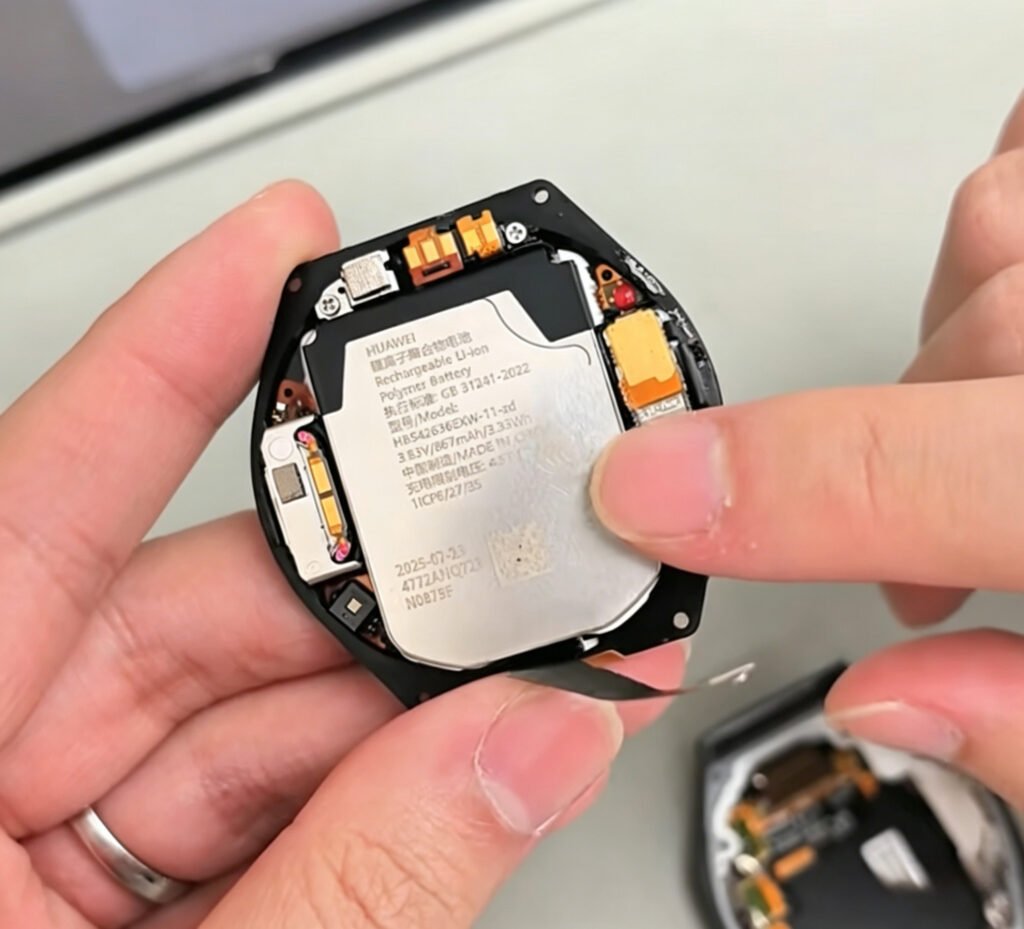
If you have followed smartwatch teardowns or new product launches, one number likely caught your attention: 867mAh.
For a 46mm smartwatch, this is an aggressive capacity figure—and a highly symbolic one.
But what truly matters is not how large the capacity is,
it is what kind of real-world battery life that capacity delivers.
Under official usage scenarios, the Watch GT6 46mm delivers up to 21 days of battery life.
And this result is not achieved by a single technology alone.
The more important factor is the well-coordinated and mature technology combination behind it:
- A high-silicon anode system
- A stacked (laminated) cell structure
- A custom-shaped battery design
These three elements are also the areas where, in real mass production, the difficulty and trade-offs are the most obvious.
Compared with traditional winding, the stacked structure offers better mechanical stability and lower internal resistance, helping improve energy efficiency—but it also comes with a much narrower manufacturing window.
- The custom-shaped battery design maximizes the use of internal case space, turning what would otherwise be wasted volume into usable capacity. However, this places higher demands on consistency and production yield.
- The high-silicon anode system, while increasing energy density, introduces stricter engineering challenges in material formulation, compaction density, and long-term stress control.
From a manufacturing perspective, this is not simply about “switching to a different battery cell.”
It is a fully redesigned battery system, built around the smartwatch’s usage cycle, power consumption profile, and wearing form factor.
The real value of this design lies in one key point:
It does not just make the battery bigger. It extends usable time per charge without noticeably increasing thickness or sacrificing wearing comfort.
Case 2: Xiaomi Watch S5 Adopts Silicon-Carbon Battery, Improving Both Capacity and Battery Life
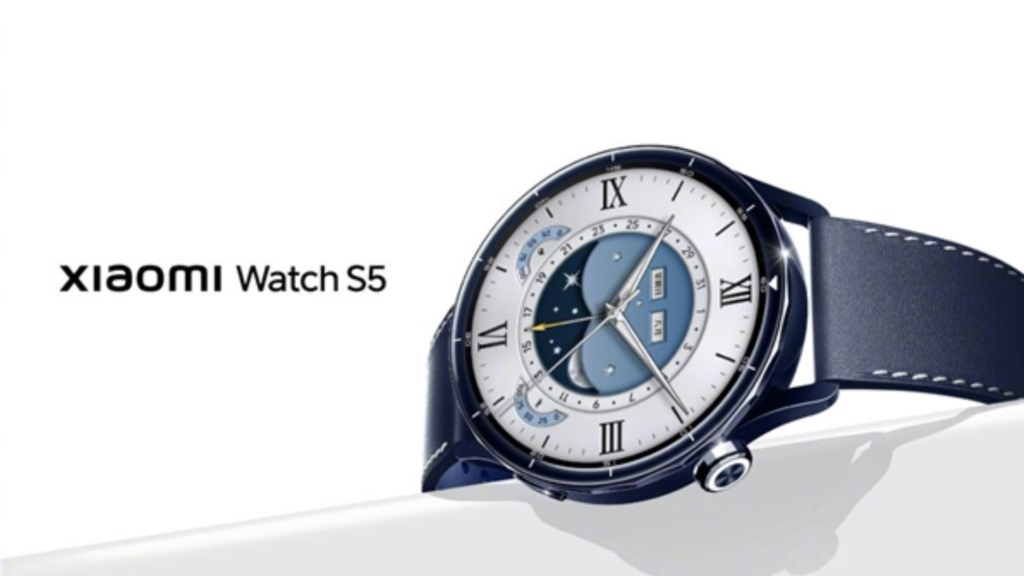
With the Watch S5, Xiaomi also introduced a silicon-carbon battery solution to address battery life challenges under strict size limitations.
According to publicly available information, the battery capacity of the Watch S5 has increased to the 800mAh level, which is relatively high among smartwatches in the same category.
Based on this capacity, Xiaomi officially claims a typical battery life of around 15–21 days, significantly reducing how often users need to recharge.
The use of a silicon-carbon battery allows the Watch S5 to achieve higher energy density without noticeably increasing the thickness of the device.
As a result, the increase in battery capacity translates into real improvements in battery life, rather than just better-looking specifications.
From a product perspective, the Watch S5 does not heavily promote battery technology itself.
Instead, silicon-carbon batteries are treated as a foundational upgrade that supports:
- Longer daily wear time
- Continuous operation of health monitoring and system functions
- A more stable and predictable overall usage cycle
This approach allows the value of silicon-carbon batteries to be reflected mainly in actual battery life improvements, rather than in technical marketing claims.
Application Trends of Silicon-Carbon Batteries:
From the two smartwatch cases discussed earlier, it is clear that silicon-carbon batteries are already making a real impact on battery life. And this trend is not limited to smartwatches alone.
As wearable devices and smart terminals continue to demand higher energy density and thinner, lighter designs, silicon-carbon batteries are gradually moving from a “new technology experiment” to an industry-wide consensus.
1. Smartphones: Silicon-Carbon Batteries Are Becoming a Mainstream Trend
In the smartphone segment, the adoption of silicon-carbon batteries is progressing the fastest and most clearly.
Multiple smartphone manufacturers have begun using silicon-carbon battery technology in their flagship models to improve both battery capacity and real-world battery life.
📍 According to recent industry analysis, Android smartphones equipped with silicon-carbon batteries have seen battery capacities clearly exceed 6,000 mAh, with some models moving even higher.
At similar battery volumes, their energy density is significantly higher than that of traditional graphite-anode lithium batteries.
📍 Reports indicate that several flagship models, including the Honor Magic5 Pro, have already adopted silicon-carbon battery solutions. Its 5,450 mAh battery delivers approximately 12.8% higher energy density than conventional lithium batteries.
📍 Industry rumors also suggest that future models such as the Samsung Galaxy S27 Ultra may further adopt silicon-carbon battery technology. Internal testing is said to explore capacity ranges of 12,000–20,000 mAh, aimed at pushing extreme battery-life limits.
Together, these examples point to a clear signal: silicon-carbon batteries are shifting from an optional solution to a flagship standard.
2. From Smartwatches to Smaller Devices
Compared with smartphones, smaller wearable devices face even greater challenges when it comes to battery technology.
📍 At present, large-scale commercial products using silicon-carbon batteries in smart glasses and smart rings are still limited. However, multiple industry analyses already identify silicon-carbon batteries as a key technological path for improving energy density in micro-sized batteries.
📍 In highly integrated products such as smart glasses, battery volume is extremely constrained.
Without increasing device thickness or compromising wearing comfort, improving energy density per unit volume has become almost the only viable way to extend battery life.
For this reason, battery designs using silicon-carbon composite anodes are widely viewed by the industry as a potentially engineering-feasible solution for these next-generation wearable devices, with broader adoption expected in the coming years.
What Are the Main Challenges of Silicon-Carbon Smartwatch Batteries?
Higher energy density does not come without trade-offs. Before adopting a silicon-carbon battery, smartwatch manufacturers should consider several engineering factors.
1. Silicon Expansion
Silicon undergoes substantial volume changes during lithiation and delithiation. If not properly managed, this can cause electrode damage, unstable interfaces, capacity loss, and reduced cycle life.
2. Swelling and Mechanical Stability
For a smartwatch, battery swelling is particularly important because the cell is located inside a highly integrated enclosure. Battery expansion can affect internal components, display assembly, sealing, and long-term mechanical reliability.
3. Cycle Life
A smartwatch battery is expected to survive repeated charging and discharging over years of daily use. Therefore, a higher initial capacity is not enough. The battery must maintain acceptable capacity retention throughout its required service life.
4. Manufacturing Consistency
A high-performance laboratory cell does not automatically become a high-yield commercial product. Electrode consistency, cell thickness, dimensional tolerances, formation processes, and quality control all become increasingly important as energy density and cell complexity increase.
For this reason, silicon-carbon battery development should be evaluated as a complete cell-engineering and manufacturing project rather than simply a material substitution.
LanDazzle Smartwatches Battery Solutions
What sets us apart is not just battery manufacturing, but how we engineer batteries to fit real products and real use cases.
First, custom-shaped battery design.
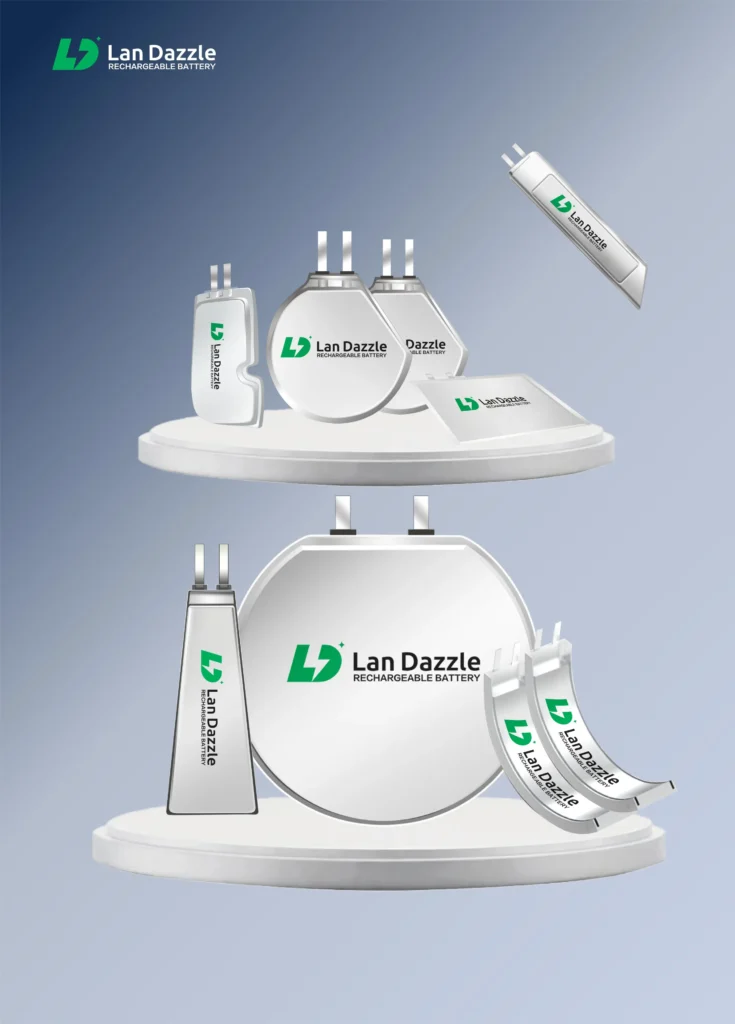
We specialize in irregular and application-specific battery shapes, allowing our batteries to fully utilize limited internal space and integrate seamlessly into compact or unconventional device designs.
Second, advanced stacking technology.
By adopting a stacking process instead of traditional winding, we achieve higher energy density, better structural stability, and more consistent performance—especially in thin or space-constrained applications.
Third, silicon–carbon battery solutions.
Our silicon–carbon battery solutions are designed to balance higher energy density with practical cycle life, offering improved performance while maintaining reliability for commercial applications.
Conclusion
Silicon–carbon battery technology is no longer just an upgrade at the material level. It is becoming a system-level solution that combines structure, manufacturing process, and energy density to meet the real constraints of smart wearable devices. From smartwatches to future applications in phones and other compact electronics, the direction is clear: higher energy in smaller spaces, without compromising stability.
As a manufacturer, we focus on turning these requirements into practical, scalable battery solutions that can move from concept to mass production reliably.
Contact Us
If you are developing smartwatches, wearables, or other compact electronic devices and are exploring custom battery solutions, feel free to contact us for technical discussion or project support.
Email: info@landazzle.com
Whatsapp: +8618938252128