
Recent wildfires across Europe have once again reminded the world how destructive extreme weather can be.
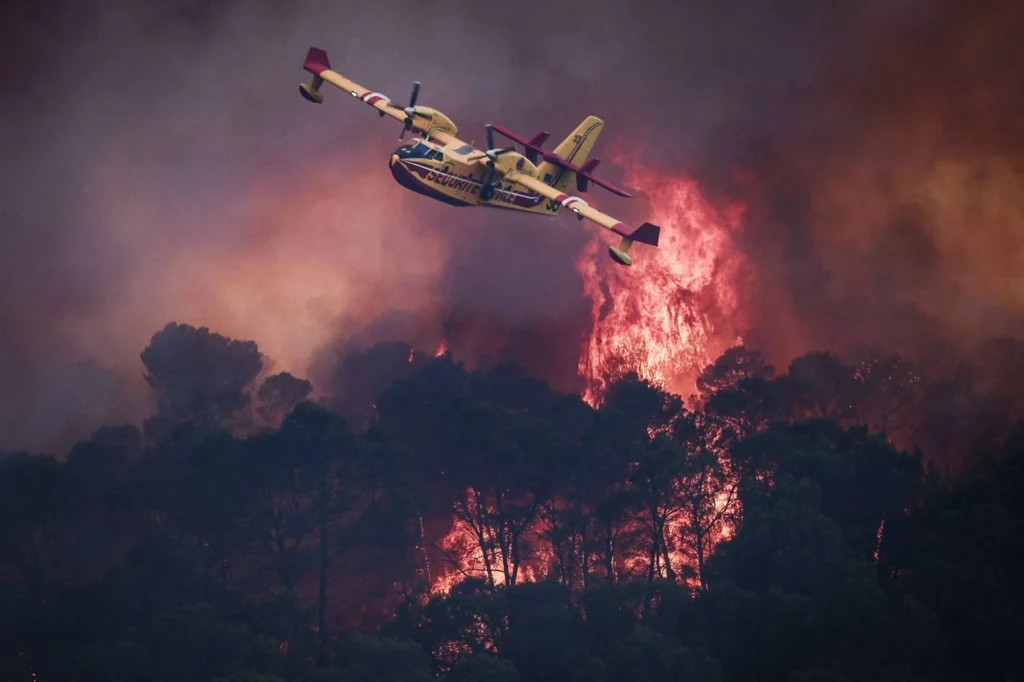
According to Reuters, France and Spain are facing some of the worst wildfires in recent years. Around 220,000 people have been evacuated in France, while more than 100,000 people in Spain have been affected by evacuations or emergency safety measures.
To control the fires, the European Union activated its cross-border firefighting support system. Firefighters from Italy, Portugal, Greece, Turkey, Switzerland, and several other countries joined the rescue efforts.
This is not only a battle against flames, but also a race against time, extreme heat, and physical exhaustion.
What Technologies Are Helping Firefighters Today?
Wildfires around the world are becoming larger, lasting longer, and becoming much harder to control.
When a fire spreads across tens of thousands of hectares and burns for weeks or even months, firefighters alone are no longer enough. More advanced technologies are becoming important partners on the front line.
Drones: Reaching Places Humans Cannot
In the past, firefighters had to enter dangerous areas to check how a fire was spreading. This was slow and extremely risky.
Today, drones have become standard equipment in wildfire response.
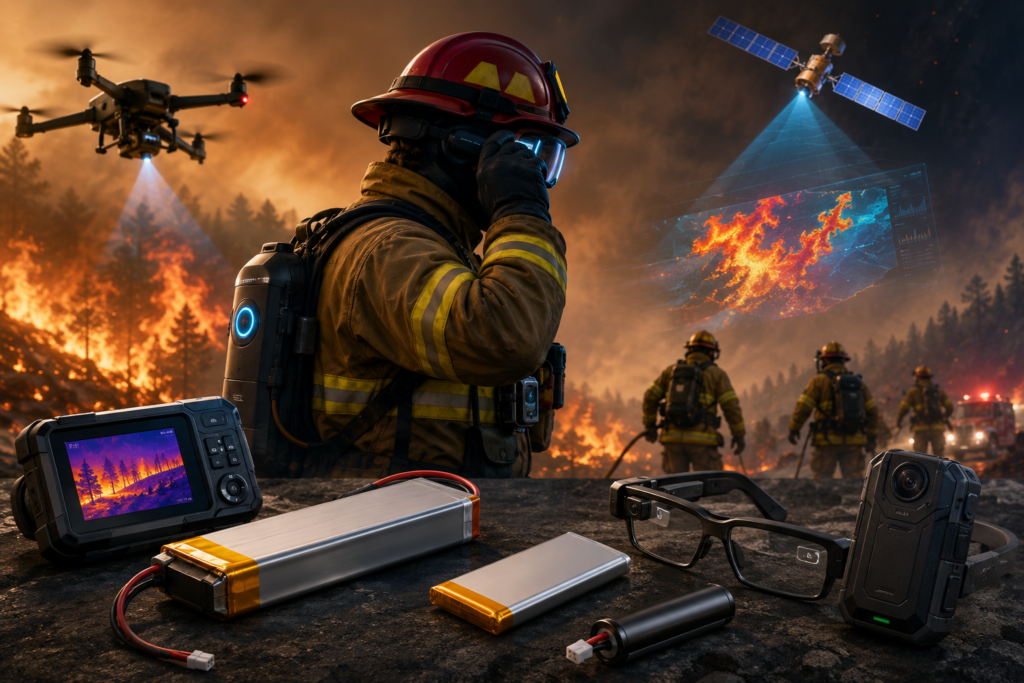
Equipped with high-resolution cameras, thermal imaging sensors, and laser rangefinders, drones can quickly fly over fire zones and send back real-time information about fire lines, fire movement, and trapped people. Their value is even greater at night. Even when firefighters cannot see through the darkness, thermal cameras can detect hot spots and provide critical information to command centers.
Some large drones can also transport medical supplies, communication equipment, or even fire suppression materials to places that vehicles cannot reach.
Thermal Imaging Cameras: Seeing Through Smoke
One of the biggest challenges during a wildfire is thick smoke, which can completely block visibility.
Thermal imaging cameras allow firefighters to see heat instead of visible light. They create images based on infrared radiation from different objects. These cameras can find hidden fire sources, locate trapped people, and detect hot spots that are not fully extinguished, making firefighting safer and more efficient.
For firefighters working in extreme heat, thermal imaging has become a second pair of eyes.
AI Smart Glasses: Important Information Right in Front of the Eyes
AI smart glasses are gradually being used in industries such as manufacturing, logistics, and public safety.
For firefighters, smart glasses can display navigation routes, building layouts, dangerous areas, temperature changes, and teammate locations directly on the lenses.
Instead of looking down at handheld devices, firefighters can receive important information while keeping their attention on the environment around them. In the future, AI combined with computer vision may even identify dangerous areas automatically, analyze fire behavior, and recommend the safest evacuation routes.
In extreme conditions, every second and every distraction matter.
Body Cameras: Bringing the Front Line to the Command Center
Body cameras are no longer used only for recording incidents.
During large wildfires, they can livestream what firefighters see directly to the command center. This allows commanders to understand the situation immediately, adjust rescue plans, and send more resources where they are needed most. As AI video analysis continues to improve, these cameras may soon detect dangers automatically, such as collapsing buildings, sudden fire changes, or firefighters falling during operations.
Satellite Monitoring: Watching the Fire From Space
If drones provide a local view, satellites provide the big picture.
Today, Earth observation satellites monitor forests around the world every day. Using infrared imaging, satellites can detect new fire locations, predict how fires will spread, and send data to emergency agencies. For large wildfires that cross regional or national borders, satellite data helps governments coordinate rescue teams and plan evacuations more effectively.
During the recent European wildfires, cross-border monitoring and data sharing played an important role in improving international firefighting efforts.
Wearable Cooling Devices: Protecting Firefighters From Heat
Firefighters wear heavy protective clothing while working in environments that can reach hundreds of degrees Celsius. Extreme heat quickly causes fatigue and may lead to dehydration, heat exhaustion, or even heat stroke.
To reduce these risks, more fire departments are beginning to use wearable cooling devices. Liquid cooling vests, phase-change cooling garments, and active cooling systems help firefighters maintain a safer core body temperature and work longer in hot environments. As these devices become lighter and more comfortable, they are becoming an important part of modern firefighting equipment.
How High-Performance Batteries Power Modern Firefighting Technology
From drones and AI smart glasses to thermal imaging cameras, body cameras, and wearable cooling systems, all of these technologies rely on one essential component—the battery. Unfortunately, wildfire environments are also among the most demanding conditions for battery performance.
The first challenge is high temperature.
Continuous exposure to heat can reduce battery capacity, lower power output, or even activate thermal protection, limiting how long devices can operate.
The second challenge is long battery life.
Wildfire operations often last many hours. Devices cannot stop frequently for battery replacement or charging. If a drone must return because its battery is low, or if smart glasses shut down during a rescue mission, valuable time may be lost.
The third challenge is weight and size.
Firefighters already carry heavy equipment. Every extra gram increases physical strain. For wearable devices like AI smart glasses and body cameras, larger batteries also make the equipment heavier and less comfortable. This makes high energy density especially important.
Finally, there is reliability and safety.
Wildfire operations involve vibration, impacts, dust, moisture, and rapid temperature changes. Batteries must continue delivering stable power while maintaining a high level of safety. For many smart firefighting devices, performance depends not only on advanced chips and AI software, but also on the battery hidden inside.
Smarter Firefighting Requires Better Battery Technology
As AI, robotics, and wearable technologies continue to evolve, future firefighting equipment will become even smarter—and even more dependent on advanced power systems.
Battery technology is also moving toward several important goals:
- Higher energy density for longer operating time
- Wider operating temperature range for extreme heat and cold
- Faster charging between missions
- Smaller, lighter, and more ergonomic designs
- Custom battery shapes that maximize the available space inside devices
For next-generation equipment such as AI smart glasses, body cameras, and portable thermal imaging devices, batteries are no longer expected to simply provide power. They must also deliver long runtime, high safety, lightweight design, and perfect fit for compact products.
Final Thoughts
The recent wildfires in Europe remind us that human effort alone is no longer enough to deal with increasingly severe natural disasters.
Drones, AI smart glasses, thermal imaging, satellite monitoring, and wearable cooling devices are working together to build a new generation of intelligent firefighting systems. Behind every one of these smart devices is a battery that must deliver reliable, safe, and long-lasting power throughout the entire mission.
As artificial intelligence and smart hardware continue to advance, high-performance batteries will become more than just power sources. They will serve as one of the key technologies supporting the future of smart emergency response, intelligent firefighting, and modern rescue operations.