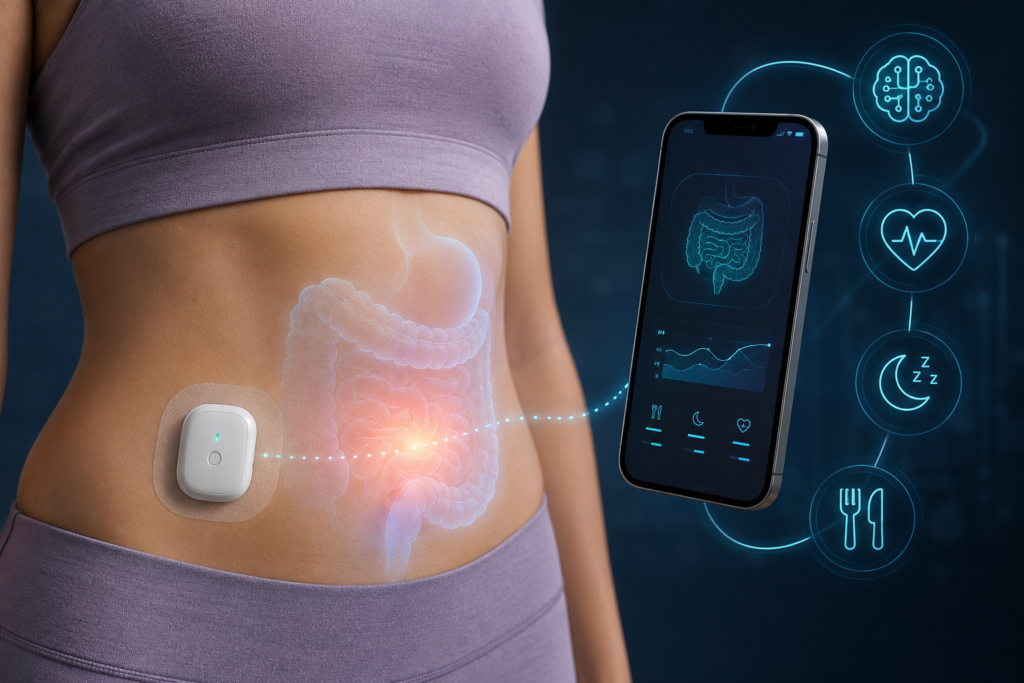
Recently, a startup called SUNA Health introduced a new wearable health device. Unlike smartwatches, smart rings, or smart glasses, this device is worn on the abdomen instead of the wrist or finger. It is designed to continuously collect body data, helping users better understand their gut health, analyze how different foods affect their bodies, and provide personalized health recommendations.
This new product highlights an important trend: AI-powered health wearables are moving beyond traditional health tracking and beginning to explore more complex and personalized areas of human health.
Today, devices such as the Apple Watch, Galaxy Watch, Oura Ring, and an increasing number of smart glasses can already monitor heart rate, blood oxygen, sleep, stress, and physical activity. These features have become standard in modern health wearables.
Gut health, however, is a much greater challenge. Often called the body’s “second brain,” the gut plays a key role in digestion, the immune system, metabolism, and even mood and sleep. Unlike heart rate or body temperature, gut health is much more complex and difficult to monitor continuously.
The launch of SUNA reflects a new direction for the wearable industry. AI-powered wearables are beginning to explore more of the body’s hidden health signals, opening the door to a deeper understanding of personal health.
AI Health Wearables Are Entering the Era of Deeper Health Monitoring
In recent years, health wearables have advanced rapidly. Smartwatches can now continuously track heart rate. Smart rings can monitor sleep quality and recovery. More and more wearable devices are also adding features such as ECG, body temperature, and respiratory rate monitoring.
At the same time, AI is changing the role of these devices. Instead of simply collecting data, AI helps users understand what the data means.
For example:
- Why did I sleep poorly last night?
- Why is my recovery slower after exercise?
- Which daily habits are affecting my health?
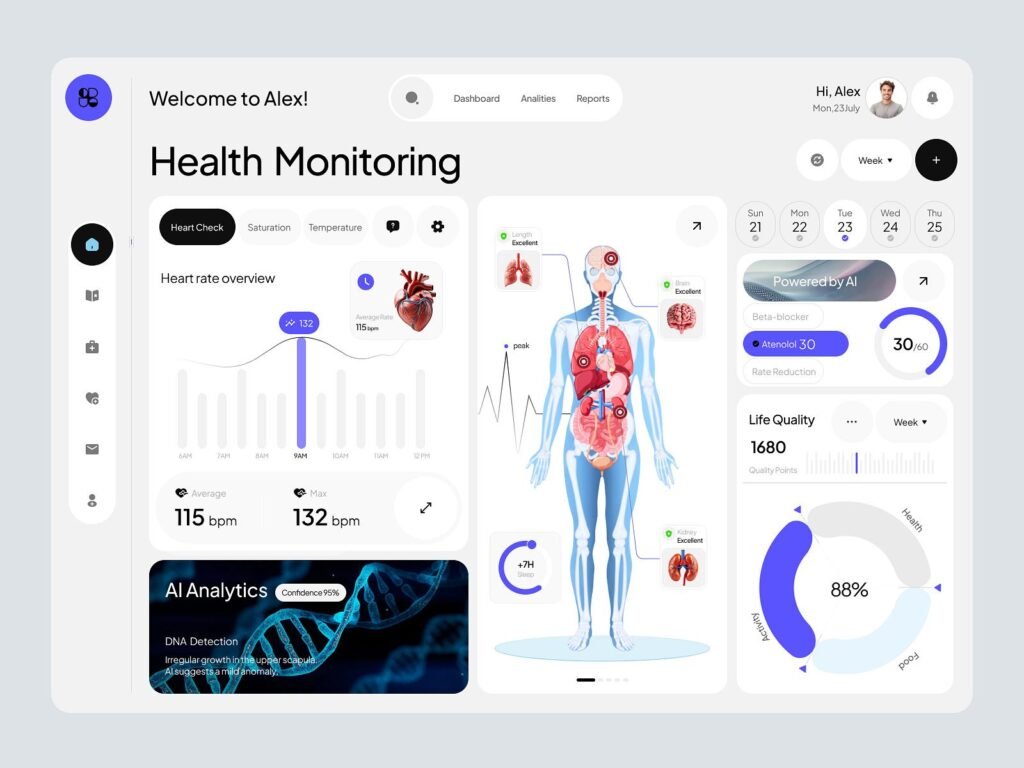
AI is turning large amounts of health data into simple, personalized insights that users can understand and use. As AI algorithms continue to improve, wearable devices are beginning to monitor more than just traditional health metrics. Blood glucose, blood pressure, women’s health, muscle condition, and, more recently, gut health are becoming the next major areas of innovation.
This means the future of health wearables is no longer just about telling users how many steps they walked today. Instead, these devices aim to provide a deeper and more complete understanding of the human body.
New Monitoring Capabilities Bring New Hardware Challenges
As health wearables gain more features, they also need to collect more data. A modern smartwatch may need to run several components at the same time, including:
- Optical sensors
- Accelerometers
- Gyroscopes
- Temperature sensors
- Bluetooth communication modules
- AI algorithms
For a wearable patch device, the challenge is even greater. It needs to work continuously for long periods while remaining comfortable to wear.
Users expect it to be so light that they barely notice it. They want a battery that lasts for days instead of needing daily charging. At the same time, they expect the device to monitor their health around the clock.
These expectations may sound simple, but they create major challenges for hardware designers. In many cases, the biggest limitation is no longer the sensors themselves—it is the power system that keeps everything running.
Why Batteries Are Becoming the Key to Next-Generation Health Wearables
For a smartphone, adding a few extra millimeters of thickness may not be a big problem. But for health wearables, even a small increase in weight or thickness can have a direct impact on comfort.
This is especially true for wearable patches that stay attached to the skin for long periods.
- If the device is too heavy, it may not stay in place.
- If it is too thick, it becomes less comfortable to wear.
- If it generates too much heat, users may be less willing to wear it all day.
As a result, health wearables place much higher demands on batteries than most consumer electronics.
A battery must do more than simply provide enough power. It also needs to be lightweight, thin, energy-dense, safe, produce little heat, and deliver stable power over long periods. Together, these factors determine whether a device can truly provide all-day, comfortable, and continuous health monitoring.
As AI health devices continue to add more sensors and features, battery design is no longer just about increasing capacity. The shape and size of the battery have also become important parts of product design.
Different types of health wearables require different battery designs.
- Smart rings often use curved or ring-shaped batteries to make the best use of their limited space.
- Smart glasses usually hide ultra-thin batteries inside the temples to balance comfort and battery life.
- Wearable patches, such as SUNA’s device, benefit from batteries that fit the natural curve of the body, allowing longer operating time without increasing the size of the device.
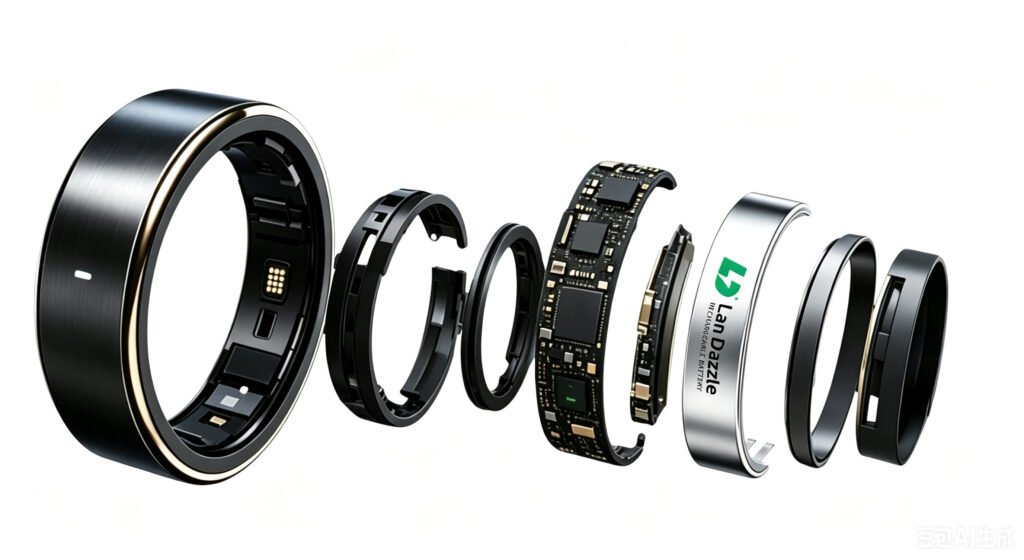
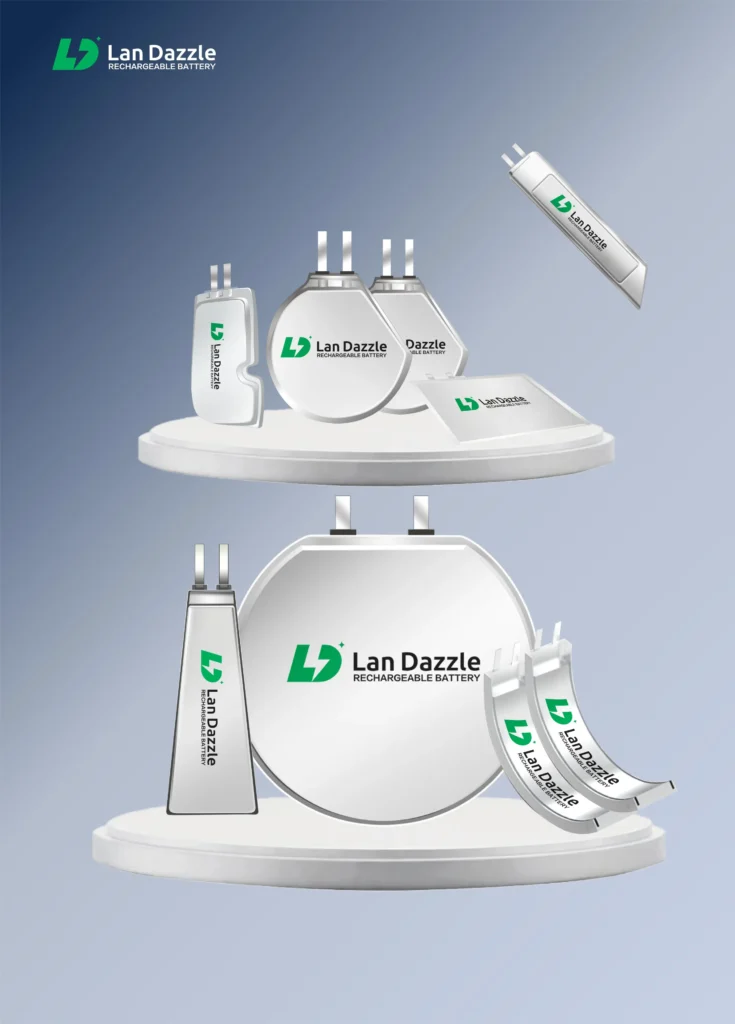
This means that standard battery sizes are becoming less suitable for the next generation of health wearables. More manufacturers are turning to custom battery solutions, designing the battery’s size, thickness, and even shape to match the internal structure of each device. This helps maximize available space and extend battery life without making the device larger.
As health wearables become lighter, thinner, smarter, and more comfortable to wear, batteries will no longer be just a power source. They will become one of the key technologies that shape the device’s design, user experience, and overall performance.
The Future of AI Health Wearables Depends on Better Battery Technology
When people think about AI health wearables, they often focus on AI models, algorithms, and smart analysis. But in reality, AI can only deliver meaningful insights if it has access to continuous, reliable, and long-term data.
For health monitoring, a single heart rate reading or one night’s sleep record provides only limited value. What really matters is collecting data over time. With long-term, consistent data, AI can identify health patterns, understand how daily habits affect the body, and provide more accurate and personalized recommendations.
This also means that wearable devices must interfere with users as little as possible. If a device needs frequent charging, or if it is too heavy, too thick, or generates too much heat, people are less likely to wear it consistently. Once data collection is interrupted, the value of AI analysis is greatly reduced.
That is why, in AI health wearables, the battery is no longer just a power source. It is one of the foundations of the entire user experience. The longer the battery lasts, the more likely users are to wear the device all day. The more continuous the data, the more accurate and useful the AI insights become.
In the future, competition in health wearables will not be limited to AI algorithms, sensor accuracy, or software features. Companies will also compete on:
- how to make devices lighter, thinner, and more comfortable
- how to deliver a week or even longer of battery life within a very small space
- how to ensure safe operation during long periods of skin contact. All of these challenges depend on continued innovation in battery technology
The launch of SUNA Health may be just the beginning of this trend. As AI health wearables expand into areas such as gut health, blood glucose, respiration, and muscle monitoring, more products will aim to provide continuous, around-the-clock health tracking. Their goal is clear: to move beyond simply recording health data toward truly understanding the body’s condition, predicting health trends, and offering personalized health guidance.
In this transformation, AI will continue to be the driving force behind innovation. But the technology that allows AI to deliver lasting value is reliable hardware. The next generation of health wearables will be powered not only by smarter AI, but also by batteries that are thinner, lighter, safer, more energy-dense, and more flexible. Only then can AI move beyond simply seeing data to truly understanding health.
Conclusion
From smartwatches and smart rings to wearable patches designed to monitor gut health, AI health wearables are expanding the boundaries of health monitoring. In the future, these devices will not only collect more physiological data but also use AI to help users better understand their overall health.
However, no matter how advanced AI algorithms become or how accurate sensors get, every device still depends on reliable hardware. Longer battery life, thinner and lighter designs, higher safety standards, and more flexible battery shapes are becoming essential for the next generation of health wearables.
As health monitoring moves toward continuous, all-day, and personalized care, battery technology will no longer remain behind the scenes. It will become one of the key factors that determines product performance, user experience, and market competitiveness.
If you are developing AI health wearables, medical wearable devices, or other innovative products that require thin, lightweight, and high-energy-density batteries, we’d love to talk with you.
At LanDazzle, we specialize in custom-shaped lithium polymer batteries. We provide ultra-thin, curved, and fully customized battery solutions designed to match your product’s internal structure, helping you maximize battery life, improve wearing comfort, and give your engineers greater design freedom.
Email: info@landazzle.com
Whatsapp: +8618938252128