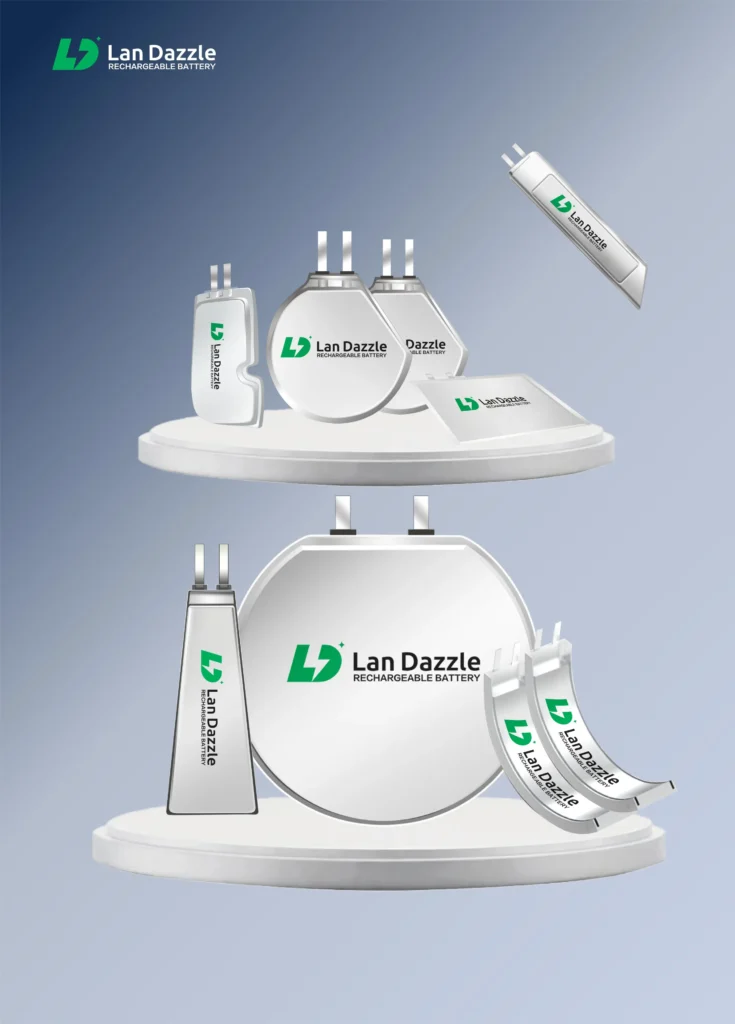
If a user still feels like they are “wearing an electronic device,” the hardware isn’t mature enough yet.
The next generation of wearable electronics is moving toward Invisible Sensing—continuous glucose monitors (CGMs), smart patches, and e-textiles that blend seamlessly with human skin. While sensors and microcontrollers shrink through advanced silicon integration, the battery remains the primary physical bottleneck.
Shrinking a battery down to the 0.5–1.5 mm range is not about “flattening” traditional cells—it is a micro-millimeter engineering war that redefines wearable form factors.
Key Design Challenges: Standard vs. Ultra-Thin Batteries
| Feature | Standard Pouch Cell | Ultra-Thin Battery (0.5 mm – 1.5 mm) |
| Primary Limitation | Volumetric Energy Density | Packaging Ratio & Electrode Coating Precision |
| Flexibility | Rigid / Static | Dynamic Bending & Strain Tolerance |
| System Integration | Standard Rectangular Placement | Custom Geometries & Direct FPC Integration |
| Form Factor Driving Force | Device built around battery | Battery built around available internal space |
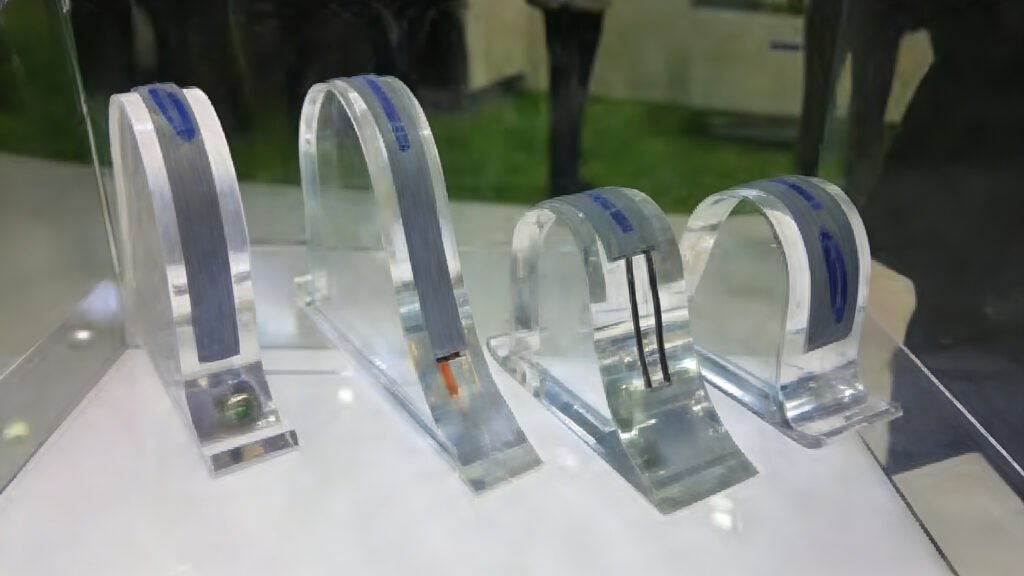
0.5 mm to 1.5 mm: The Real Challenge Is Every Layer
When a battery is designed to be just 0.5 mm, 1 mm, or 1.5 mm thick, even small changes during manufacturing can have a major impact.
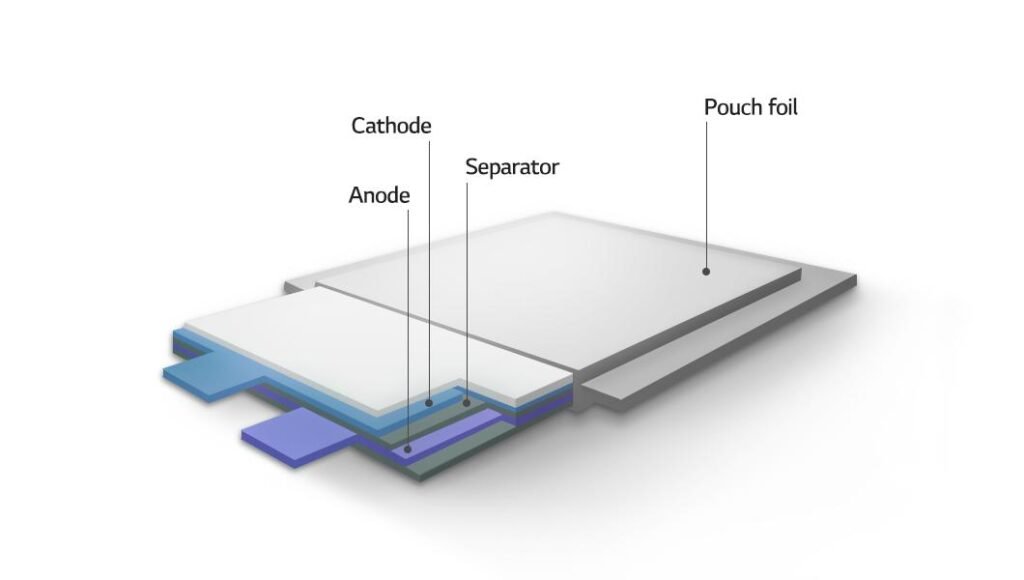
Packaging
Traditional pouch lithium-ion batteries use aluminum-plastic film for packaging. In an ultra-thin battery, the packaging film itself can take up a significant part of the total thickness.
- If the package is too thick, it directly reduces the space available for active materials.
- If it is too thin, manufacturers must control heat-sealing quality, edge reliability, and long-term barrier performance much more carefully.
This is especially important for devices worn directly on the body. The battery cannot only perform well during factory testing. It must also remain stable when exposed to sweat, moisture, temperature changes, and long-term mechanical pressure.
Electrodes
A conventional battery can use thicker electrodes to increase the amount of active material. But when the total battery thickness is limited to the millimeter or even sub-millimeter range, electrode coating becomes a highly precise manufacturing process.
- If the coating is too thin, the energy stored per unit area may decrease.
- If it is too thick, it can create problems with ion transport, internal resistance, and mechanical stress.
Therefore, designing an ultra-thin battery is not simply about making it “as thin as possible.” Instead, manufacturers need to carefully redistribute the limited space between the active materials, electrode thickness, current collectors, separator, and packaging.
This is why ultra-thin batteries are increasingly becoming a form of system engineering, rather than simply making a smaller battery cell.
Flexible PCBs Solve the Bending Problem, But Batteries May Not Bend the Same Way
This is an easily overlooked issue in next-generation wearable design. Flexible PCBs, or FPCs, can bend thanks to flexible materials and carefully designed circuit traces.
But that does not mean a battery can bend as freely as an FPC.
A battery contains multiple layers made from different materials, each with its own mechanical properties. When the battery bends, different levels of stress can develop between these layers. If this stress stays concentrated in one area for a long time, it may affect the electrodes, current collectors, separator, or even the battery packaging.
Research has shown that in flexible batteries, internal contact pressure and electrical conductivity can change significantly as the degree of bending increases.
In other words:“Being able to bend” and “being able to bend reliably over time” are two different things.
That is why future wearable device design should not only ask:“Can this battery bend?”
It should also ask:“How will it bend? What is the bending radius? Where will the bending happen? How many times will it bend each day?”
These questions should be considered as early as possible in the product design process.
Battery Placement May Matter More Than Battery Capacity
As wearable devices become thinner, engineers are dealing with more than just battery capacity. They also need to solve the problem of space and component placement. Suppose a smart patch needs to fit a sensor, MCU, wireless communication chip, antenna, FPC, and battery into a very small space. Simply trying to squeeze all the components inside is no longer the best approach.
A better solution is to make different components work together as one continuous flexible system.
For example, the sensor can be placed as close to the skin as possible. The FPC can follow the shape of the device, while the battery can fill spaces that a traditional rectangular battery cannot use.
This is where battery shape becomes important. A standard rectangular battery may only use part of the available space. A custom-shaped, curved, or ultra-narrow battery can reach areas that traditional batteries cannot cover.
This is the real value of an ultra-thin battery: It is not just about reducing thickness. It is about changing how space is used inside the device. This is especially important for products such as smart rings, smart glasses, and medical patches.
The Next Competition May Not Be More mAh, But Better Space Utilization
Consumers usually use mAh to understand battery capacity.
But for very small wearable devices, comparing mAh alone is no longer enough. A more important question may be: How much usable energy can a battery provide within a given thickness, area, and weight?
For example, a battery may have a very high capacity, but if its size does not match the available space inside the device, its actual value may be lower than that of a slightly smaller battery that makes better use of irregular spaces.
This will push battery design further away from standard sizes and toward device-specific batteries. In other words, future batteries may not be designed like this:“Start with a standard battery, then design the device around it.”
Instead, the approach may become:“Design the battery around the space the device actually has.”
This represents a major shift in the way wearable devices are designed.
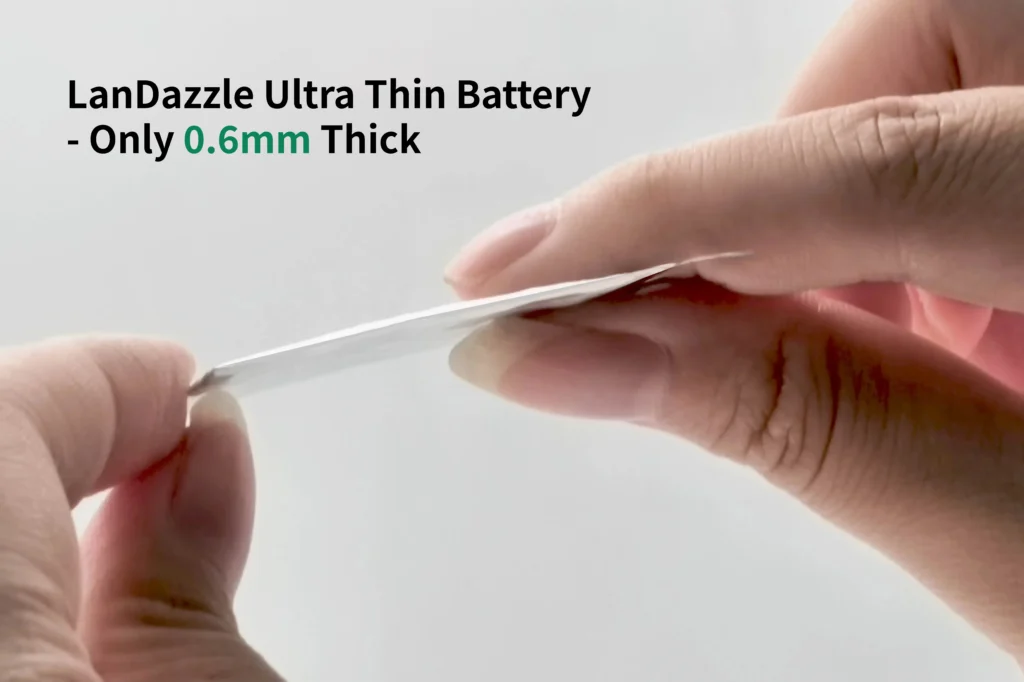
The Real Challenge: How Can the Battery and FPC Work as One System?
In next-generation ultra-thin wearables, the connection between the battery and FPC will also become critical. Traditional electronic devices can use connectors, brackets, and rigid PCBs to manage their internal structure.
But in an ultra-thin patch, there is almost no extra space.
The battery, FPC, sensors, and packaging layers must all connect within a very small area while also dealing with repeated bending. Engineers therefore need to consider several factors at the same time:
- Battery bending radius
- FPC bending areas
- Solder joints and connection points
- Clearance between the battery edge and other components
- Temperature rise during charging and discharging
- Long-term mechanical fatigue
- Extra space for battery expansion
One important point is that a battery is not a completely static component.
As the battery goes through more charge and discharge cycles and is used for longer periods, its thickness may change to some degree. If there is not enough mechanical tolerance inside the device, a prototype that works well in the lab could develop mechanical stress, lower performance, or reliability problems after long-term use.
Therefore, the goal of ultra-thin battery design should be:
The battery should work normally when it is at its thinnest, while remaining safe and reliable when reasonable mechanical changes occur.
“Flexible” Does Not Mean a Battery Can Bend Forever
Many flexible electronics studies have shown that batteries can handle significant mechanical deformation through special structural designs.
For example, a flexible lithium-ion battery inspired by kirigami structures was designed to spread concentrated stress into smaller areas. In dynamic testing, the battery maintained more than 95% of its capacity after over 20,000 cycles. For consumer electronics engineers, this does not mean that every flexible battery can be bent without limits.
When developing a real product, engineers still need to consider: Bending direction, bending radius, bending frequency, pressure points, and real-world usage conditions.
A wearable patch may only experience a few hundred small deformations each day, while smart clothing could face tens of thousands or more mechanical changes over its lifetime.
So, the competition for next-generation batteries will gradually move from “Can we make it thin?” to:
“Can it remain reliable after becoming thin enough for real life?”
The Ultimate Goal May Be to Make Users Forget the Battery Exists
This is perhaps the most interesting part of the ultra-thin battery trend. In the past, wearable devices followed a simple product logic:
Battery → Electronics → User
The battery provides power, the electronic system processes data, and the user wears the device. But future Invisible Wearables may follow a different model:
Skin → Flexible System → Data
The battery will no longer be a clearly visible “module.” Instead, it will become part of a flexible electronic system, quietly providing power to the entire device. This is why ultra-thin batteries are about much more than adding a few more hours of battery life. They may determine whether wearable devices can finally move beyond the physical limits of traditional electronics.
Future medical patches could become so thin that users almost forget they are wearing them. Smart clothing could hide sensors, circuits, and power sources inside the fabric. Health trackers may no longer need a noticeable outer shell. Even products that still look like “electronic devices” today could gradually become flexible interfaces that fit naturally against the human body.
The “Invisible Revolution” in Next-Generation Wearables
Wearable devices have traditionally focused on becoming smaller. The next stage may focus on being thinner, softer, more comfortable, and harder to notice. This change will not happen only in sensors and processors. The components users never see may play an equally important role in making a device truly invisible—especially the battery.
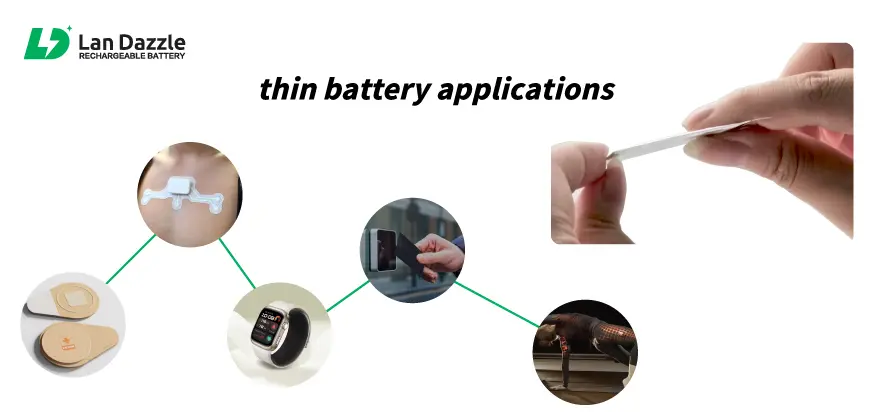
0.5 mm, 1 mm, and 1.5 mm may look like small differences, but for wearable devices, these tiny changes can lead to completely different product designs.
- A thinner battery can enable a thinner patch.
- A more flexible battery shape can make better use of the limited space inside a device.
- And a more reliable flexible structure can allow electronics to move naturally with the body instead of forcing the body to adapt to the device.
So, the competition in future wearable technology may not only be about:
- “Who has smarter AI?”
- “Who has more sensors?”
- “Who has longer battery life?”
There is another, more fundamental question: Who can make electronic devices truly disappear into everyday life? When users start to forget that they are wearing an electronic device, the true era of the Invisible Wearable may finally arrive.
Looking for a battery designed around your next wearable device? Contact our battery engineering team to discuss your requirements.
Email: info@landazzle.com
Whatsapp: +8618938252128