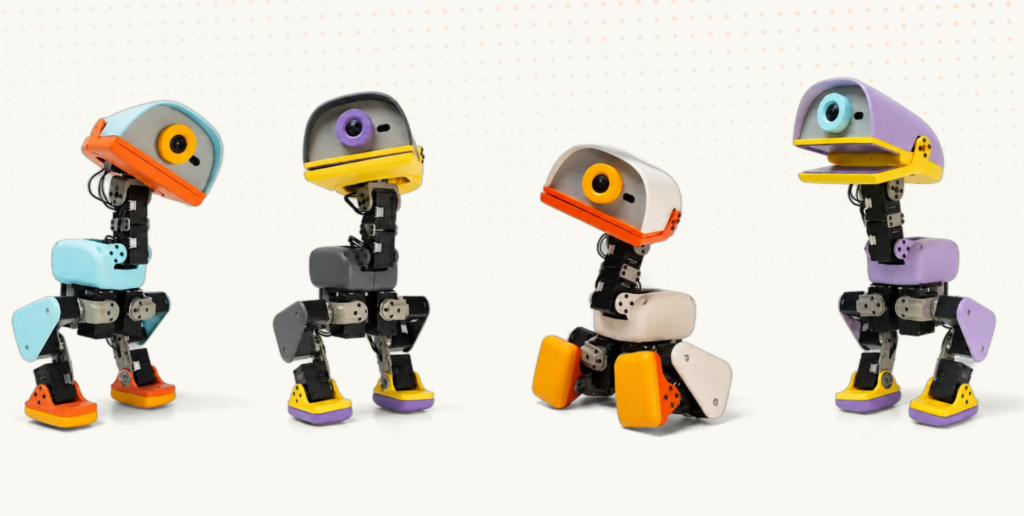
When I first saw Microduck, I thought it looked more like a playful desk toy than a serious robotics platform.
Then I looked a little closer.
The 25 cm-tall duck-like robot from Pollen Robotics, a French robotics company owned by Hugging Face, can walk, sit, crouch, pick up objects with its articulated beak, recover from many common falls, and even roller-skate with an optional accessory. It has 15 motors, a camera, LiDAR, two IMUs, and an onboard computing platform based on Rockchip’s RK3566. It weighs less than 800 grams. (pollen-robotics.com)
And then there was the launch response.
Microduck opened for pre-orders on August 27, 2026, at an introductory price of $399. According to Hugging Face co-founder Thomas Wolf, orders exceeded $1 million within the first six hours and surpassed $2.6 million in the first 24 hours.
For me, the interesting part is not simply that a cute robot sold well. It is what Microduck represents.
From AI That Talks to AI That Acts
For the past few years, much of the consumer AI experience has existed inside screens. We ask a chatbot a question. We generate an image. We use an AI assistant to summarize a document.
Microduck belongs to a different category. It puts AI into a physical system that has to move through the real world.
That distinction matters.
Pollen Robotics describes Microduck as an open-source bipedal robot designed around physical AI and reinforcement learning. Unlike its earlier Reachy Mini, which was built primarily for human-robot interaction, Microduck is focused on movement and physical behavior.
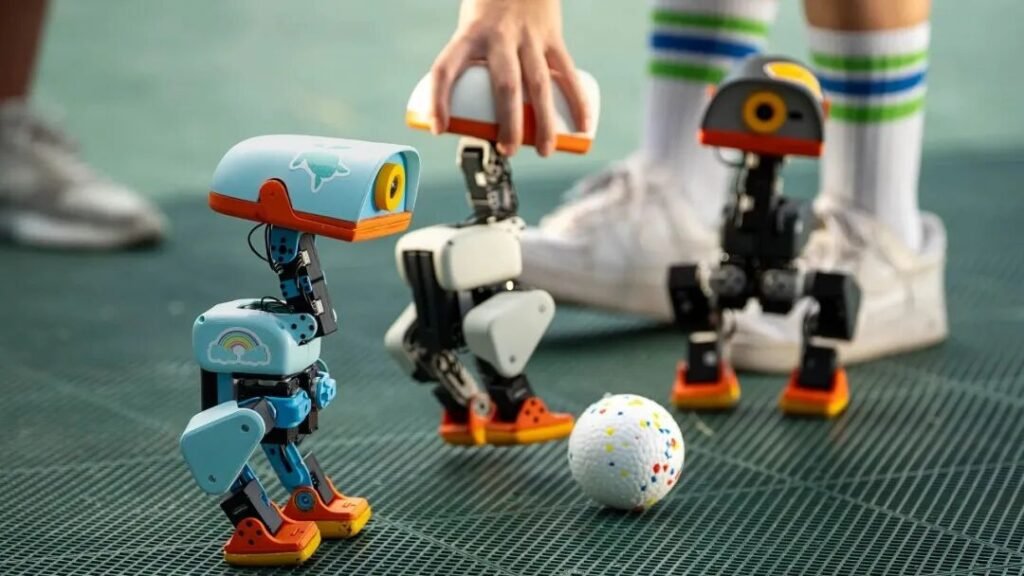
That means developers are not only teaching an AI system what to say or recognize. They can teach it how to move.
A robot can be trained in simulation, tested repeatedly, and then have a learned behavior transferred to the physical machine. Pollen provides an open-source SDK, simulation environment and reinforcement-learning stack as part of this development workflow.
This is where I think Microduck becomes much more interesting than its appearance suggests. The duck is essentially a small, accessible playground for experimenting with physical AI.
Why a Small Robot Is Actually a Big Engineering Challenge
It is easy to underestimate how much engineering is packed into a robot this small. Microduck is only 25 cm tall, but it contains 15 motors, a camera, LiDAR, two IMUs, microphones, a speaker, wireless connectivity and an onboard computing system.
All of those components have to work together inside a very limited physical volume. And unlike a software application, a physical robot cannot simply add more resources without consequences.
- More motors mean more potential movement, but also more energy consumption.
- More sensors can improve perception, but they also add hardware, weight and power requirements.
- More computation can enable more sophisticated behavior, but the processor still has to operate within the robot’s thermal and energy limits.
In other words, once AI gets a body, the physical constraints start to matter just as much as the software.
A robot does not only need to know what it should do. It needs enough energy to actually do it.
The Battery Problem Gets More Interesting as Robots Get Smaller
Microduck uses a removable rechargeable battery with a capacity of 2,600 mAh, and its real-world runtime is around one hour, depending on how the robot is used.
That detail may sound simple, but it highlights a problem that will become increasingly important as physical AI devices get smaller.
Battery design is not only about capacity.
It is also about space, weight, geometry and runtime.
A larger battery may provide more energy, but it also adds weight. In a mobile robot, additional weight can affect motor load and movement efficiency. At the same time, the battery has to share limited internal space with motors, sensors, processors and mechanical structures.
For a robot like Microduck, a removable battery also has a practical advantage: users can recharge or replace the battery without redesigning the entire device. But as future robots become smaller and more tightly integrated, battery placement and shape may become harder to accommodate.
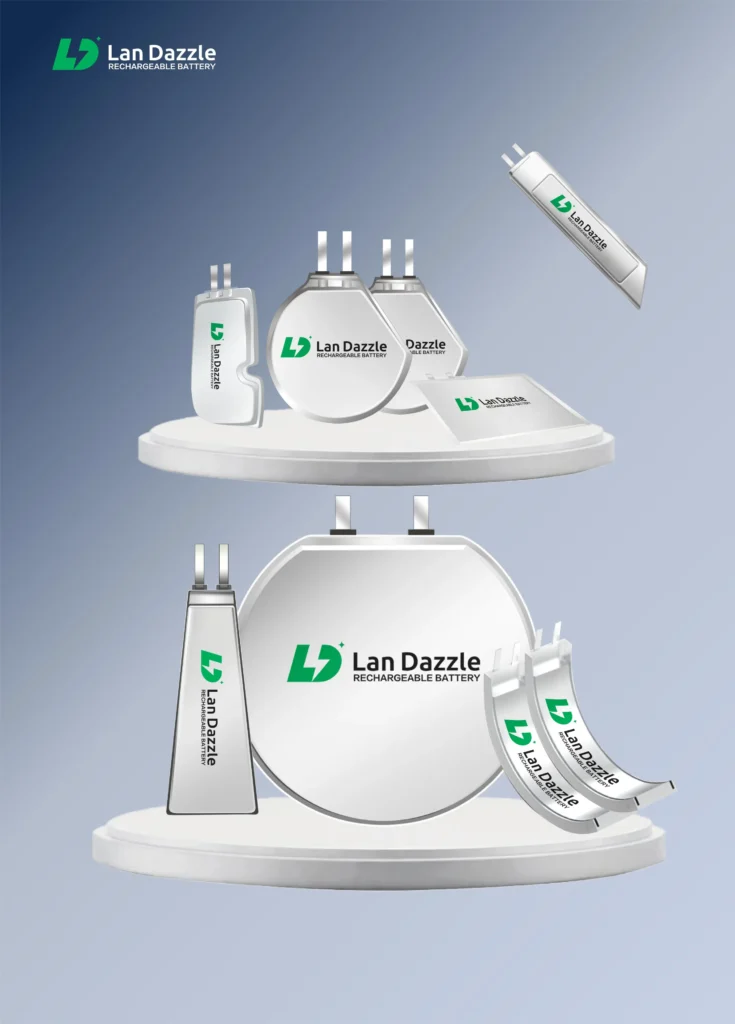
In compact robots, wearable devices and other highly integrated electronics, a conventional rectangular battery may not always make the most efficient use of the available volume. In those cases, custom-shaped lithium batteries can allow engineers to explore geometries such as curved, ultra-thin or irregular-shaped cells that better match the product architecture.
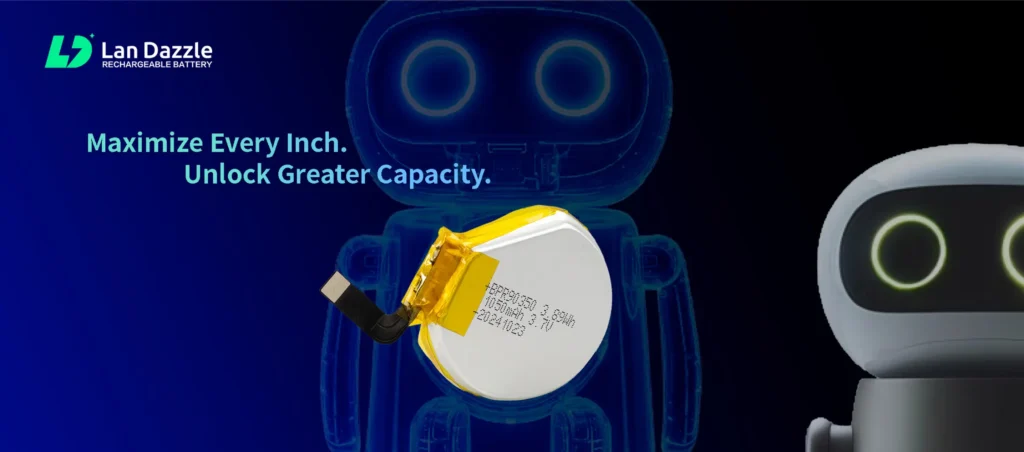
I do not think every robot needs a custom battery. But I do think battery geometry deserves to be considered earlier in the design process when physical space is highly constrained.
As robots become smaller and more capable, the battery can no longer be treated simply as a component that is added after the rest of the product has been designed.
It becomes part of the architecture.
Microduck Shows Where Physical AI Could Be Heading
What excites me most about Microduck is not any single feature. It is the development model behind it.
The robot can already walk, sit, crouch, recover from falls and manipulate simple objects. But those behaviors are only the starting point. The platform is designed so developers can train and share new behaviors rather than treating the robot as a fixed-function consumer product.
That opens up a very different kind of robotics ecosystem.
Imagine a developer teaching one robot a new movement, testing it in simulation, transferring it to the physical machine, refining the behavior and then sharing it with other users.
Suddenly, the robot is not just a product.
It becomes a platform.
And that is an important shift.
We have already seen software platforms become more valuable as communities build applications, models and tools on top of them. Physical AI could follow a similar path, except the output is no longer just information.
It is behavior in the real world.
- A robot learns how to walk differently.
- A robot learns how to recover from a new type of fall.
- A robot learns how to interact with an unfamiliar object.
That is a very different relationship between AI and hardware.
The Duck May Be Small, but the Idea Is Much Bigger
Microduck may look playful, but I think that is part of its appeal. It makes a complicated idea—physical AI—feel approachable.
Instead of looking at a massive humanoid robot in a research laboratory, developers and enthusiasts can put a small robot on a desk and start experimenting.
That lowers the barrier to entry.
And as more developers begin working on physical AI, the engineering challenges will extend beyond models and algorithms. Motors, sensors, processors, thermal management, mechanical design and batteries will all have to evolve together.
For me, that is the more interesting story behind this duck-like robot.
The future of AI may not be limited to systems that can see, hear, talk or generate. It may increasingly include machines that can move, react, recover, learn and physically interact with the world. And when AI moves into the physical world, even something as simple as a battery becomes part of the intelligence story—because the smartest robot still has to have enough energy to move.
As physical AI devices become smaller, battery design matters more. Explore custom-shaped lithium battery options for space-constrained products.
Email: info@landazzle.com
Whatsapp: +8618938252128