Dual-cell architecture, tight internal space, and ultra-thin form factors could reshape lithium-ion battery engineering for foldable devices.
Apple’s first foldable iPhone has not officially arrived yet, but the battery story is already becoming one of the most interesting parts of the product.
The biggest challenge in building a foldable smartphone is not simply making a display bend or fitting a sophisticated hinge into a thin chassis. The battery has to work around both.Recent reports suggest Apple’s rumored foldable iPhone, often referred to as the iPhone Ultra, could use two separate battery cells with reported rated capacities of 1,921mAh and 2,962mAh, giving a combined rated capacity of 4,883mAh. More importantly, iOS 27 beta code has introduced references to multiple “batteries” inside an iPhone, including battery-health and authenticity language referring to individual batteries.
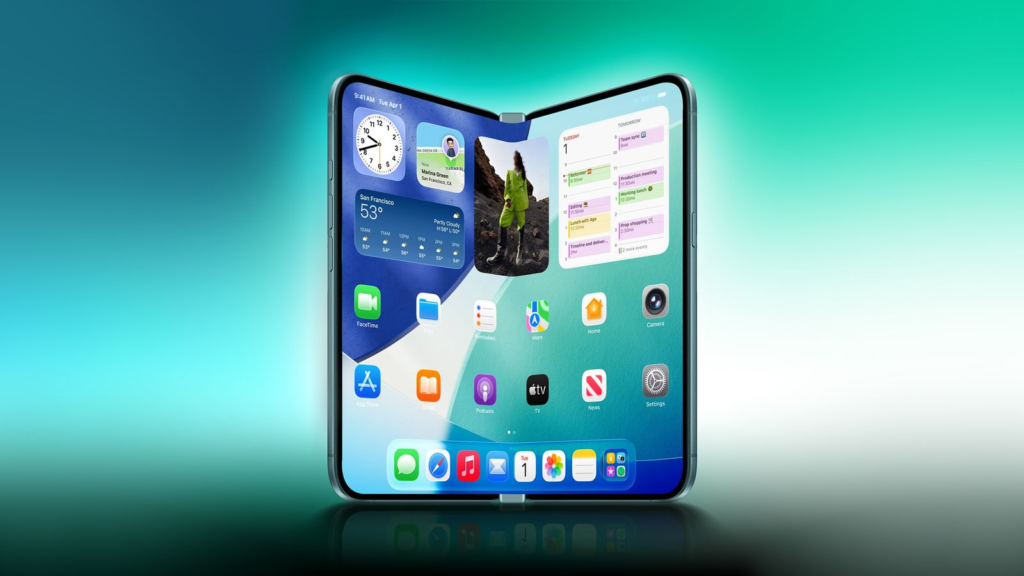
Apple has not confirmed these specifications, but the clues point toward a broader engineering direction: the battery may have to adapt to the device architecture rather than forcing the device architecture to accommodate a conventional battery.
That distinction could matter far beyond one iPhone.
Why Foldable iPhones Cannot Simply Use a Traditional Single Battery
Traditional smartphones give battery engineers a relatively continuous internal space. Even with an L-shaped battery, the goal is mainly to maximize volume while working around the motherboard, cameras, speakers, and antennas. A book-style foldable phone is different. Its central hinge divides the chassis into two sections, forcing the battery to adapt to a much more fragmented internal layout.
1. The Hinge Divides the Available Space
The hinge occupies critical space in the center of the device, while cables and mechanical components need room to move. That makes a single large battery difficult to package efficiently. Samsung’s Galaxy Fold, for example, already uses two separate battery cells, with one located in each half of the device.
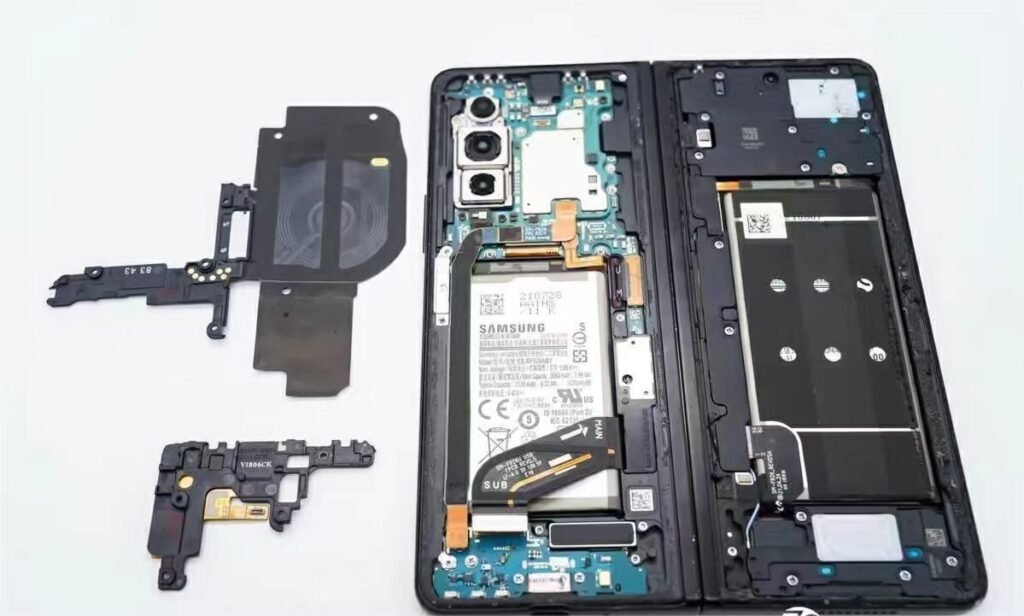
The engineering question therefore changes from how much battery can fit inside the phone to how much usable battery can fit into each available section.
2. Ultra-Thin Design Leaves Little Room for Error
The rumored Apple foldable is expected to be extremely thin when unfolded, with reports suggesting roughly 4.5–4.8mm, although Apple has not confirmed the final specification.
At this thickness, every fraction of a millimeter matters. Battery thickness, pouch construction, protective layers, swelling allowance, and assembly tolerances all become critical.
This makes ultra-thin pouch cells increasingly attractive for foldable devices.
3. Two Displays Increase Power Pressure
A foldable phone combines an outer display with a much larger internal OLED screen.
More display area can mean higher power demand during gaming, video playback, multitasking, or high-brightness use. Apple can offset some of this through more efficient chips, displays, and power-management software, but battery volume remains a physical constraint.
That creates a simple equation:
More screen area → higher power demand → greater pressure on battery energy density.
4. From Irregular Batteries to Distributed Battery Design
Traditional iPhones can use irregular-shaped batteries to work around components on the motherboard.
Foldable devices take this concept further. Instead of fitting one irregular battery around obstacles, engineers may need to place multiple thin battery cells across separate internal zones.
This represents a shift from battery-first packaging to space-first battery engineering—where the battery is designed around the product’s geometry rather than the other way around.
Apple’s Dual-Cell Strategy: Compromise or New Industry Template?
If current reports are accurate, Apple’s reported dual-cell design should not necessarily be viewed as a compromise. It may actually be the most practical way to use the fragmented space inside a foldable phone.
Supply-chain reports suggest a 1,921mAh + 2,962mAh configuration, totaling 4,883mAh. These figures remain unconfirmed, but the unequal capacities make engineering sense: the two halves of a foldable phone do not have identical internal space.
Instead of forcing two identical cells into different compartments, engineers can customize each cell around the available space. This is a major shift from selecting standard battery sizes to designing batteries around the product’s geometry.
The Real Challenge Is Battery Management
Two cells also introduce new challenges. The battery-management system must account for differences in:
- Voltage and capacity
- Internal resistance
- Temperature
- Aging
- Charging and discharge behavior
The two cells may also experience different thermal conditions depending on their proximity to the SoC, charging IC, and other heat-generating components.
In other words, dual-cell hardware requires smarter battery-management software.
That makes the iOS 27 evidence particularly interesting. Recent beta code includes references to multiple “batteries” in Battery Health-related wording. This does not confirm that the feature is specifically designed for Apple’s foldable iPhone, but it does suggest Apple is preparing its software ecosystem to handle multiple internal batteries.
If this architecture reaches production, Apple’s approach could help push distributed battery design from a foldable-phone solution toward a broader industry trend.
Why Apple May Choose Rigid Ultra-Thin Cells Instead of a Fully Flexible Battery
A folding display does not necessarily require a fully flexible battery.
For a mass-market foldable phone, two rigid but ultra-thin pouch cells may be a more practical solution than a battery that physically bends with the display.
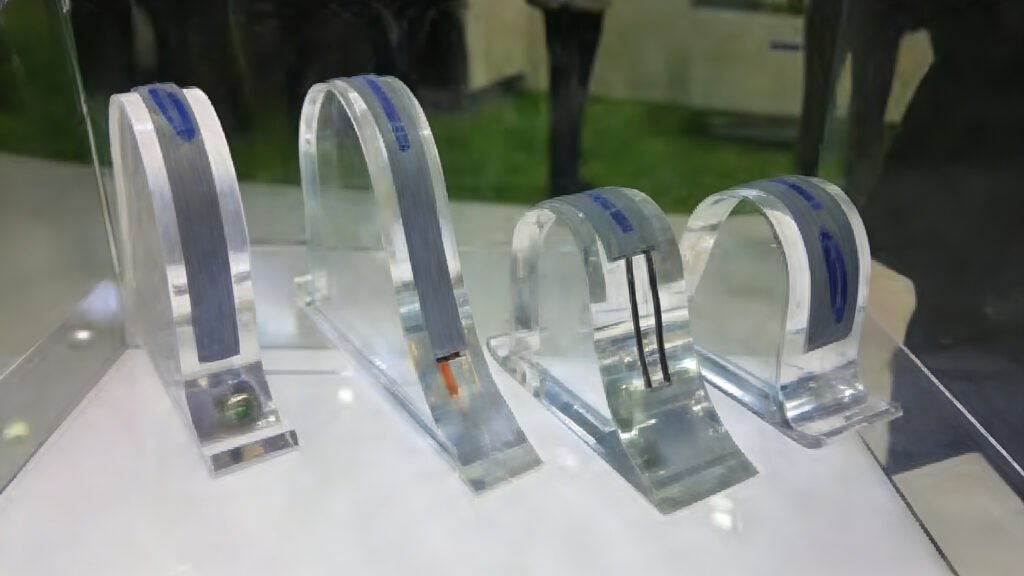
Battery design must balance more than flexibility. Cycle life, internal resistance, swelling, mechanical stability, sealing reliability, and safety all matter. A cell that can bend in a laboratory demonstration still has to meet demanding requirements for long-term consumer use.
This makes a distributed architecture attractive: instead of making the battery itself flexible, engineers can make the battery system flexible at the architecture level by placing multiple thin cells in separate areas of the device.
For foldable hardware, this could be a more realistic bridge between today’s rigid lithium-ion technology and the fully flexible batteries of the future.
What This Means for the Future of Custom Battery Design
The bigger story is not just about Apple. It is about what happens when consumer electronics stop being rectangular.
As devices become smaller, thinner, and more specialized, battery design is moving in the same direction. Smart rings need curved cells, AI glasses need narrow batteries, medical patches need ultra-thin cells, and foldable phones need distributed battery architectures.
The key question is no longer simply: How much battery capacity can we get?
It is: How much usable energy can we fit into the available space?
Energy Density Only Matters When the Battery Fits
A standard rectangular cell may offer excellent energy density but still waste valuable space inside a compact device. An irregular-shaped cell designed around the available cavity can sometimes provide more usable energy at the system level, even with similar cell chemistry. That is why volumetric energy density (Wh/L) can be more useful than comparing mAh alone for space-constrained products.
Custom Battery Design Starts With the Mechanical Envelope
In practical battery development, engineers should first define the physical constraints:
- Maximum thickness, length, and width
- Available internal volume
- Curved or irregular areas
- Nearby components and antenna zones
- Swelling allowance
- Peak current and operating temperature
- Required cycle life
- Assembly and packaging requirements
Only then can the cell’s chemistry, electrode design, and capacity be optimized realistically. For ultra-thin batteries, reducing thickness is not simply a matter of making a conventional cell thinner. Electrode loading, stacking, pouch construction, sealing, and manufacturing tolerances all become increasingly important.
Beyond Foldable Smartphones
The same design philosophy applies to foldable tablets, AR/VR headsets, smart rings, AI glasses, medical wearables, robotics, and drones. These products all face the same fundamental constraint: the battery has to compete for space with other critical components.
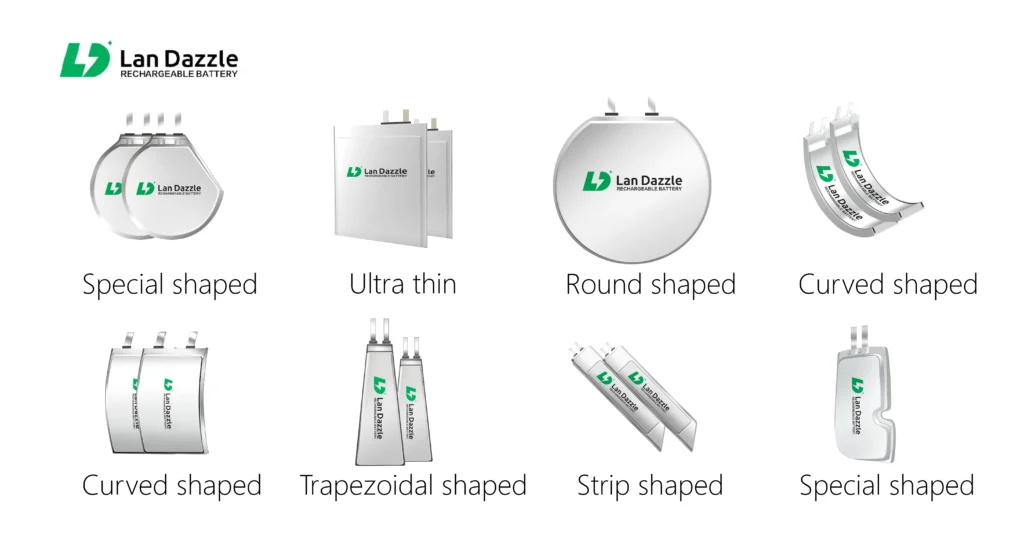
The result is a clear industry trend: The battery has to follow the product geometry—not the other way around. That is where custom-shaped and ultra-thin lithium-ion batteries can become increasingly important in next-generation electronics.
The Remaining Engineering Barriers
The dual-cell design solves the packaging challenge, but it also creates new engineering issues.
- 1. Cell Matching and Aging
Two cells can age differently due to heat, current, and manufacturing differences. The battery system therefore needs to monitor each cell separately.
- 2. Thermal Management
In thin devices, batteries sit close to processors, charging chips, and displays. Uneven heat can cause one cell to age faster, making thermal design especially important.
- 3. Ultra-Thin Manufacturing
Thinner batteries are harder to manufacture consistently. Electrode alignment, stacking, sealing, and irregular shapes can all affect production quality.
- 4. Runtime vs. Form Factor
The rumored 4,883mAh capacity of Apple’s foldable may be lower than some conventional iPhone models, although these figures remain unconfirmed.
More importantly, battery capacity alone does not determine runtime. Apple may need to combine higher energy density with more efficient chips, displays, modems, and power management.The battery is therefore becoming an important part of the overall device design.
Conclusion: Custom Batteries Could Become the New Standard
Apple’s foldable iPhone could show that future devices may need batteries designed around the shape of the product, rather than the other way around. Dual-cell designs can better use fragmented internal space, while ultra-thin and custom-shaped cells can reduce wasted space.
This approach could also benefit foldable tablets, AR glasses, VR headsets, smart rings, medical wearables, and robotics. The future of batteries may not depend on chemistry alone. Cell design, geometry, packaging, thermal management, and device architecture will increasingly need to work together.
For manufacturers, the key lesson is simple: the battery should be part of the product design from the beginning—not the last component fitted into the remaining space.
Looking for a Battery That Fits the Product, Not the Other Way Around?
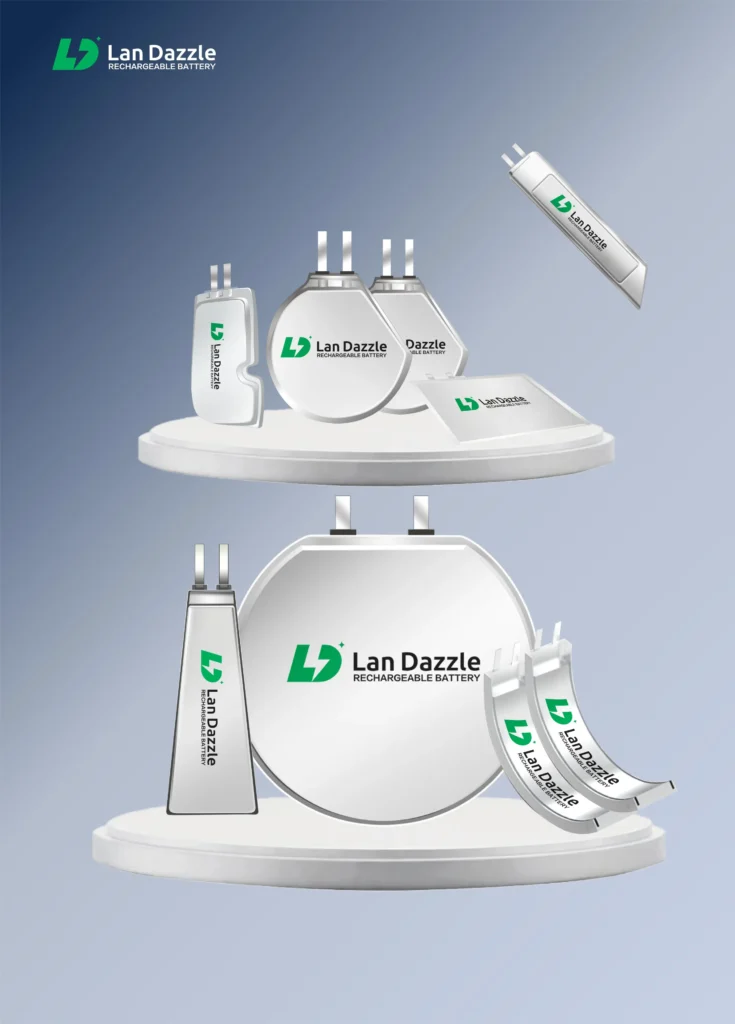
For space-constrained electronics, LanDazzle develops custom lithium-polymer battery solutions around specific mechanical envelopes, including ultra-thin, narrow, curved, and irregular-shaped designs.
The right starting point is not just the target mAh. It is the available space, required thickness, operating current, thermal environment, and product geometry.
If you are developing a foldable device, smart glasses, smart ring, medical wearable, robotics product, or another compact electronic device, a custom battery architecture can help turn otherwise unusable internal volume into usable energy storage.
Email: info@landazzle.com
Whatsapp: +8618938252128