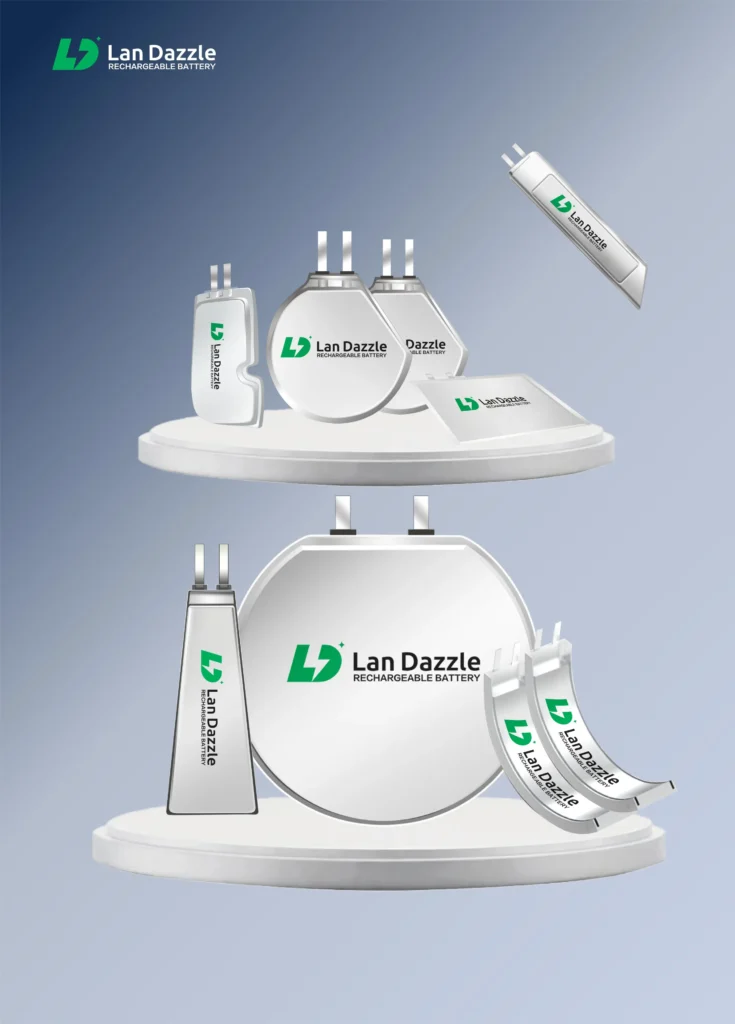
In recent years, smart glasses, smart rings, smart watches, and other wearable devices have entered a stage of rapid development. With the growth of artificial intelligence, spatial computing, and human-computer interaction technologies, new-generation wearable devices are integrating more and more functions, including AI assistants, visual recognition, real-time translation, and augmented reality (AR) displays.
However, as functions continue to increase, a long-standing challenge is becoming more obvious:
Devices need more powerful computing capabilities, but users still want them to remain lightweight, comfortable, and natural to wear.
In this situation, batteries have become one of the key factors affecting the development of wearable devices.
Recently, the European Union adjusted some requirements related to removable batteries in its battery regulations, allowing highly integrated devices such as smart glasses to receive certain exemptions. This change is not only a regulatory adjustment but also reflects a shift in future wearable device design:
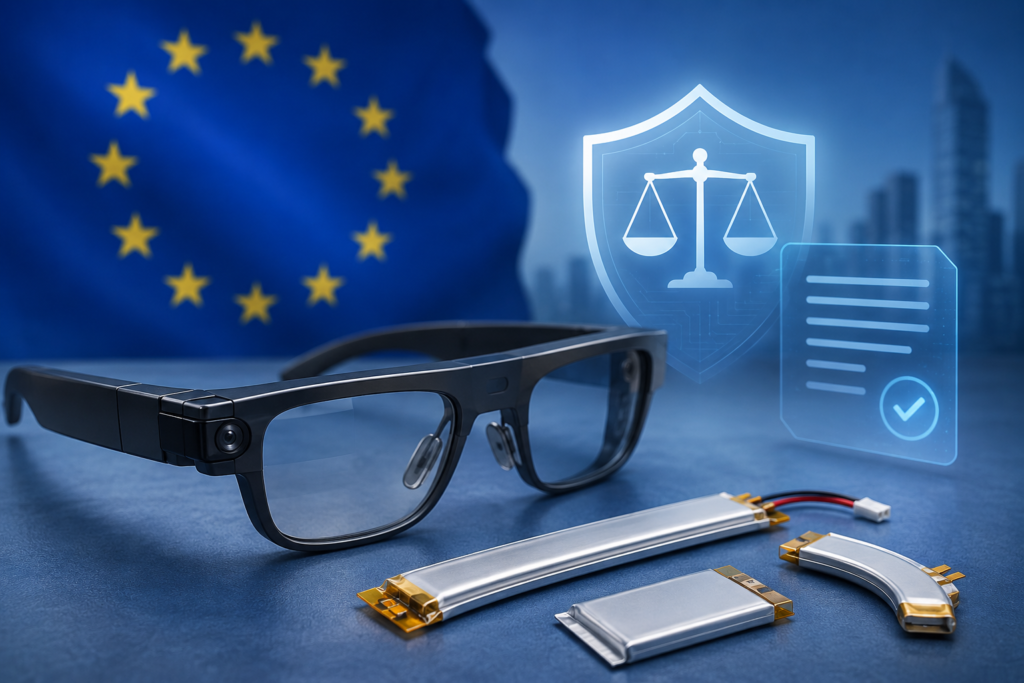
As product designs continue to evolve, batteries also need to move from standardized components toward highly customized solutions.
1. The Core Logic Behind the EU Battery Exemption: Balancing Safety and Technology
The main goal of the EU battery regulations is to improve battery efficiency, reduce electronic waste, and promote more sustainable product designs.
However, for small wearable devices such as smart glasses, simply requiring users to remove and replace batteries themselves does not fully match current technology development.
This exemption does not mean reducing environmental goals. Instead, it represents a more practical balance between environmental protection, safety, and product innovation.
The special structure of smart glasses requires built-in batteries
Unlike smartphones and tablets, smart glasses have extremely limited internal space.
The temples of a pair of smart glasses may only be a few millimeters wide, but they need to contain many components, including batteries, processors, cameras, microphones, speakers, antennas, and various sensors.
Under such space limitations, if manufacturers are forced to use traditional removable battery designs, the product would require additional battery compartments, mechanical structures, and protective space.
This would increase the size and weight of the device while also affecting waterproofing, dust resistance, and overall reliability.
For smart glasses that need to be worn for long periods, increased weight and size directly affect user comfort.
In addition, lithium batteries have high energy density. Frequent battery replacement by ordinary users may create safety risks, such as battery damage, short circuits, or even thermal runaway.
Therefore, for highly integrated devices like smart glasses, professional battery replacement and maintenance may be safer than user-operated battery replacement.
2. New Design Freedom from the Exemption: Wearable Devices Enter a New Era of Innovation
The adjustment of smart glasses battery requirements provides manufacturers with more freedom in product design.
In the past, product designs often needed to be built around standard battery sizes. However, the future direction of wearable devices is changing:
Batteries will no longer be a limitation on product design. Instead, they will become an important technology that helps products achieve new forms.
From standard batteries to product-specific customized designs
One of the biggest challenges for smart glasses is how to achieve longer battery life within limited space.
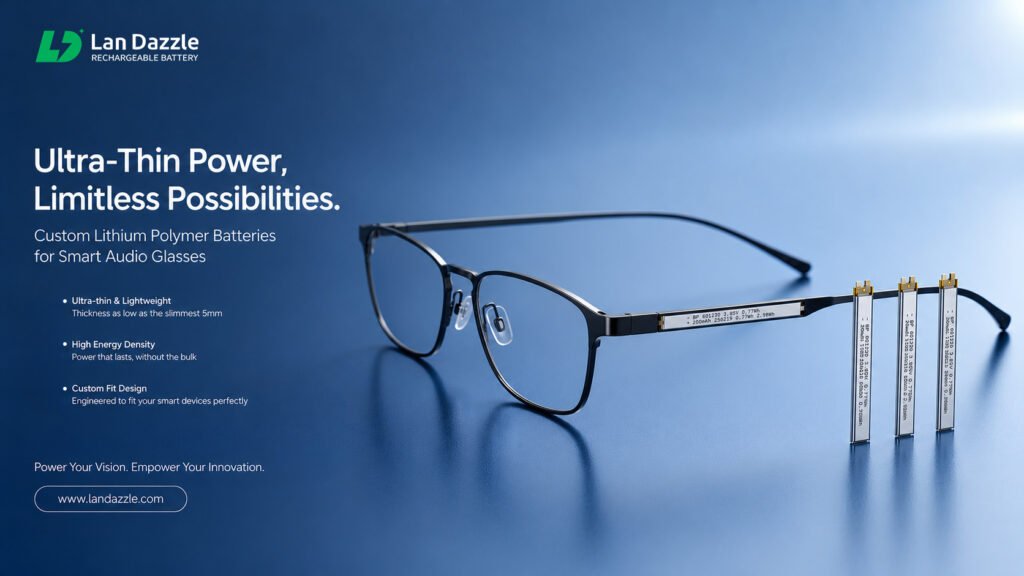
Traditional rectangular batteries often cannot fully use the irregular space inside wearable devices. Customized batteries, however, can be designed according to the product structure, such as narrow-long batteries, curved batteries, and ultra-thin batteries.
This design approach reduces wasted space and allows the battery to better integrate with the device structure.
For example, in smart glasses, the battery can be customized according to the size and shape of the temple. This helps maintain a lightweight design while increasing available capacity and providing more stable power support for high-power components such as cameras and AI chips.
Integrated designs improve product reliability
Future high-end wearable devices will focus more on all-day usage experiences.
Whether used for sports, outdoor activities, or healthcare applications, devices need to provide better durability.
Built-in battery solutions allow manufacturers to create a more complete and integrated structure, improving water resistance and dust protection while reducing potential failures caused by mechanical connections.
This is why many premium smart devices still choose built-in battery designs.
3. Customized Battery Design: From “Fitting Products” to “Defining Products”
Behind the EU smart glasses battery exemption, the deeper trend is:
Future wearable devices need to move from standardized batteries toward deeply customized battery solutions.
In the past, batteries were usually considered only as power supply components inside a product.
After the product design was completed, manufacturers would simply select a battery that matched the available space.
However, for next-generation wearable devices, this approach is changing.
Battery performance, shape, and placement will directly influence the final product design.
Custom-shaped designs unlock more space value
Smart rings, smart glasses, and medical wearable devices all share one common feature:
Their internal space is highly irregular.
Therefore, future batteries need to go beyond traditional rectangular designs and improve space utilization through customized shapes.
For example:
- Smart glasses require narrow-long or curved batteries;
- Smart rings require batteries that fit circular spaces;
- Medical devices require special battery sizes based on wearing positions.
Customized battery designs allow device manufacturers to fully utilize every available space.
High-performance batteries meet the growing demand of AI devices
AI features are driving smart glasses into a new stage of development.
Future devices may support:
- Real-time visual recognition;
- AI voice interaction;
- Real-time translation;
- AR displays.
All these functions will increase power consumption.
However, consumers will not accept heavier and bulkier glasses.
Therefore, the challenge is not simply adding more battery capacity, but increasing energy density within limited space.
This requires batteries with:
- Higher capacity;
- Lower internal resistance;
- Stronger discharge capability;
- Better cycle life.
4. The Future Competition Among Battery Manufacturers: Technology Depth Determines Opportunities
As wearable devices enter a period of rapid growth, competition among battery companies is also changing.
In the future, relying only on standardized manufacturing capabilities will no longer be enough to meet market demands.
Competitive battery suppliers need to have capabilities in materials, manufacturing processes, and joint product development.
Material innovation improves battery performance
High-performance wearable batteries require continuous improvements in material systems to increase energy density while controlling battery expansion, safety, and cycle life.
For example, new anode materials, high-voltage battery systems, and advanced electrolyte technologies will become important development directions for future batteries.
Precision manufacturing supports miniaturized devices
Small devices require much higher manufacturing accuracy.
Ultra-thin batteries, custom-shaped batteries, and high-rate batteries all require precise control of:
- Cell structures;
- Electrode processing;
- Stacking processes;
- Packaging technology.
Only manufacturers with advanced precision manufacturing capabilities can achieve large-scale production of complex battery designs.
From suppliers to technology partners
In the future, excellent battery manufacturers will not only provide a battery model.
They will participate throughout the entire product development process.
From early structural design, capacity planning, and performance testing to mass production optimization, battery companies need to work closely with device manufacturers to solve product challenges together.
5. Future Outlook: Customized Batteries Will Reshape the Wearable Device Industry
The EU smart glasses battery exemption is only one example of a larger industry change.
With the development of AI and smart hardware, more products will face similar challenges:
More powerful functions, but smaller product sizes.
In the future, emerging products such as smart glasses, smart rings, medical wearables, and miniature robots will increasingly depend on customized battery solutions.
The development direction of battery technology will gradually shift from:
“Making bigger batteries”
to:
“Creating more energy in smaller spaces.”
This means batteries will no longer be hidden components. Instead, they will become a key technology that defines product experiences.
Conclusion: Customized Batteries Are Becoming a Core Advantage for Next-Generation Wearable Devices
The EU smart glasses battery exemption sends an important signal:
Future wearable devices need to find a new balance between safety, sustainability, performance, and user experience.
For highly integrated products such as smart glasses, the key is not simply making batteries replaceable. The real goal is to achieve safer, higher-performance, and longer-lasting power solutions within limited space.
LanDazzle focuses on the research, development, and manufacturing of customized lithium polymer batteries. We provide high-performance battery solutions for smart glasses, smart rings, medical devices, robotics, and other applications, including ultra-thin LiPo batteries, custom-shaped batteries, curved batteries, and high-rate batteries.
If your product requires a lighter, thinner, and higher energy density customized battery solution, feel free to contact us. Our engineering team is ready to explore the right battery design for your application.
Email: info@landazzle.com
Whatsapp: +8618938252128