Table of Contents
Today, electronic products are getting smaller and smaller, making power solutions more important than ever. Whether it’s wearable health monitors, smart door locks, drones, or IoT sensors, designers face the same problem at the start: less and less space, but higher and higher demands for batteries.
Devices need batteries that are lighter, thinner, stable, safe, and long‑lasting. In real engineering, not many solutions can meet all these requirements at the same time. That is why small LiPo batteries are widely used in these applications.
Small LiPo batteries are made for situations where space is limited but performance cannot be compromised. They are thin and have high energy density, providing enough steady power even in very small sizes. More importantly, when designed properly, they do not sacrifice safety or service life.
As a battery engineer with many project experiences, I must stress one point:
You cannot just pick any small LiPo battery and use it. The right one for you can only be chosen after checking several things: voltage, capacity, size, discharge performance, and protection design.
What is a Small Lipo Battery?
Technically speaking, a small LiPo battery is a small lithium‑polymer battery. It belongs to the lithium‑ion battery family but has a different structure. Unlike traditional lithium‑ion batteries that use liquid electrolyte, LiPo batteries use solid or gel‑like polymer electrolyte. This structural difference gives LiPo batteries much more freedom in shape design.
In real engineering, these batteries can be made very thin and light. They are no longer limited to fixed cylindrical or square metal cases. For this reason, small LiPo batteries are perfect for products with limited space, strict weight limits, and complex shapes — such as wearable devices, drones, and all kinds of small electronic devices.
What Are the Different Types of Small LiPo Batteries?
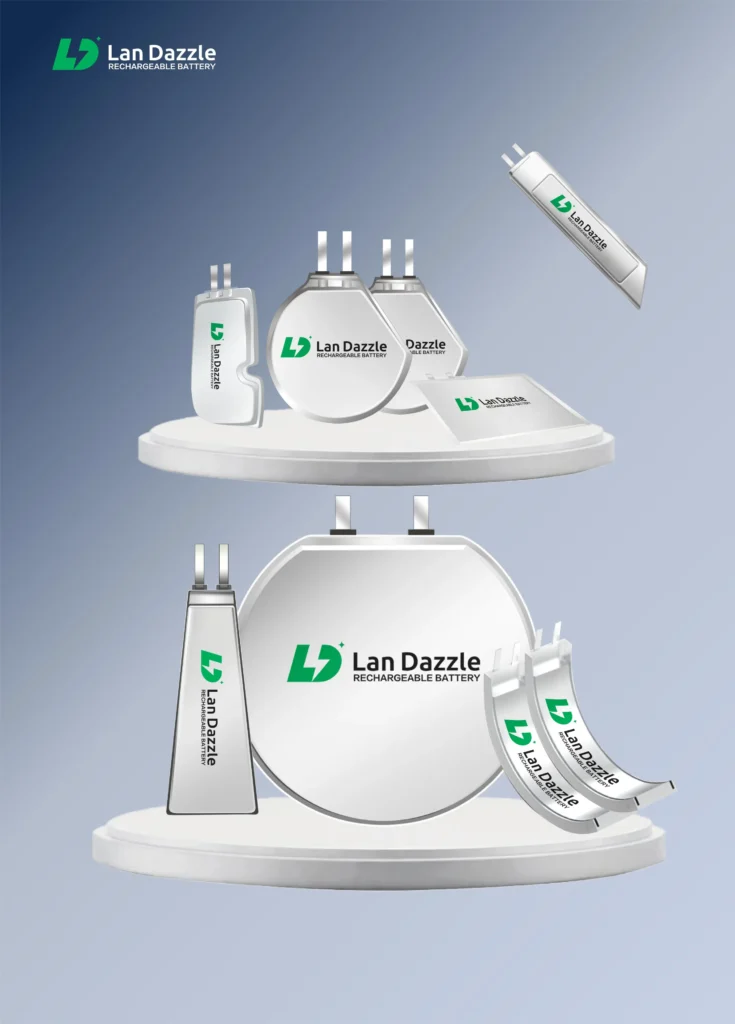
Although LiPo batteries are similar in chemical makeup, small LiPo batteries come in many different shapes and structures for actual use. Different products have completely different battery requirements. Understanding these common types will help you make better choices during the design stage.
1. Ultra‑thin LiPo batteries
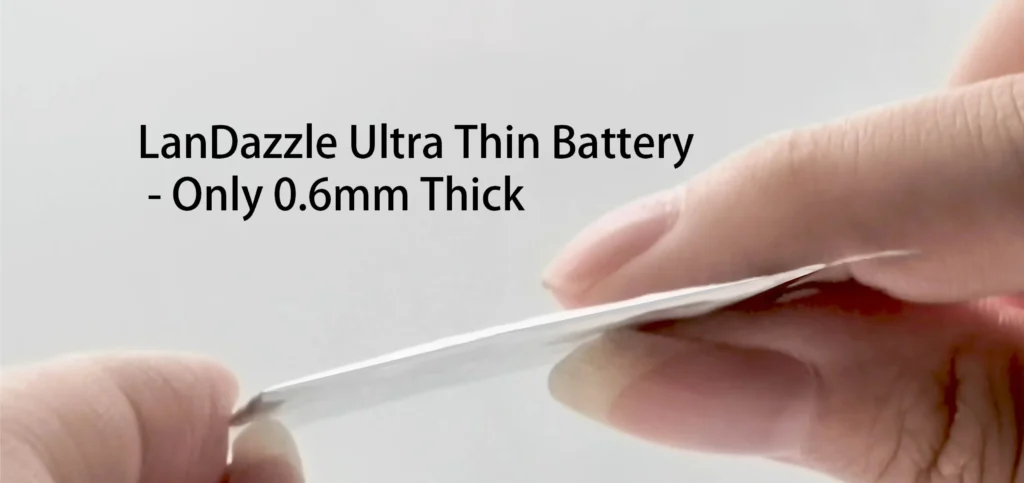
These batteries are designed for products with extremely limited space. They are used in applications very sensitive to thickness, such as smart cards, RFID tags, and medical patches.
With advanced manufacturing, these batteries can be as thin as 0.5 cm or even thinner. It is not easy for engineers to keep power stable at such a small thickness. But when chosen and designed properly, ultra‑thin batteries offer clear advantages in being slim and flexible.
2. Mini / micro LiPo batteries
These batteries are almost standard in wireless earphones, tiny sensors, and wearable tracking devices. Although they are small in size, good material choices and structure design still give them high energy density and steady discharge performance. That is why small LiPo batteries are the top choice for many consumer electronics.
3. Small LiPo battery packs
For drones, remote‑controlled models, and small robots, batteries need to do more than just work — they need to handle heavy loads. High‑discharge small LiPo battery packs can support discharge rates of 20C up to 100C. They provide large amounts of current quickly for motor startup and high‑speed operation.
With good design, the battery temperature and performance stay within safe limits.
4. Custom‑shaped small LiPo cells
In real projects, many products have irregular internal spaces — curved surfaces, rounded corners, or non‑standard shapes.
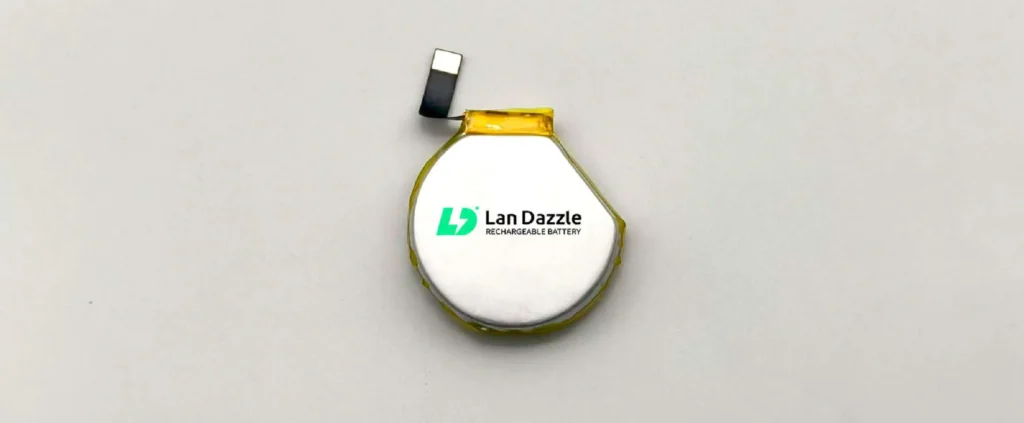
Standard batteries often cannot fit in these spaces. Custom‑shaped small LiPo batteries are made for exactly these situations. By balancing size, shape, and capacity, these batteries make the most of limited space without losing safety.
Key Factors to Consider When Choosing a Small Lipo Battery
Many people think choosing a battery only requires matching the voltage and fitting the size. But in real engineering, this way of thinking can easily cause hidden problems. The following factors must be carefully evaluated before finalizing your battery solution.
1. Voltage and Capacity Matching
Most small LiPo batteries have a nominal voltage of 3.7V per cell, which is the most common and widely used standard. If your device needs higher voltage, you can connect batteries in series to reach 7.4V, 11.1V, and so on.
Capacity is measured in mAh and directly affects how long your device can run. For example, a 500mAh battery can power a 100mA load for about 5 hours under ideal conditions.
However, higher capacity usually means a larger and heavier battery. You need to find a good balance between battery life and product design.
2. Size and Weight
In small devices, the battery is often one of the last parts to be placed, but it is also one of the most important. A mismatch in thickness, length, or width can ruin the whole structure. This is why custom small LiPo batteries are becoming more popular. Designed to fit your product, they can fit perfectly inside and keep weight low. This is especially important for wearable and handheld devices.
3. Discharge Rate (C‑rating)
The discharge rate determines how much current the battery can provide at one time. A higher C‑rating means stronger instant power output, which is very important for high-power devices like drones and robots. Here is a simple example:
A 500mAh 20C battery can continuously discharge up to 10A.
Choosing the wrong C‑rating can lead to overheating, voltage drops, or unstable performance.
4. Safety and Protection Design
No matter how small the battery is, safety always comes first. Small LiPo batteries usually need a PCM or BMS protection circuit to prevent overcharging, over-discharging, short circuits, and overheating.
In addition, reliable manufacturers perform tests such as UN38.3, CE, and RoHS to ensure safe transportation and use. In mass production, every qualified small LiPo battery should pass full protection tests and aging tests.

Why Custom Small LiPo Batteries Are the Smart Choice?
During the development of compact electronic products, every millimeter of space represents real cost. Standard batteries are convenient, but they often cannot perfectly match product requirements. This is why more and more engineers are turning to custom solutions.
1. Better fit for product structure
Custom LiPo batteries can be designed into almost any shape based on your product casing. Ultra-thin cells, curved batteries, and tiny square structures are all possible.
2. More reasonable electrical performance
By customizing voltage, capacity, and discharge rate, the battery’s working profile can better match the device’s actual power needs. The result is higher efficiency, more stable performance, and longer service life.
3. More controllable safety and reliability
Custom batteries can integrate protection boards, temperature sensors, and connector designs as needed. They can also pass cycle life, high/low temperature, and vibration tests to ensure stable performance in real use.
4. Higher integration efficiency and brand consistency
From wires and connectors to labels and logos, custom solutions fit directly into the production process, reduce assembly issues, and help make products more distinctive.
How LanDazzle Helps You Choose the Right Battery
Choosing the ideal small LiPo battery for your product can be complex — but with the right partner, it becomes effortless. LanDazzle specializes in designing and manufacturing custom LiPo batteries that perfectly match your technical, mechanical, and performance requirements. Our team works closely with clients from concept to production to ensure every battery solution is optimized for efficiency, safety, and reliability.
1. Professional Consultation and Engineering Support
Our engineers start by understanding your device’s specifications — including voltage, current draw, size constraints, and operating conditions. From there, we recommend the most suitable 3.7V LiPo cell or custom battery pack configuration to ensure your product performs exactly as intended.
2. Advanced Design and Prototyping
We use precise modeling and simulation tools to create tailored LiPo battery solutions that fit seamlessly into your product’s structure. With rapid prototyping capability, you can quickly validate performance, fit, and thermal stability before mass production.
3. High-Quality Manufacturing and Testing
Every battery is built under strict quality control using premium-grade lithium polymer cells. We perform multiple safety and reliability tests — including UN38.3, CE, and RoHS certifications — to ensure each battery meets international standards.
4. End-to-End Customization and Global Delivery
From connector types and protection circuits to labeling and packaging, we offer full customization. Whether you need a mini LiPo pack for a wearable device or a compact battery module for a drone, our production facilities can scale to meet your needs with consistent quality and timely delivery worldwide.
Conclusion
Selecting the right small liPo battery is one of the most critical steps in developing a successful electronic product. From understanding voltage and capacity to evaluating discharge rate, size, and safety, every detail plays a key role in ensuring your device performs at its best. Off-the-shelf batteries might work for some applications, but when precision, space optimization, and reliability matter most, a custom LiPo battery is the smarter choice.
We combine deep technical expertise with advanced manufacturing capabilities to deliver custom battery solutions that meet your exact needs. Whether you’re designing a wearable device, a drone, or a smart IoT sensor, our team ensures that each battery is engineered for maximum safety, durability, and performance.
Email: info@landazzle.com
Whatsapp: +8618938252128