Table of Contents
According to related test data, under the same size specifications: 150630 (1.5T × 6.0W × 30.0L mm)
The capacity of a curved steel-can battery is approximately 26mAh (4.4V), while the capacity of a curved pouch battery is approximately 22mAh (4.4V). Compared with the pouch design, the steel-can battery achieves around 20% higher capacity.
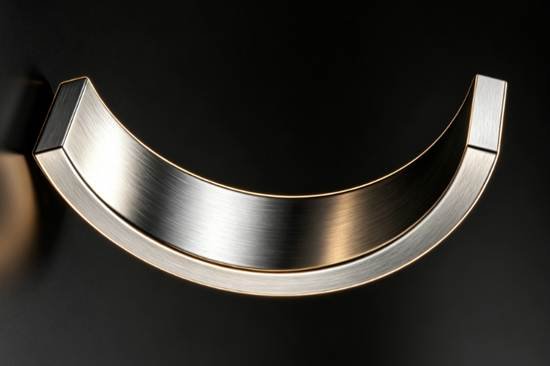
For smart rings, where internal space is extremely limited, this means longer battery life with the same size or a smaller product size while maintaining the same battery life.
In recent years, smartwatches have been one of the core products in the wearable device market. However, a much smaller product has started to attract increasing attention — the smart ring.
Compared with smartwatches, the biggest advantage of smart rings is their lightweight design and comfortable wearing experience. They do not take up wrist space, and unlike smartphones or watches, they create less burden during daily use. Instead, they fit into everyday life like a normal piece of jewelry.
Today, companies including Samsung Electronics, Oura Health, Huawei, Xiaomi, and RingConn have already entered the smart ring market. The competition is moving beyond basic health tracking and is shifting toward AI-powered health management, continuous data collection, and more natural human-device interaction.
According to market research reports, the global smart ring market is expected to continue growing rapidly in the coming years, with an estimated annual growth rate of more than 20%. The main factors driving this growth include:
- Growing demand for personal health management
- The rapid development of AI health services
- Increasing consumer demand for lightweight and comfortable wearable devices
However, behind this tiny ring lies a major engineering challenge: How can we fit a battery into an extremely limited space while still ensuring enough safety and battery life? This has become one of the key challenges for the next generation of smart rings.
1. The Biggest Challenge of Smart Rings: Achieving Longer Battery Life in a Millimeter-Level Space
The biggest difference between smart rings and smartwatches is that smart rings have much more limited internal space.
Inside a typical smart ring, multiple components need to fit into a very small area, including:
- Health monitoring sensors
- Bluetooth communication modules
- Control chips
- Power management systems
- Rechargeable batteries
All these components compete for the same limited space
From the user’s perspective, a smart ring needs to be:
- Small enough for comfortable daily wear
- Lightweight enough to avoid feeling like a foreign object
- Long-lasting enough to reduce frequent charging
- Capable of providing continuous health monitoring
However, these goals naturally conflict with each other.
A larger battery can provide longer battery life, but it also increases the size and weight of the ring. A smaller battery helps maintain a slim and lightweight design, but it may not provide enough power for continuous operation.
Currently, smart rings on the market have already made some progress in this area. For example, Samsung Galaxy Ring can provide up to around 7 days of battery life depending on the ring size, according to official specifications. Oura Ring also achieves multi-day usage through a highly integrated design.
However, as future smart rings add more advanced features, such as:
- More accurate health sensors
- AI-powered data analysis
- 24/7 body condition monitoring
Traditional battery designs will become increasingly difficult to meet these requirements.
The future development of smart rings requires more than just smaller batteries. It requires new battery technology that can better adapt to the unique shape and limited space of these devices.
2. Why Are Traditional Pouch Batteries Difficult to Meet the Needs of Smart Rings?
Currently, most consumer electronic devices use standardized battery designs, such as rectangular pouch batteries, hard-case batteries, or cylindrical batteries. These battery types have mature manufacturing processes and relatively low costs, making them suitable for products with more available internal space, such as smartphones and power banks.
However, smart rings are completely different. The internal space of a ring has a clear circular and curved structure, making it difficult for traditional rectangular batteries to fully use the available space. As a result, some smart rings on the market have started using curved pouch battery solutions.
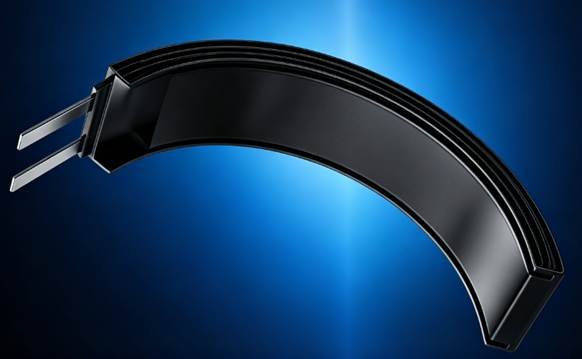
Pouch batteries have a certain level of flexibility and can be bent to match product designs. However, for extremely small devices like smart rings, they still face several challenges.
1) Limited Space Utilization
Pouch batteries use aluminum-plastic film packaging, and the packaging process requires additional space for:
- Top sealing areas
- Side sealing edges
- Folding areas
These areas do not store energy but still take up valuable internal space. For regular electronic devices, this wasted space has a limited impact. However, for smart rings, every millimeter matters.
2) Challenges in Long-Term Cycling Reliability
Smart rings are designed to be worn close to the human body for long periods, making safety and reliability extremely important.
Due to their flexible structure, pouch batteries may face potential issues during long-term charging and discharging cycles, including:
- Structural deformation
- Slight swelling after repeated cycles
- Mechanical stress during assembly
If the battery is permanently fixed inside the ring, repair and replacement can also become more difficult if problems occur.
3) Product Lifetime vs. Battery Lifetime Mismatch
As high-value consumer electronic products, smart rings are expected to provide long-term use.
However, in traditional designs, the battery is usually fully sealed inside the device. Once battery performance declines, repairing or replacing it becomes very challenging.
Therefore, future smart rings require not only higher energy density, but also more reliable and flexible battery structures that can better match the unique design of these devices.
3. Curved Steel-Can Batteries: Redefining Battery Design for Smart Rings
To solve these challenges, a new battery technology direction is gaining attention:
Curved Steel-Can Battery.
Unlike traditional pouch batteries, steel-can batteries use a metal casing for protection, providing higher structural strength and better reliability. The biggest advantage of this technology is that the battery can actively adapt to the device design, instead of forcing the device to adapt to the battery.
Higher Space Utilization, More Available Capacity
The steel-can structure can eliminate some sealing and folding areas that are required in pouch batteries, improving the use of internal space.
4. How Does Steel Can Structure Improve the Smart Ring Experience?
Besides higher capacity, steel-can batteries offer another important advantage:
Stronger structural stability.
Smart rings experience various stresses during daily use, including:
- Pressure caused by finger movement
- Impact and friction
- Environmental changes during long-term wear
The steel-can structure improves the overall strength of the battery and reduces the risk of deformation.
At the same time, it creates more possibilities for smart ring design.
Lighter and More Comfortable: Higher space utilization allows manufacturers to create more efficient designs within a limited volume, making smart rings feel more like regular jewelry.
Longer Battery Life: The increased battery capacity can support more health monitoring features while reducing the need for frequent charging.
More Flexible Product Structures: Steel-can batteries can also be developed into removable designs, improving repairability and replacement convenience.
This will become increasingly important as smart rings evolve into long-term wearable devices.
5. The Future Competition of Smart Rings Is Not Only About Chips and AI, but Also Battery Innovation
In the past, when people talked about the development of smart devices, the focus was often on:
- More powerful processors
- More advanced software
- More intelligent features
However, for wearable devices, the biggest limitations often come from the most basic part of the system — the power source.
If the battery cannot meet the requirements, even the most advanced AI functions will be difficult to truly integrate into everyday life.
The future development of smart rings may include:
- More accurate health monitoring
- More powerful AI health assistants
- Longer continuous operation time
- A more natural and comfortable wearing experience
All these goals require continuous innovation in battery technology. The future competition will not only be about “who has the better chip,” but also about “who can create a battery that better fits the human body.”
6. Commercialization of Curved Steel-Can Batteries Still Faces Challenges
Although curved steel-can batteries offer clear advantages, large-scale production still faces several technical challenges.
High Difficulty in Ultra-Thin and Ultra-Narrow Steel-Can Manufacturing
Smart rings require extremely small batteries while also needing curved structures.
How to achieve:
- Ultra-thin steel-can processing
- High-precision forming
- Stable production consistency
remains a major manufacturing challenge.
Curved Forming and Yield Control
Compared with traditional battery designs, irregular-shaped batteries are more complex and require stricter manufacturing control. During production, even small variations may affect battery performance, safety and production yield.
High Requirements for Laser Welding Technology
Ultra-thin steel-can batteries require reliable welding processes to ensure sealing performance and long-term stability.
Therefore, curved steel-can batteries are not only a design innovation but also a major challenge in manufacturing technology.
Conclusion: The Future of Smart Rings Depends on Battery Innovation Hidden Inside
Smart rings are becoming an important direction for the next generation of wearable devices. They represent a new product philosophy:
Technology should not create more burdens; it should be more natural in everyday life.
However, achieving truly lightweight design, long battery life, and a seamless wearing experience requires battery technology to advance together with product development.
By improving space utilization, enhancing structural reliability, and providing greater design flexibility, curved steel-can batteries offer a new possibility for the future development of smart rings.
In the future, competition in wearable devices will not only happen at the level of displays, chips, and software. In areas where users cannot see — battery shape, structure, and manufacturing technology — will also determine whether smart devices can truly become part of everyday life.
A smart ring may look very small, but the battery innovation behind it could help drive the entire wearable industry into a new stage.