Table of Contents
Cold weather can be tough on batteries. As temperatures drop, voltage decreases, internal resistance increases, and chemical reactions slow down. This can lead to weaker power output, shorter runtime, and even startup failures.
From cars to outdoor equipment, battery performance is often put to the test in low temperatures. In this article, we’ll explore how cold weather affects battery performance and how to choose the right battery for reliable operation in freezing conditions.

Battery Comparison and How They Perform in Cold Weather
When temperatures drop, the difference between batteries becomes huge. Different chemistries have very different cold tolerance. Let’s go through the most common types and talk honestly about how they perform in cold weather.
LiPo Batteries
Well-designed, low-temperature optimized LiPo batteries perform better than most batteries in the cold.
From an engineering standpoint, LiPo has clear advantages: high energy density, low internal resistance, and strong discharge performance. With materials and electrolyte designed for low temperatures, they can still output stable current below freezing.
High-quality low-temperature LiPo batteries keep good capacity at –20°C (–4°F) and recover quickly when warmed up. They are also light and flexible, making them great for drones, robots, and compact devices that work in cold conditions.
LiFePO₄ Batteries
LiFePO₄ is known for high safety, long life, and stable voltage at normal temperatures. But in cold weather, we need to be realistic.
Below 0°C (32°F), its charging performance drops sharply. Charging below freezing can cause permanent damage. Today, many LiFePO₄ packs include heating systems or smart BMS to control temperature.
With proper thermal management, their winter reliability is much better than before.
Lead‑Acid Batteries
Traditional lead‑acid batteries are mature and low-cost — that’s their biggest strength. But in the cold, their weaknesses are obvious.
Low temperatures thicken the electrolyte and slow chemical reactions. At around –18°C (0°F), usable capacity can drop by more than 50%. They work if you need a very cheap solution and don’t use them in long-term cold.
But for stable cold‑weather performance, they are not ideal.
AGM Batteries
AGM is still a type of lead‑acid battery, but with a better structure. The electrolyte is absorbed in glass fiber mats, so internal resistance is lower and it’s more shock‑resistant. This makes it perform slightly better than traditional lead‑acid in low temperatures.
However, below 0°C, capacity still drops a lot, and cold charging is still risky. AGM batteries are also heavy and bulky, so they are not efficient in extreme cold.
How to Choose the Best Battery for Cold Weather?
When choosing a battery, you should not only look at how well it resists low temperatures, but also where and how you use it. Requirements can differ greatly between applications. Below we explain this more clearly based on real‑world use cases.
1. Vehicles and Starting Applications (Cars, Trucks, ATVs)
For vehicles that need to start reliably on cold mornings, high instant current is critical.
AGM batteries perform well here, with high Cold Cranking Amps (CCA) and good shock resistance. They are a reliable choice for traditional fuel vehicles. For electric and hybrid systems, LiFePO₄ batteries with heating systems are growing popular. They are lighter, more efficient, and longer‑lasting, with clear long‑term advantages.
Recommended: AGM batteries or LiFePO₄ batteries with heating systems.
2. Outdoor Equipment and Backup Power Systems
Generators, solar energy storage, and remote monitoring systems often run for long periods in low temperatures. In these scenarios, LiFePO₄ batteries with low‑temperature charge protection or heating offer excellent stability and cycle life. For fixed, weight‑insensitive systems, AGM remains a cost‑effective choice.
Recommended: LiFePO₄ with heated BMS, or AGM for fixed systems.
3. Drones, Robots, and Portable Devices
Weight and size become strict requirements for flying, moving, or portable devices. Low‑temperature LiPo batteries are almost unbeatable here. They support high‑rate discharge, have high energy density, and work well in cold conditions. They stay stable at –20°C and below, making them ideal for drones, robots, wearables, and outdoor sensors.
Best choice: Custom low‑temperature LiPo batteries.
4. Marine, RV, and Off‑Grid Systems
These systems usually run for long hours with stable loads and face wide temperature changes.
Overall, LiFePO₄ provides an excellent balance of capacity, weight, and lifespan. It is lighter than lead‑acid and maintains more stable voltage during long discharges, making it great for continuous power in cold environments.
Recommended: LiFePO₄ batteries with thermal management.
Factors to Consider When Choosing a Cold Weather Battery
- Operating Temperature Range
Don’t just check if the battery works. You must confirm both discharging temperature and charging temperature.Some lithium batteries can discharge at low temperatures, but cannot be charged in the cold. - Low-Temperature Discharge Performance
Cold temperatures increase internal resistance, which directly affects instant current output. For starting applications, pay close attention to CCA or low-temperature discharge ability. - Safety of Low-Temperature Charging
For example, standard LiFePO₄ batteries carry a high risk when charged below 0°C. If you need to charge in cold conditions, the battery must have a heating system or smart BMS. - Energy Density and Weight
For drones, robots and similar devices, LiPo batteries have clear advantages. - Lifespan and Durability
Low temperatures are a long-term test for battery materials. Batteries with high cycle life are more valuable in these environments.
How to Use and Maintain Batteries in Cold Weather
1. Keep Batteries Warm
Cold temperatures slow down chemical reactions inside the battery, reducing capacity and power output. Keep batteries insulated or stored close to your body to maintain warmth. For extreme environments, consider using batteries with built-in heating elements or external warming wraps.
2. Charge Before Use
Always charge your batteries to full capacity before heading into the cold. Fully charged batteries perform better and are less likely to freeze than partially charged ones.
3. Smart Storage Practices
When not in use, store batteries in a cool, dry place — not in freezing or hot environments. Charge them to about 50–70% before long-term storage, and check their charge level periodically to prevent over-discharge.
4. Avoid Extreme Temperature Swings
Rapid changes from cold to warm can cause condensation, which may damage battery components. Allow batteries to return to room temperature gradually before charging or using them.
Custom Low Temperature Battery Solutions – LanDazzle
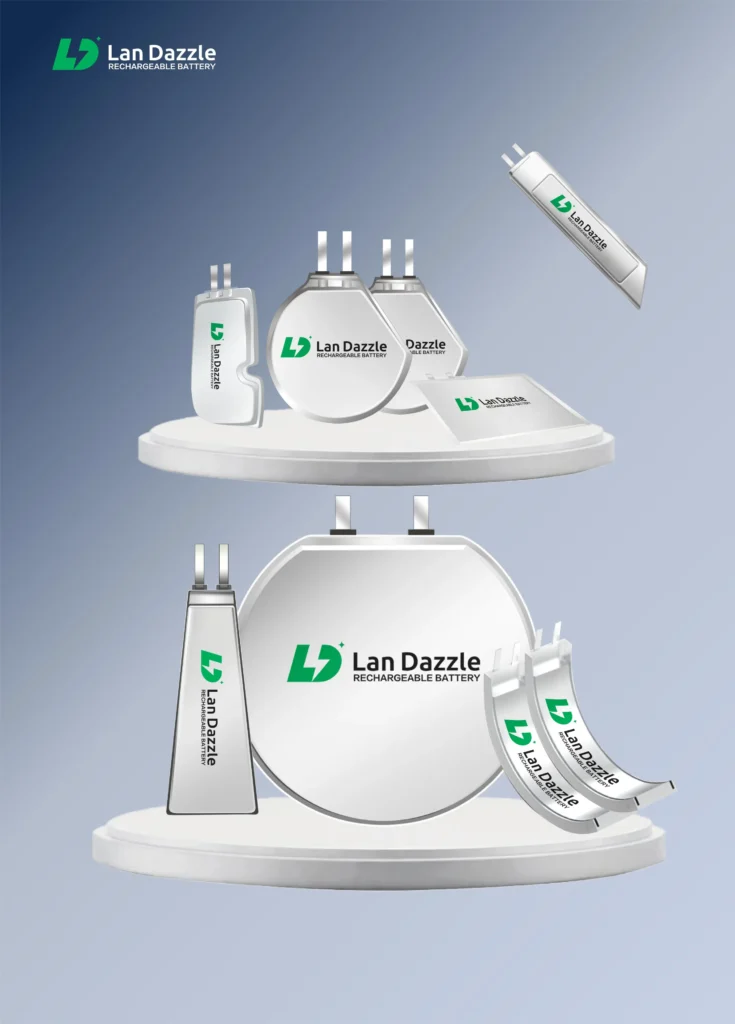
Founded in 2018, LanDazzle is a leading lithium manufacturer focusing on the R&D of special shaped lipo battery, low temperature battery and lithium battery pack.
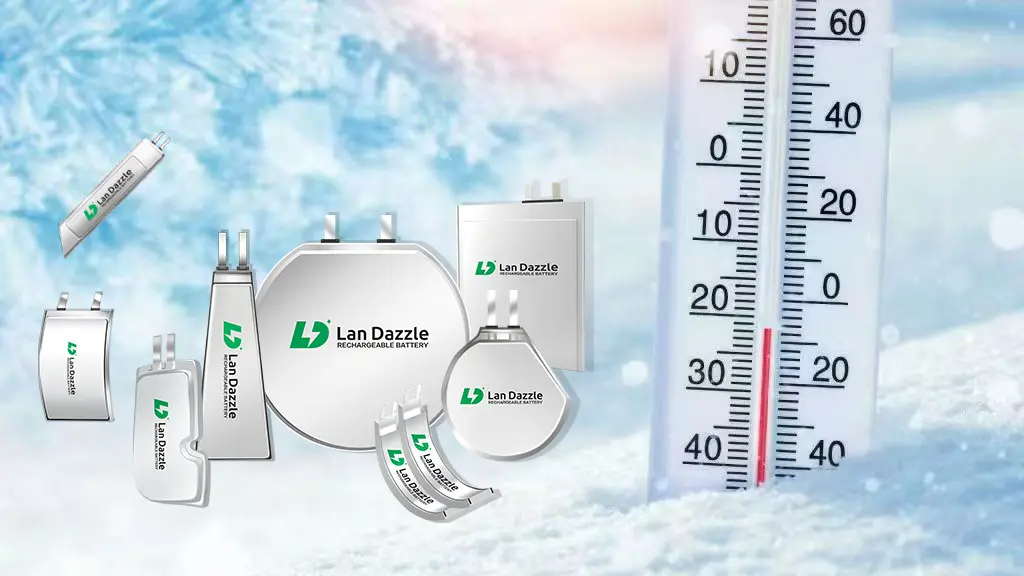
Our Low Temperature Battery Advantages:
- Structure & Shape Advantage
With advanced stacking technology, we can highly customize battery shapes to make full use of internal space. This allows for smaller, thinner, and complex designs, ideal for professional devices with limited space and a need for low-temperature stability. - Low-Temperature Performance Advantage
At –40°C and 0.5C discharge, the battery still maintains over 60% efficiency.
At –30°C, it can deliver about 80% of its rated capacity.
The operating temperature range is –40°C to 60°C, and the battery has passed safety certifications including UL, CE, and UN. - Weight Advantage
At the same voltage and capacity, our low-temperature LiPo batteries are significantly lighter and thinner than LiFePO₄ batteries, making them perfect for weight‑ and space‑sensitive devices.
Conclusion
Cold weather can quickly drain ordinary batteries, but with the right technology, consistent performance in freezing temperatures is achievable. Among all options, low-temperature LiPo batteries stand out for their lightweight design, high discharge rate, and excellent efficiency at sub-zero temperatures. LiFePO₄ batteries also perform well when equipped with smart BMS or built-in heating, while AGM batteries remain a cost-effective choice for starting and backup power.
At LanDazzle, we specialize in custom low-temperature lithium battery solutions engineered to maintain reliable power even at –40°C. Our batteries combine advanced materials, flexible designs, and proven safety to meet the demands of drones, robotics, outdoor equipment, and more.
Ready to find the perfect low temperature battery solution for your products? Contact our team at LanDazzle today to discuss your custom battery needs and discover how our high-performance solutions can power your devices in any environment.
Email: info@landazzle.com
Whatsapp: +8618938252128