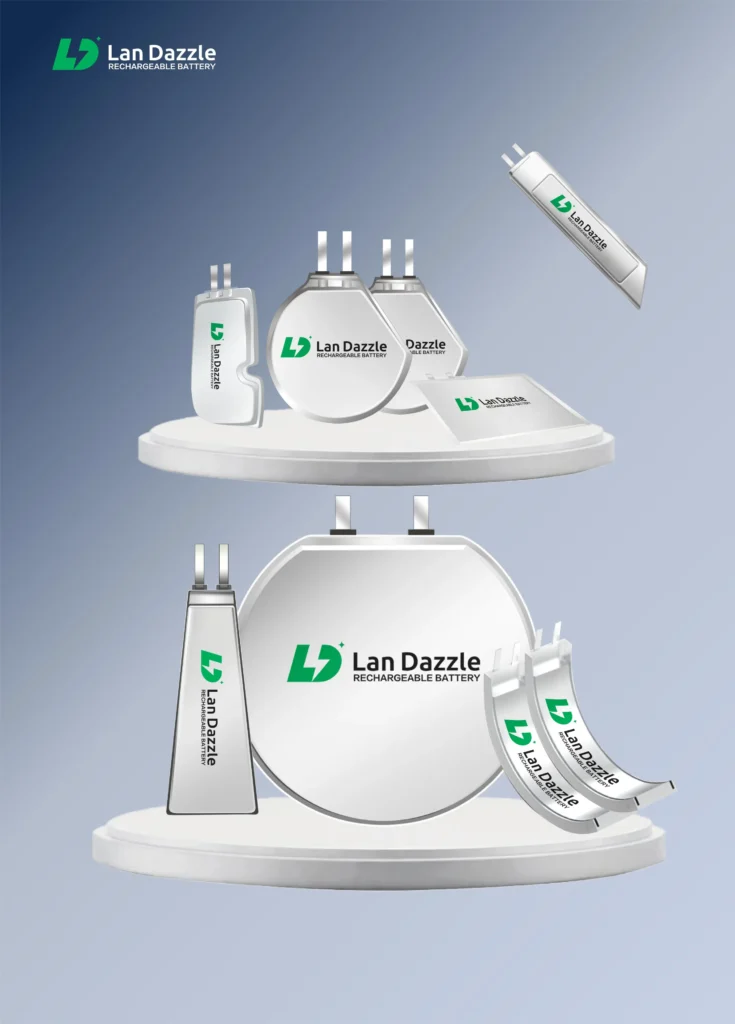
As consumer electronics, wearable devices, medical equipment, and new smart hardware continue to become lighter, thinner, and more closely shaped to product designs, curved pouch batteries are becoming a key power component in many innovative products.
However, it is important to understand that a curved pouch battery is not simply a standard pouch battery that has been “bent.”
Its design and manufacturing logic are fundamentally different from those of traditional standard pouch batteries.
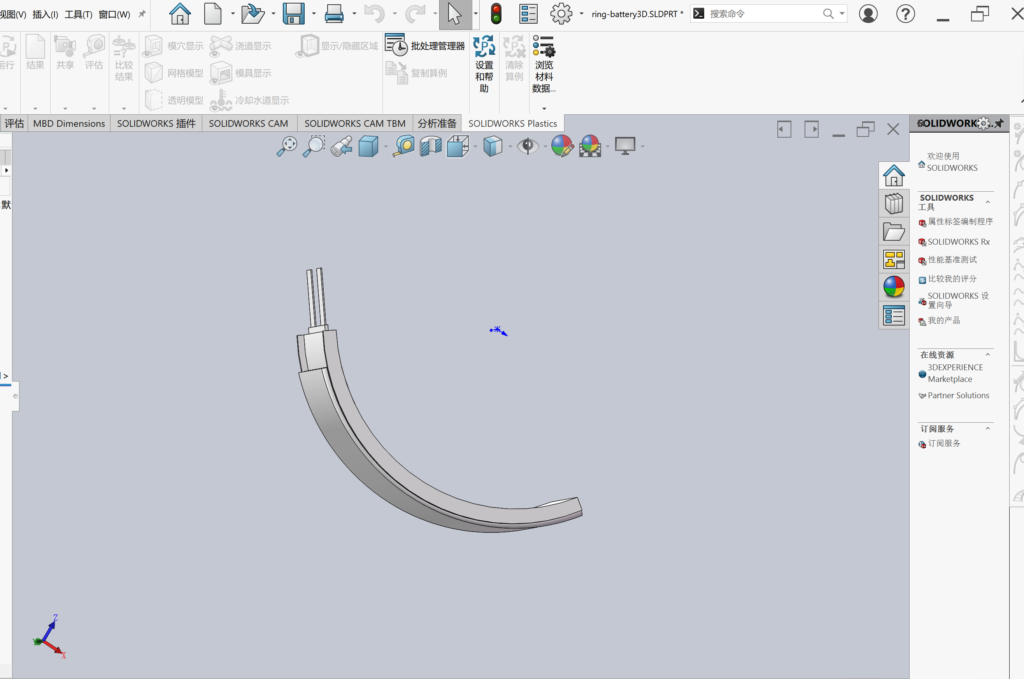
1. Core Material Selection
Curved pouch batteries place much higher demands on materials than standard flat pouch batteries.
All key materials must offer high flexibility, good bending resistance, and stable shape retention. They need to withstand repeated bending and long-term charge–discharge cycles without causing structural failure or performance loss.
To meet these requirements, the core material selection for curved pouch batteries focuses on the following areas:
Cathode Materials: Balancing Energy Density and Bending Stability
- Commonly use lithium cobalt oxide (LCO) or high-nickel ternary materials
- Paired with ultra-thin aluminum current collectors (12–20 μm)
- Particle size distribution is tightly controlled to avoid stress concentration from large particles
- Conductive carbon coating is applied to improve bonding between active material and the current collector, helping prevent material peeling during bending
Anode Materials: Reduced Expansion for Repeated Bending
- Mainly based on natural graphite
- Combined with ultra-thin copper foil (6–12 μm)
- Material formulation is optimized to reduce volume expansion during charging and discharging
- Anode expansion is controlled to within 12%, making it suitable for repeated bending conditions
Separator Materials: Improving Safety and Structural Stability
- Use high-toughness ceramic-coated PE/PP separators
- Key performance controls include:
- Puncture resistance
- Thermal shrinkage
- Thermal shrinkage is kept below 5% at 120°C, which helps prevent wrinkles, damage, and short circuits under curved and bent conditions
Electrolyte System: Stable Ion Transport in Curved Structures
- Gel polymer electrolytes are preferred
- Compared to traditional liquid electrolytes, they offer better electrolyte retention
- This helps prevent electrolyte movement or loss in curved areas caused by bending stress
- Ensures stable and even ion transport throughout the battery
Packaging Materials: The Foundation of a Stable Curved Structure
- Provides long-term sealing reliability and structural stability
- Use high-ductility aluminum–plastic film
- Made from a three-layer structure: nylon / aluminum foil / polypropylene
- Elongation rate of 30% or higher
- After forming, the film shows no local thinning or micro-cracks
- Maintains its curved shape with minimal rebound after bending
2. Key Structural Design Principles for Curved Pouch Cells
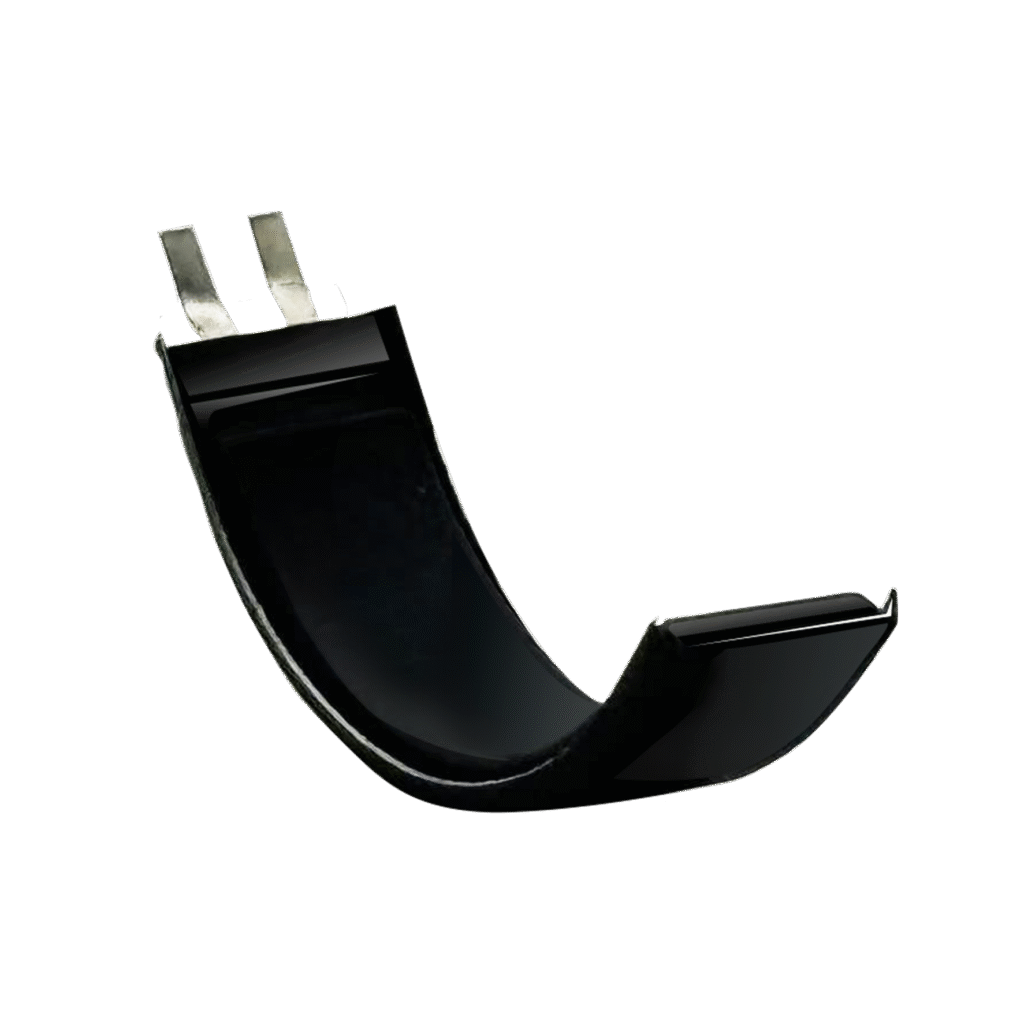
Structural design plays a critical role in preventing stress-related issues in curved pouch cells.
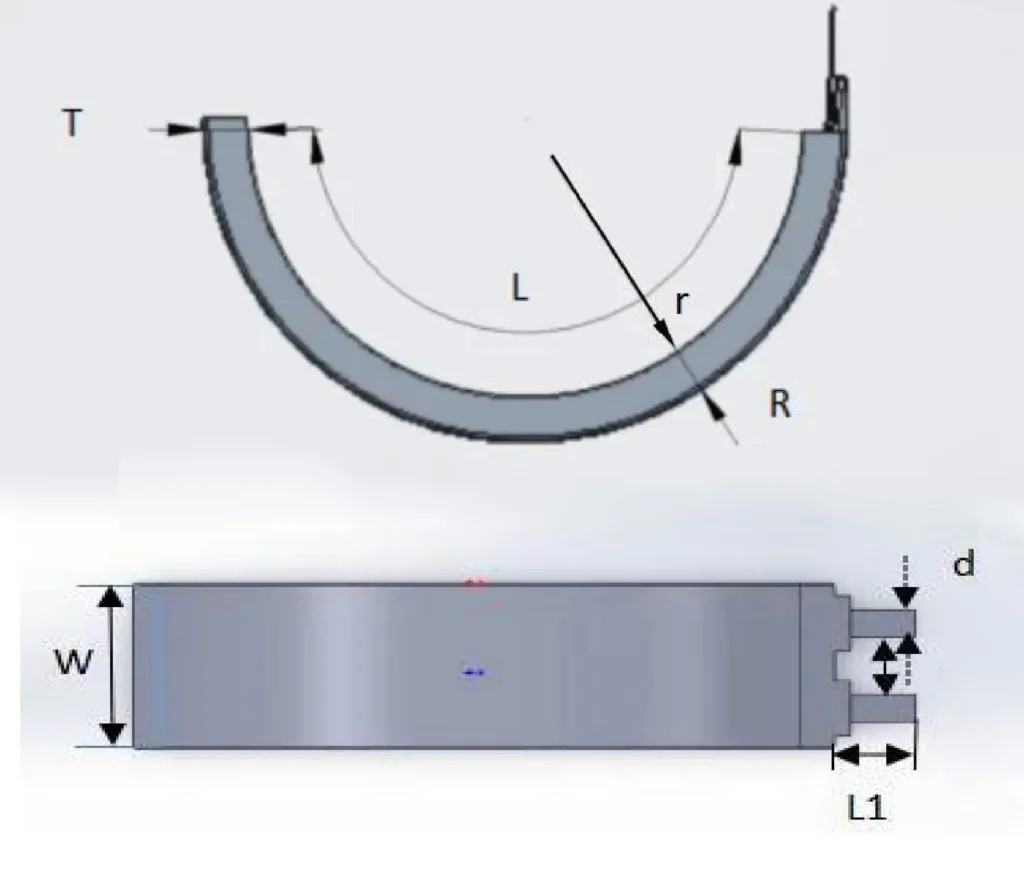
The core design principles are stress distribution, curvature matching, and structural symmetry, which help reduce the risk of structural failure during both forming and long-term use.
The key design points include the following:
Electrode Optimization to Reduce Stress Concentration
- Electrode corners are designed with rounded edges instead of sharp angles
- This prevents sharp corners from pressing into or puncturing the separator during bending
- In curved areas, the areal density of active material is reduced by 10%–15%
- This helps balance compaction density and deformation between curved and flat regions, avoiding local stress concentration
Electrode Size Matching for Improved Safety
- The design strictly follows the principle of full anode coverage over the cathode
- The anode is slightly larger than the cathode in both length and width
- This reduces the risk of lithium plating and internal short circuits at cathode edges under bending conditions
Tab Orientation Aligned with Bending Direction
- The tab exit direction is aligned with the battery’s bending direction
- This minimizes shear stress at the tab root during bending
- Helps prevent tab fatigue or breakage over repeated bending cycles
Controlled Curvature Matching in Packaging Design
- Ensures better fit, sealing accuracy, and long-term structural reliability
- The forming radius of the aluminum–plastic film is 0.1–0.2 mm larger than the electrode curvature radius
- This reserved clearance helps prevent scraping or damage to the cell during assembly
3. Main Forming and Manufacturing Processes
At present, mass production of curved pouch batteries mainly uses two processes: winding and stacking.
Among them, the stacking process is the preferred solution for high-end curved batteries, while the winding process is mostly used for low-cost products with larger bending radii.
Winding Process: Suitable for Large-Radius, Cost-Sensitive Designs
The winding process is similar to that used for traditional pouch batteries.
After electrode coating, calendering, die-cutting, and tab welding, the electrodes are wound in a fixed direction to form the cell. The cell is then pre-shaped using a curved mold, followed by assembly into a curved aluminum–plastic film, electrolyte filling, formation, and final shaping.
Advantages:
- High production efficiency
- Lower manufacturing cost
Limitations:
- Inherent stress differences between inner and outer electrode layers
- Outer layers are stretched while inner layers are compressed during bending
- This can easily cause micro-cracks in the electrodes
Because of these limitations, the winding process is generally only suitable for products with a bending radius larger than 10 mm. It offers relatively lower forming accuracy and long-term reliability.
Stacking Process: The Mainstream Solution for High-Precision Curved Batteries
The stacking process is the core manufacturing method for high-precision curved pouch batteries and is currently the mainstream mass-production solution in the industry.
- Cathode and anode sheets are laser cut into pre-designed curved shapes
- Pre-formed curved separators are used
- A vision positioning system ensures accurate stacking
- Alignment error between each electrode and separator layer is controlled within ±0.05 mm
During stacking, a thermal bonding process is applied. The separator is gently heated so it temporarily bonds to the electrodes, preventing layer movement or misalignment.
After stacking:
- The cell undergoes hot-press pre-forming to remove internal gaps
- The pre-shaped cell is then sealed using a curved aluminum–plastic film
Curved Hot-Press Shaping: The Key Final Step
After packaging, the most critical step is curved hot-press shaping, which determines the final form of the battery.
- Hot pressing is carried out at 50–90°C and 0.1–1 MPa
- Pressure is held for 10–100 seconds
- Special curved fixtures are used to fully release internal stress caused by stacking and packaging
- This process eliminates shape rebound and stabilizes the final curvature
As a result, forming accuracy can be controlled within ±0.05 mm.
For some high-end products, an additional fixture baking process is applied to further lock in the curved structure and improve long-term shape stability.
4. Mass Production Process Control, Quality Management, and Defect Prevention
Curved polymer pouch batteries require very high process accuracy and stable parameters in mass production. These factors directly affect product yield, long-term reliability, and shape consistency.
To ensure stable quality, it is essential to precisely control key process parameters, build a full quality control system covering raw materials, production processes, and finished products, and apply targeted solutions to common mass-production defects. This ensures both process stability and product quality.
1. Electrode Preparation: The Foundation of Mass Production Quality
Electrode preparation is the basic step in curved battery production. The following points must be strictly controlled:
- Coating process:
Ensure uniform coating thickness, with double-side weight deviation controlled within ±1% - Calendering process:
Use step-by-step, gradual pressure instead of one-time high pressure to improve bending flexibility and prevent electrode brittleness - Die-cutting process:
Keep cutting edges smooth and burr-free to prevent sharp edges from damaging the separator and causing internal short circuits
2. Packaging and Forming: Key to Shape Consistency
During the packaging stage, the focus is on structural matching and sealing reliability:
- Aluminum-plastic film forming:
Use multi-step progressive stamping to avoid local thinning and ensure the curved cavity matches the cell shape accurately - Heat sealing process:
Use curved-specific sealing heads and precisely control temperature, pressure, and time to ensure even force and strong sealing - Quality risk control:
Prevent weak sealing, overheating, and seal wrinkles, reducing the risk of electrolyte leakage or gas leakage in later use
3. Electrolyte Filling and Formation: Core Processes for Electrochemical Performance
Electrolyte filling and formation directly affect battery performance and cycle life:
- Strictly control workshop humidity and electrolyte filling volume to ensure full wetting in curved areas
- Use curved-specific fixtures during formation charging to keep electrodes and separators tightly bonded, forming a stable and uniform SEI layer
- After secondary sealing, perform vacuum degassing to remove excess gas generated during formation, preventing cell delamination and abnormal internal resistance
4. Full-Process Quality Control System
To ensure consistency in mass production, a complete quality control loop is required:
Raw Material Stage
- Strictly test elongation, particle size distribution, thermal stability, and barrier performance
- Prevent batch differences from affecting forming quality
Production Process Stage
- Use vision inspection and X-ray inspection to monitor electrode alignment, welding quality, and aluminum-plastic film forming results in real time
- Remove defective products promptly to keep the process stable
Finished Product Testing
No leakage or short circuit after 10,000 dynamic bending cycles, with capacity retention ≥ 90%
Curvature tolerance: ≤ ±0.05 mm
Sealing performance: Helium leak detection to ensure no sealing defects
Lifetime and reliability:
Capacity retention ≥ 80% after 1,000 charge–discharge cycles
Conclusion
Curved pouch batteries are not just a variation of standard pouch cells—they require dedicated materials, precise structural design, and highly controlled manufacturing processes to ensure reliability, consistency, and long-term performance. From electrode preparation to curved forming and final quality inspection, every step must be optimized specifically for curved applications.
With deep experience in curved battery engineering, we have successfully developed custom curved batteries for smart rings, achieving ultra-compact size, stable curvature, and reliable performance under daily wear and repeated bending. These solutions enable wearable devices to be thinner, lighter, and better integrated with product design.

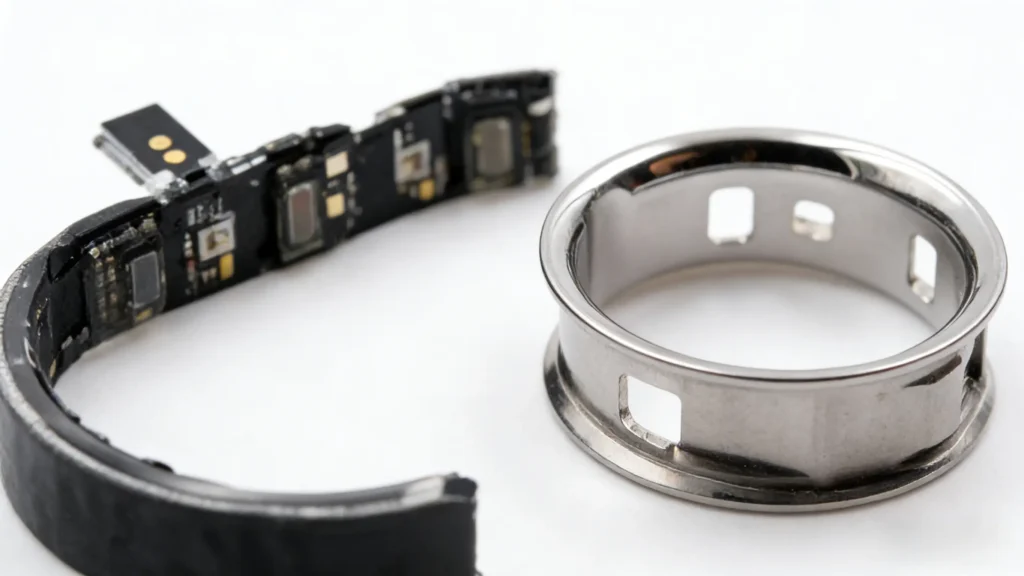
If you are developing smart rings, wearable devices, medical electronics, or other compact products with curved designs, we can help you create a battery solution that truly fits your device—not the other way around.
Email: info@landazzle.com
Whatsapp: +8618938252128