Unique Battery Technology Requirements for Humanoid Robots
(1) Balancing High Energy Density and Lightweight Design
This is the most basic and critical requirement for humanoid robot batteries.
- Battery pack weight is usually limited to 3–6 kg
- Target system-level energy density:
- ≥ 250 Wh/kg: supports 2–3 hours of basic operation
- ≥ 350 Wh/kg: required for 8+ hours of continuous industrial use
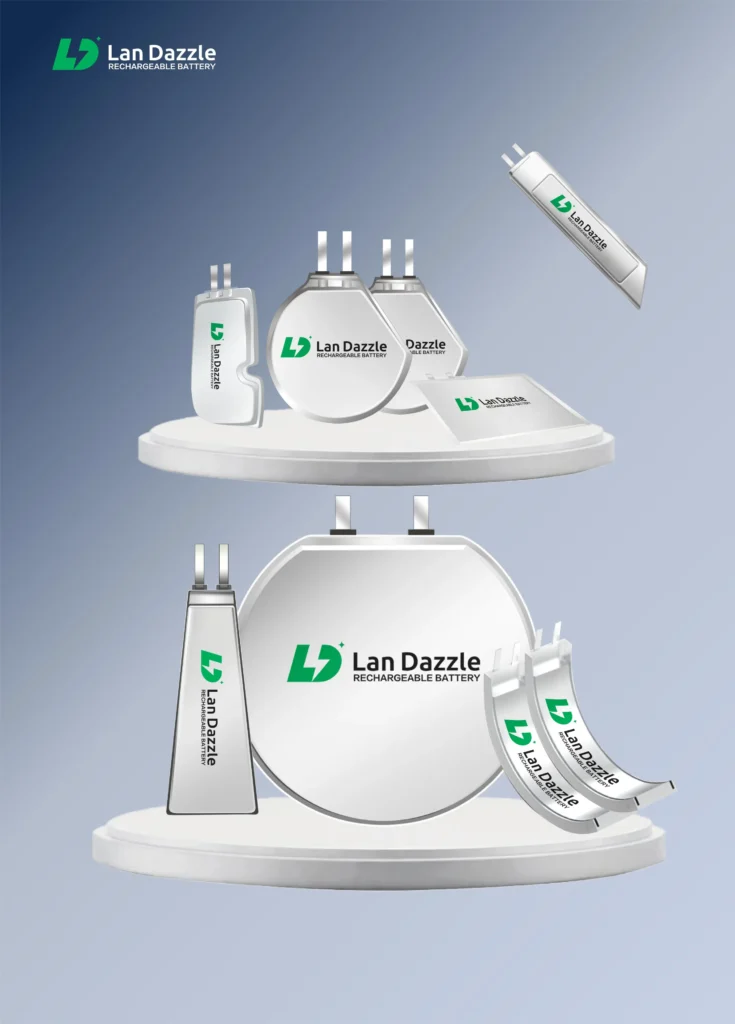
Unlike electric vehicles, humanoid robots have very limited and irregular internal space, mainly in the torso and back. This means high energy density must be combined with custom-shaped battery designs.
Key technical approaches include:
- Increasing cell-level energy density
- Using custom and irregular PACK integration
- Maximizing battery capacity within very limited space
This combination has become one of the key competitive areas in battery technology since 2025.
(2) High Power Density and Strong Discharge Capability
Battery power performance directly determines how well a humanoid robot can move.
Humanoid robots do not only need stable low power for normal walking and precision tasks. They also need very high peak power for actions such as fast walking, jumping, flipping, and carrying heavy loads.
Industry benchmarks show:
- Continuous discharge rate: 3C–5C
- Peak discharge rate: 10C–50C
- Voltage fluctuation must stay within ±2%
For example, the Atlas robot developed by Boston Dynamics requires over 5 kW of instant power during backflips. Without high power density batteries, even the best motors and controllers cannot deliver real movement performance.
(3) Fast Charging and Energy Refill Methods
Charging speed has a direct impact on robot working efficiency. From a commercial perspective, time spent charging means lost productivity.
Mainstream fast-charging standard
- ≥ 2C charging rate
- 80% SOC within 30 minutes
High-demand industrial scenarios
- 6C or higher charging
- 80% SOC within 10–15 minutes
Examples include Tesla Optimus Gen3 and XPeng IRON.
Battery swapping as a complementary solution
In some industrial and high-availability scenarios:
- Hot-swappable batteries are used
- Energy refill can take only seconds
- Robots do not need to shut down
This allows 24/7 continuous operation in demanding environments.
(4) Wide Temperature Range Adaptability
Humanoid robots are expected to work in many different environments, from indoor spaces to extreme outdoor conditions. Typical operating temperature requirements
- Industrial / military use: -40°C to 80°C
- Service / household use: -20°C to 60°C
Key performance limits
- At -20°C, battery capacity must remain ≥ 80%
- At 60°C, there must be no swelling, fire, or thermal runaway
To meet these requirements, advanced systems use smart thermal management.
For example, Tesla Optimus Gen3 uses liquid cooling to keep temperature differences within ≤ 5°C, even in hot and dusty factories.
(5) Long Cycle Life and Low Lifetime Cost
Battery life is a key factor in commercial competitiveness.
Industry baseline
- ≥ 1,500 charge cycles for industrial and service humanoid robots
Leading solutions
- Farasis Energy semi-solid-state batteries: over 4,000 cycles
- Sunwoda semi-solid solutions: over 2,000 cycles
Although batteries account for a small part of total robot cost:
- Example: Optimus battery cost is about RMB 2,180
- Only 0.5%–1% of total system cost
Battery aging and replacement frequency have a major impact on total ownership cost, especially for industrial users.
Overview of Mainstream Commercial Battery Technologies
By the end of 2025, battery technologies for humanoid robots have formed a clear structure:
- Liquid lithium batteries as the main solution
- Semi-solid batteries as a high-end supplement
- Fast charging / battery swapping as efficiency support
Each technology has clear limits in performance, cost, and application fit. There is no single battery solution that can cover all humanoid robot use cases.
Liquid Lithium Batteries: The Mainstream Mass-Production Choice
Liquid lithium batteries are currently the most mature and most widely deployed option:
- Installed share: over 70%
- Outlook: will remain dominant for the next 3–5 years
They mainly include two types: ternary lithium batteries (NCM/NCA) and lithium iron phosphate (LFP) batteries. Each type fits different performance and application needs.
Ternary Lithium Batteries (Mainstream Choice)
This is the most widely used battery type in humanoid robots. Its main advantage is a strong balance of:
Energy density × Power density × Mass-production maturity
Key Performance Range
- Energy density: 250–300 Wh/kg
- Continuous discharge: 3C–5C
- Peak discharge: 10C–20C
- Runtime: 2–5 hours (depends on working conditions)
Typical Applications
- Tesla Optimus
- Unitree Robotics H1
- Boston Dynamics Atlas
This technology has been fully proven in the electric vehicle industry, with stable performance in dynamic response and low-temperature operation.
Custom Battery Examples
Unitree H1
- Custom ternary lithium pouch battery
- 67.2V / 15Ah (432Wh)
- Real-world runtime: ~2 hours
- Supports 3.3 m/s top speed (over 2× industry average)
Tesla Optimus Gen3
- Cylindrical ternary lithium cells based on 4680 technology
- 72V system voltage
- 2.3 kWh battery capacity
- Real-world runtime: 8–10 hours
- Liquid cooling system for long-term high-load operation
Lithium Iron Phosphate (LFP) Batteries
The main strengths of LFP batteries are: high safety, long cycle life and lower internal cost.
Key Characteristics
- System energy density: ~180 Wh/kg
- Cycle life: 3,000–5,000 cycles
- Very high thermal stability, almost no thermal runaway risk
- No cobalt or nickel, lower material cost
Typical Use Scenarios
- Industrial inspection
- Logistics and material handling
- Applications less sensitive to weight and size
Example:
- Tesla Optimus industrial base version uses LFP batteries
- Runtime similar to ternary lithium
- Lower total life-cycle cost
Technical Limits of Liquid Lithium Batteries
Although liquid lithium batteries are still dominant, they are close to their physical limits.
Energy Density Limits
- Ternary lithium
- Theoretical limit: ~300 Wh/kg
- Practical system level: ~250 Wh/kg
- LFP
- System-level limit: ~200 Wh/kg
Under current electrochemical systems:
Higher energy density = lower safety margin OR higher weight
This directly conflicts with humanoid robot requirements for:
- Lightweight design
- High safety
- Irregular internal structures
Transitional Solution: Semi-Solid / Quasi-Solid Batteries
Semi-solid batteries are a practical solution to break liquid battery limits while keeping mass-production feasibility.
Partial solid electrolyte + existing manufacturing compatibility
Overall Performance Range
- Energy density: 330–400 Wh/kg
- Some samples exceed 450 Wh/kg
- Continuous discharge: 5C–7C
- Pulse discharge: up to 50C
- Cycle life: 2,000–4,000 cycles
They are widely seen as the key transition technology from 2025 to 2028.
Representative Commercial Solutions
- Farasis Energy
- ~330 Wh/kg
- ~4,000 cycles
- Supports 3C fast charging (80% in 10 minutes)
- Sunwoda
- Energy density up to 500 Wh/kg
- Applied in GAC GoMate
- Enpower
- 360 Wh/kg
- Operates from –40°C to 60°C
- ~1,500 cycles
Application Status of Humanoid Robot Batteries by Sector
Combined with the technical features of liquid, semi-solid and all-solid-state batteries mentioned earlier, this section briefly sorts out the mainstream battery selections, core parameters and application matching logic for three major landing scenarios: industrial, household and military.
4.1 Industrial Service Sector
The industrial sector sees the fastest rollout of humanoid robots. Key demands include long-hour heavy-load operation, stable performance in harsh environments and long cycle life.
Main battery picks: high-rate ternary lithium batteries and semi-solid batteries. Low-cost production lines use lithium iron phosphate (LFP) batteries. Key parameters of benchmark models are listed below:
| Robot Model | Battery Type | Capacity / Specs | Runtime | Key Features |
|---|---|---|---|---|
| Tesla Optimus Gen3 | Cylindrical ternary lithium (4680-based) | 2.3 kWh, 72 V | 8–10 hours | Liquid cooling for harsh environments; 10C fast charging (80% SOC in 10 min); optional LFP version for lower cost & longer cycle life |
| Apollo Industrial Robot | Ternary lithium (modular hot-swappable packs) | — | 4–5 hours per pack | Supports continuous 24/7 operation via battery swapping |
| XPeng IRON (mass production) | All-solid-state battery | 2.5 kWh, 400 Wh/kg | 8+ hours | High safety (no thermal runaway at 250°C for 1 hour); +30% energy density vs liquid lithium batteries |
| Qiantron T800 | Solid-state battery | — | 4–5 hours | Wide operating temperature: -20°C to 60°C; strong environmental adaptability |
| Galaxy General Galbot G1 | High-rate ternary lithium | — | — | Supports NVIDIA THOR chip; hot-swappable battery design for continuous heavy-duty operation |
4.2 Household Companion & Service Sector
Household use focuses on human-robot contact safety, light body weight and low variable power draw.
Main battery picks: pouch ternary lithium batteries and LFP batteries. Premium models adopt all-solid-state batteries, as ultra-high instant discharge output is not required. Benchmark models:
| Robot Model | Battery Type | Voltage / Capacity | Energy Density | Runtime | Key Features |
|---|---|---|---|---|---|
| Unitree H1 | Pouch ternary lithium | 67.2 V, 15 Ah / 0.864 kWh | — | ~2 hours | High-rate discharge supports 3.3 m/s movement (≈2× industry average); pouch structure improves impact resistance for home environments |
| XPeng IRON (Home/Industrial) | All-solid-state battery | 2.5 kWh | 400 Wh/kg | ~8 hours | High safety design for human-robot interaction; strict high-temperature safety compliance |
| Optimus Gen3 Home Edition | LFP battery | 2.3 kWh | — | 8–10 hours | Long cycle life, low maintenance cost; optimized for light household tasks |
4.3 Military & Special-Purpose Sector
Special scenarios require batteries to meet all industrial-grade standards plus extra needs: stable performance in extreme wild environments, high pulse power and damage resistance. Custom semi-solid or all-solid-state batteries are the top choice. No mass-produced full robot units are publicly available yet, only supporting exoskeleton battery packs. Five strict performance requirements:
- Recharging ways: Dual fast charge + ultra-fast battery swap modes, matching field conditions with no fixed charging infrastructure
- Voltage platform: Standard 60–72 V; ≥100 V for high pulse power tasks
- Capacity range: Custom 20–60 Ah, with higher energy density than same-size industrial batteries
- Temperature tolerance: Works steadily from -40 °C to 80 °C, resistant to salt spray and strong frequent vibration
- Safety standards: Pass extra drop and corrosion resistance tests, exceeding automotive-grade rules
Conclusion
Humanoid robot battery technology is moving from liquid lithium → semi-solid → all-solid-state, with continuous improvements in energy density, power output, safety, and system integration.
In the near term, liquid and semi-solid batteries will remain the mainstream solutions. In the long term, all-solid-state batteries will enable higher performance and true 24/7 robotic operation across industrial and service applications.
Future competitiveness will depend on system-level integration, including battery chemistry, BMS, thermal management, and lightweight PACK design.
Contact Us
We provide custom battery solutions for humanoid robots, including high-energy-density packs, high-rate discharge systems, and fast-charging battery designs.
Email: info@landazzle.com
Whatsapp: +8618938252128
Contact us for custom development and technical support for your robotic applications.