In recent years, AI smart glasses have been moving from a niche product to an everyday consumer device. With features like on-device AI, real-time translation, first-person video recording, and voice assistants becoming more advanced, smart glasses are no longer just for listening to music or taking calls. They are evolving into all-day intelligent devices.
While people often talk about chips, cameras, and AI models, one important part is often overlooked—the battery.
Many people think that the solution to short battery life is simply to use a larger battery. But for smart glasses, a bigger battery is not enough. Compared with traditional consumer electronics, smart glasses have another unique requirement: they need batteries that can deliver high discharge rates.

The Power Consumption of Smart Glasses Is Not Constant
Smart glasses operate very differently from smartphones. During most of the day, they only need to maintain basic functions such as Bluetooth connectivity, microphone listening, and sensor operation. As a result, their overall power consumption is very low.
However, once an AI feature is activated, the device’s current demand can increase dramatically within just a few milliseconds.
For example, when a user asks, “What is this building in front of me?”, the camera, image signal processor (ISP), AI inference engine, wireless communication module, and audio output system all begin working at full load almost simultaneously.
This creates a pulse load—a short burst of very high power demand. In other words, the real challenge for smart glasses is not continuous power consumption, but the frequent bursts of peak current required to support AI-powered features.
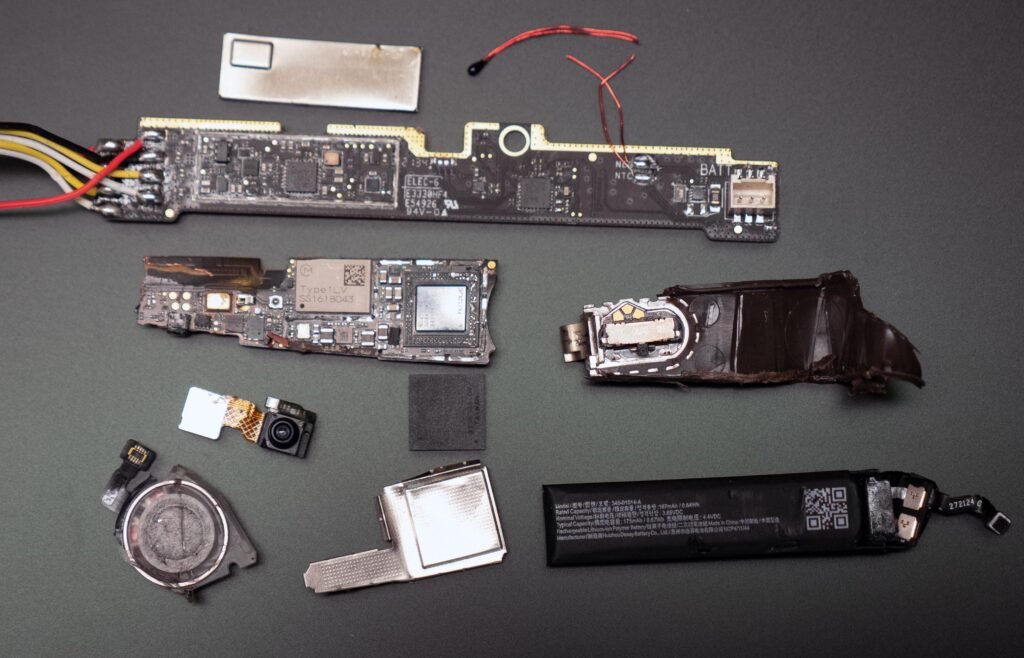
Why Do Smart Glasses Need High Discharge Batteries?
The answer lies in what can be called the “amplifier effect” of a small battery used in smart glasses.
In the battery industry, discharge capability is commonly measured by the C-rate, which is calculated as:
C-rate = Discharge Current ÷ Battery Capacity
- For a smartphone with a 5,000mAh battery, even a peak current of 600mA corresponds to a discharge rate of only 0.12C, placing very little stress on the battery.
- For smart glasses with a battery capacity of only around 200mAh, the same 600mA peak current immediately translates into a 3C discharge rate.
In other words, because the battery is so small, any high-load task on smart glasses is effectively amplified into a high-discharge-rate event from the battery’s point of view.
This is why battery discharge capability is much more important for smart glasses than for larger consumer devices. Even short bursts of AI processing, video recording, or wireless communication can place significant demands on a small battery.
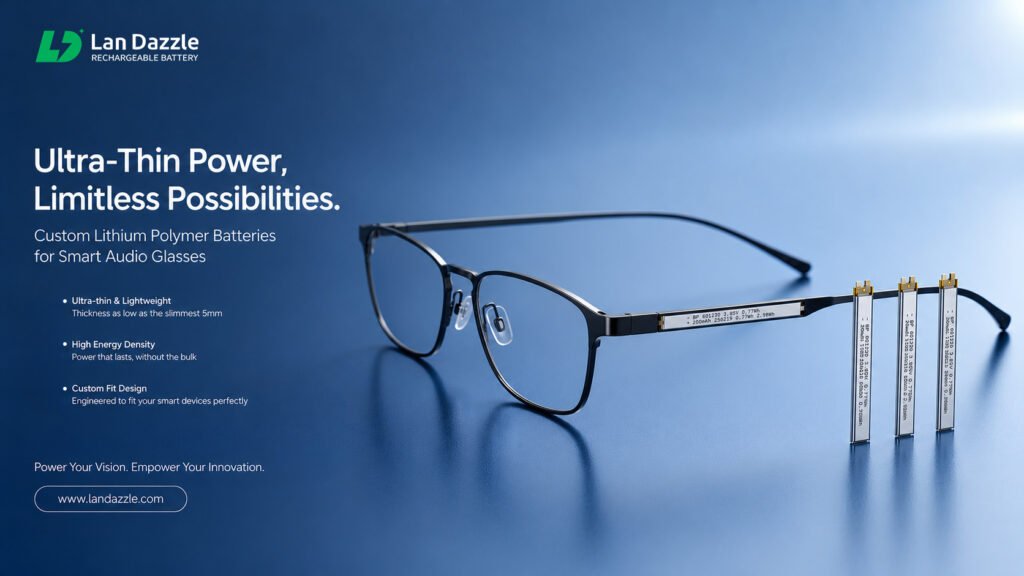
As smart glasses become smaller while offering more advanced AI features, high-rate discharge capability is becoming one of the key factors in smart glasses battery design.
Excessive Voltage Drop Triggers PMIC Protection
High-discharge operation exposes one of the biggest electrochemical challenges inside a battery—voltage drop.
The battery’s output voltage follows a simple equation:
Vout = Voc − I × Rinternal
Where:
- Vout = Output voltage
- Voc = Open-circuit voltage (which reflects the battery’s remaining charge)
- I = Discharge current
- Rinternal = Internal resistance of the battery
When smart glasses enter a high-discharge state, the battery must deliver a large amount of current in a very short time. As the current (I) increases, the voltage drop caused by the battery’s internal resistance (I × Rinternal) also increases, causing the output voltage (Vout) to fall rapidly.
To protect the hardware and prevent data corruption, the Power Management IC (PMIC) has a minimum operating voltage threshold, known as Undervoltage Lockout (UVLO). If the battery voltage drops below this threshold, the PMIC immediately shuts down the system.
This explains why a device can suddenly power off even though the battery still has energy left. The battery is not empty—instead, the voltage drops too quickly during high-discharge operation, forcing the PMIC to cut off power before the remaining energy can be used.
What Advantages Can High-Discharge Batteries Provide?
Once we understand the physical chain of events—short bursts of high power demand → high discharge rate → significant voltage drop → PMIC shutdown—the value of a high-discharge battery becomes much clearer.
By using improved electrode materials, optimized conductive additives, and ultra-thin current collector technology, high-discharge batteries greatly reduce both internal resistance and polarization resistance. This directly solves several common problems found in AI smart glasses.
| Challenge | Standard Battery | How a High-Discharge Battery Solves It |
|---|---|---|
| Unexpected shutdowns or restarts | During high-load operation, the voltage drops too much and falls below the PMIC shutdown threshold. | Lower internal resistance reduces voltage drop. The battery maintains a more stable output voltage, keeping it above the PMIC threshold even during high-current bursts. |
| Battery still has power, but the device shuts down | Severe polarization at high discharge rates prevents the battery from fully using its remaining capacity. | More usable battery capacity. A stable discharge curve at 2C–3C allows more of the stored energy to be delivered before shutdown. |
| Slow or interrupted AI performance | The battery cannot provide enough power, forcing the system to reduce processor speed or stop demanding tasks. | Stable peak power output. The battery can continuously supply enough power for the GPU/NPU, camera, and other high-performance components to run at the same time. |
High-Discharge Batteries Will Become a Key Foundation for AI Smart Glasses
Future smart glasses will continue to integrate more computing power.
Higher-resolution cameras, more advanced AI models, real-time visual understanding, more natural voice interaction, and increasingly rich multimodal applications all mean that smart glasses will enter high-load operating states more frequently for short periods of time.
At the same time, consumer expectations for smart glasses remain unchanged. Users want devices that are lightweight, comfortable to wear, and able to work reliably throughout the day.
This means that the future development of smart glasses batteries will not only focus on energy storage capacity, but also on stable power output under high-load conditions.
For the next generation of AI smart glasses, high-discharge batteries are no longer just a technical specification. They are an important foundation for ensuring stable AI performance. From image capture to real-time translation, from visual recognition to AI assistants, every burst of high power demand tests the battery’s ability to deliver energy.
As AI applications continue to expand, high-discharge batteries will play an increasingly important role in the development of smart glasses.
Looking for a High-Discharge Battery Solution for Smart Glasses?
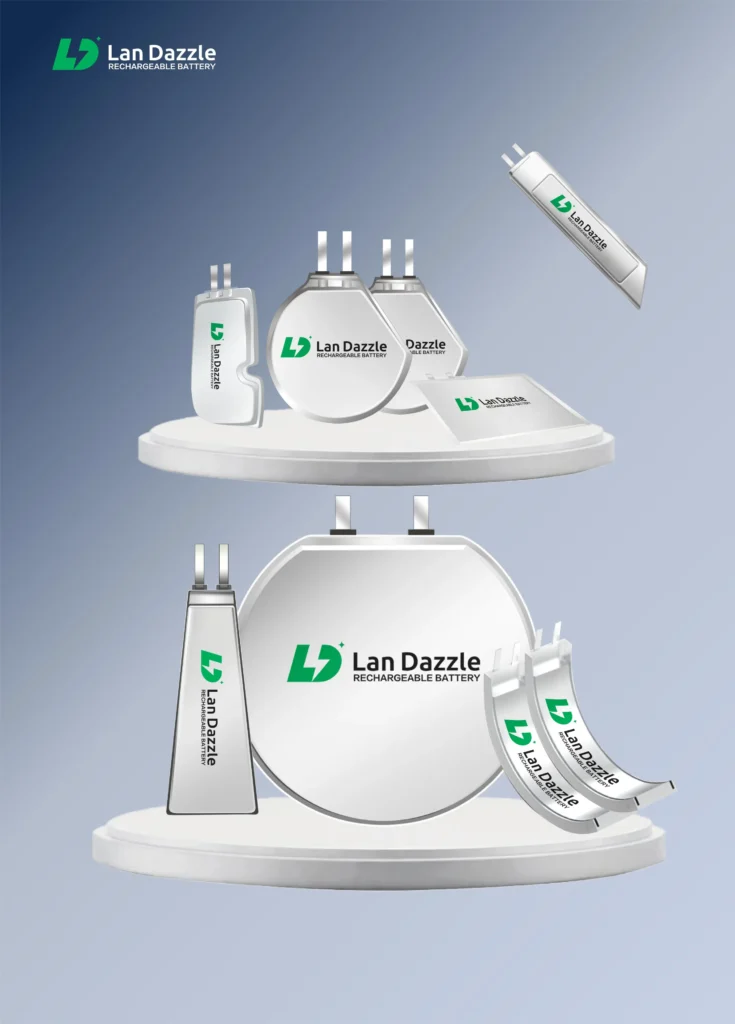
LanDazzle focuses on customized polymer lithium battery solutions. Based on the space limitations and performance requirements of wearable devices such as smart glasses, we provide battery designs with high discharge capability and high energy density, while supporting customization of battery size, capacity, discharge performance, and battery pack solutions.
If you are developing AI smart glasses, AR/VR devices, or other next-generation wearable products, feel free to contact our engineering team to discuss a battery solution that fits your project requirements.
Email: info@landazzle.com
Whatsapp: +8618938252128