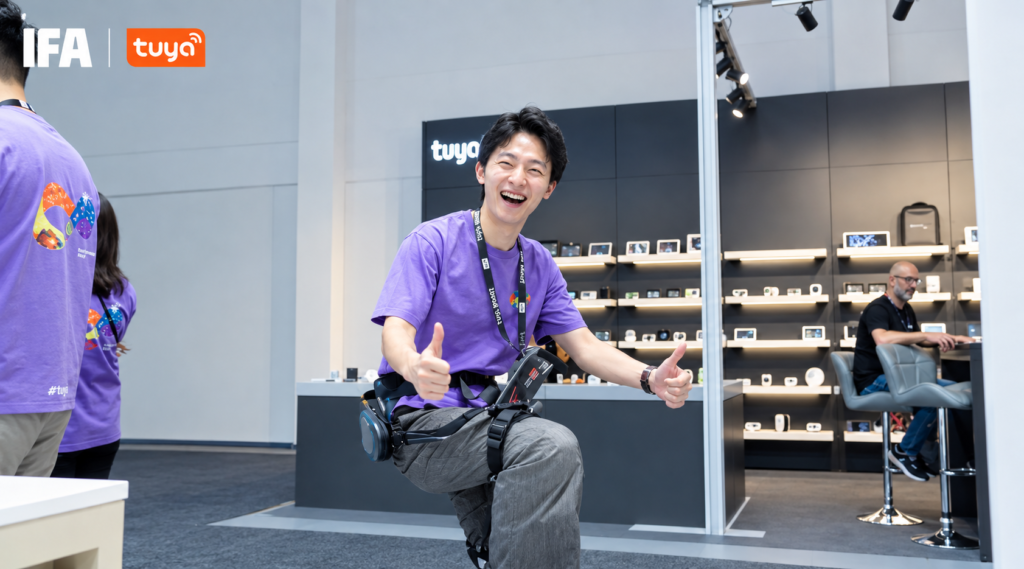
At IFA 2026 in Berlin, a lightweight AI-powered walking-assistance robot became one of the event’s attention-grabbing wearable devices. Weighing just 1.87 kg and featuring an AI-assisted walking system that works from startup, the device attracted large numbers of outdoor enthusiasts who tried walking, climbing slopes, and even jogging with it at the show.
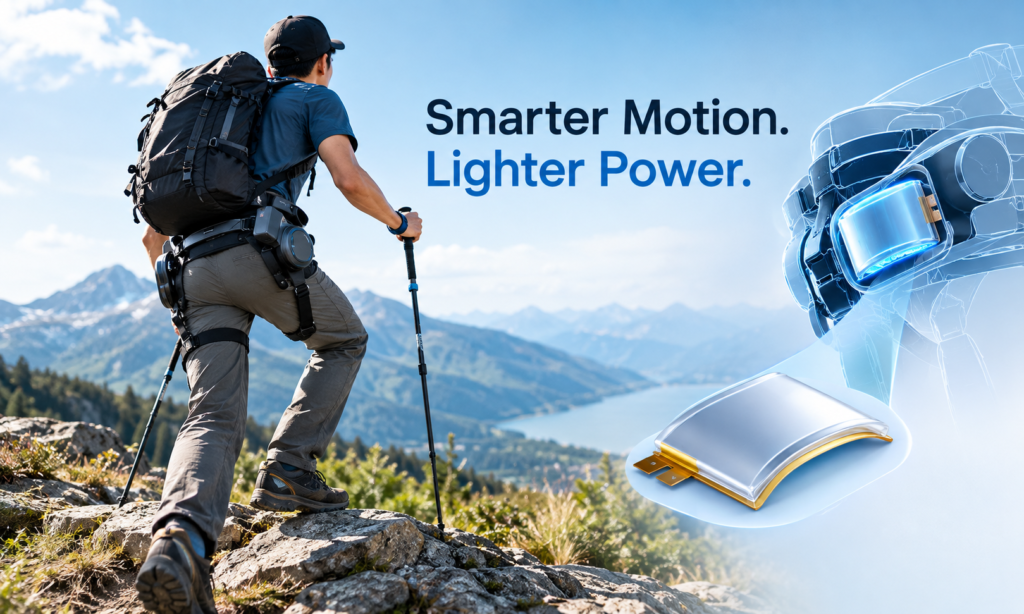
As a consumer-grade exoskeleton that combines lightweight construction with intelligent motion assistance, the product demonstrates a high level of hardware integration across several areas:
- Structure and power: The main unit weighs just 1.87 kg — lighter than a 2-liter bottle of soda — while the system can deliver up to 32 N·m of assistance torque to support hip movement during uphill walking, stair climbing, and long-distance hiking.
- AI and ecosystem: The device uses AI-based motion recognition to automatically identify 13 different movement scenarios, including walking, running, uphill movement, and stair climbing, and adjusts its assistance profile accordingly. Through Works with Tuya, the device is connected to the Tuya smart ecosystem and its underlying cloud services.
- Safety and protection: The system incorporates redundant stop-detection mechanisms, impact protection, and wear detection. It supports speeds of up to 12 km/h, provides more than 2 hours of runtime, and features IP54 dust and splash resistance.
- Market potential: According to QYResearch data, the global consumer exoskeleton robot market was approximately $203 million in 2025 and is projected to reach $698 million by 2032.
But behind these specifications lies a more fundamental engineering question:
How can a wearable robot deliver powerful assistance and more than two hours of runtime while keeping the entire system at just 1.87 kg?
The Engineering Challenge: Balancing 1.87 kg, 32 N·m of Assistance, and 2+ Hours of Runtime
For wearable devices that sit close to the waist and hips, the “plug-and-play” user experience and lightweight design depend on much more than AI algorithms and lightweight structural materials. The battery’s chemistry, form factor, power performance, and integration method are equally important.
Unlike conventional consumer electronics, where a larger battery can often be accommodated by simply increasing the enclosure size, wearable robots have much tighter constraints. The battery has to fit around motors, controllers, sensors, mechanical structures, and the human body — while adding as little weight as possible. This creates several key battery engineering challenges.
1. Curved Spaces and Custom-Shaped Cells
Wearable exoskeletons need to follow the natural contours of the human body, particularly around the waist and hips. As a result, the available space for the battery is often narrow, curved, and irregular rather than a simple rectangular cavity.
Using conventional rectangular or cylindrical cells in such spaces can leave unused gaps inside the housing. These “dead spaces” reduce overall space utilization and may force designers to increase the size of the enclosure just to accommodate a standard battery.
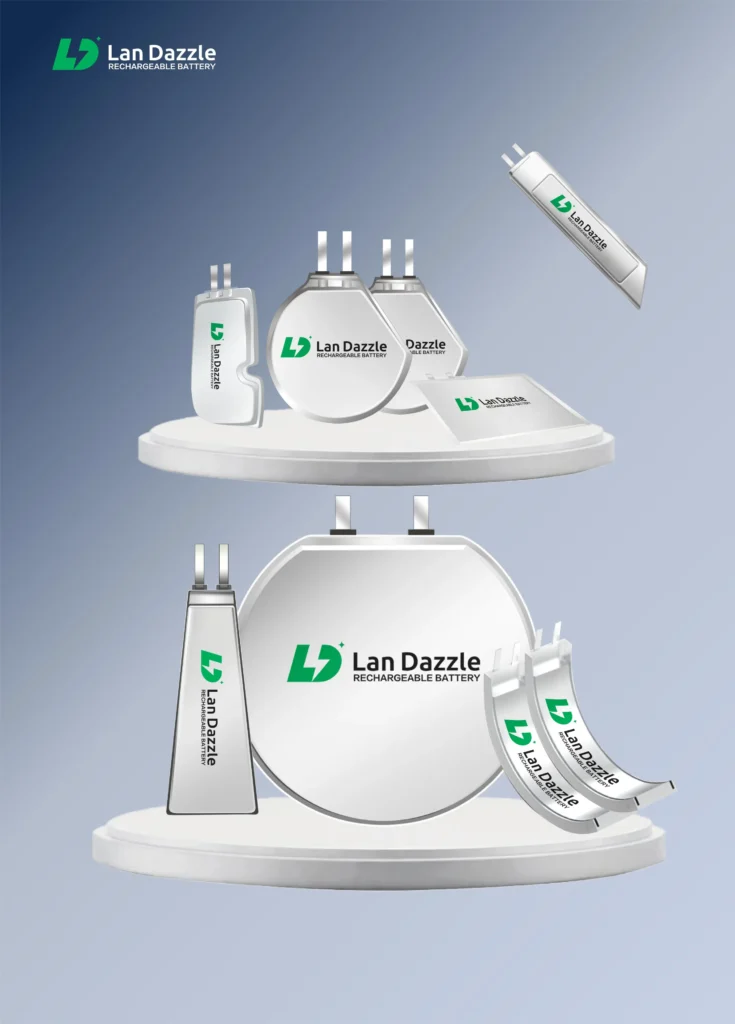
A custom-shaped lithium polymer pouch cell can offer a different approach. Depending on the product architecture, the cell can be developed in curved, ultra-thin, ultra-narrow, L-shaped, U-shaped, C-shaped, round, or other irregular geometries. This allows the battery to follow the available space inside the wearable structure rather than forcing the product to conform to a standard battery format.
For lightweight wearable robots, this design philosophy is particularly important: The battery should adapt to the product — not force the product to adapt to the battery.
High C-Rate Performance for Dynamic Power Demand
AI-based motion recognition allows the device to automatically respond when the user transitions between different activities.
For example, moving from level-ground walking to uphill walking or jogging can create rapidly changing power requirements for the motors. The battery therefore needs to do more than simply store energy. It must also deliver sufficient current when the system requires higher power.
For applications like wearable robotics, engineers may need to evaluate:
- High C-rate discharge capability
- Internal resistance
- Voltage drop
- Peak power output
- Heat generation
- Cycle life
A cell with high energy density but insufficient power capability may not provide stable performance during periods of high load. Higher internal resistance can also result in greater voltage drop and heat generation when current demand increases. For this reason, energy capacity and power delivery are two different battery design requirements.
High Energy Density for Longer Runtime
Runtime is another major challenge for lightweight wearable robots. If the product needs to operate for more than two hours while maintaining a low overall weight, the battery must store sufficient energy within a limited mass and volume. Higher energy density can help engineers achieve greater capacity without proportionally increasing battery weight or size.
For next-generation wearable devices, battery developers may consider advanced cell chemistries and electrode systems, including silicon-carbon anodes and other high-energy-density approaches.
However, energy density cannot be optimized in isolation. For a wearable robot, a practical battery must balance:
- Energy density
- Power capability
- Cycle life
- Thermal stability
- Cell swelling
- Mechanical reliability
- Operating temperature
In other words: A lighter battery is only useful if it can also deliver reliable power throughout the product’s operating life.
Safety and Mechanical Reliability for Wearable Power Systems
There is another important difference between a wearable robot and a conventional consumer electronic device: It is a powered device worn directly on the human body.
The battery may experience continuous vibration, impact, movement, and changes in temperature during operation. Outdoor activities such as hiking, climbing, and running can create even more demanding mechanical conditions.
Battery design therefore needs to consider not only electrical performance but also:
- Mechanical strength
- Packaging reliability
- Cell swelling control
- Thermal management
- Dust and water resistance
- Impact and drop resistance
- Overcharge and over-discharge protection
- Short-circuit protection
- BMS, PCM, and NTC integration
For wearable robotics, safety cannot be treated as an isolated battery feature. It needs to be considered across the entire system.
Battery Placement Matters as Much as Battery Weight
The location of the battery can also have a significant impact on the user experience. Concentrating too much weight in one area can create localized pressure. A battery that is too thick may restrict movement around the waist and hips. Meanwhile, placing the battery too far from the motor or control system can increase wiring and structural complexity.
This means product engineers may need to evaluate several factors simultaneously:
Battery Size + Battery Shape + Battery Position + Weight Distribution
This is another area where custom battery design can provide an advantage over standardized formats.
- A standard battery primarily answers the question: “How much energy can we fit?”
- A custom battery goes one step further: “How can the battery become part of the product’s mechanical architecture?”
From AI Exoskeletons to the Next Generation of Wearable Devices
The AI walking-assistance robot showcased at IFA 2026 is just one example of a broader trend in intelligent hardware. As sensors, motors, AI processors, and control systems continue to become smaller, more technologies are moving into wearable form factors.
At the same time, product development is shifting toward: More Functions + Smaller Size + Lower Weight
This creates increasingly difficult trade-offs for battery engineers. Similar challenges are already appearing in:
- AI smart glasses
- Smart rings
- Smartwatches
- Medical patches
- Rehabilitation wearables
- Smart chest straps
- Exoskeleton robots
- Humanoid robots
- Other AI-powered wearable devices
Although these products serve different applications, many share the same fundamental battery challenge:
Less space, more functions, and higher expectations for runtime and comfort.
AI Exoskeleton Battery Design Is Becoming Part of Product Design
For next-generation AI-powered wearable devices, the battery can no longer be treated simply as a standardized component selected at the final stage of product development. When space is highly constrained, battery dimensions, shape, capacity, power capability, and weight can directly influence the overall product architecture.
A more effective approach is to consider battery design at an early stage of product development.
Starting from the available CAD space, engineers can work backward from the product’s structure, capacity requirements, power demand, operating temperature, and wearing method to determine the most suitable cell dimensions and geometry.
This is where custom-shaped battery technology can provide real value.
Conclusion
Consumer AI exoskeletons are gradually moving from specialized equipment toward more lightweight, intelligent, and accessible products for outdoor activities, personal mobility, and rehabilitation. The 1.87 kg AI walking-assistance robot showcased at IFA 2026 demonstrates more than just lightweight mechanical design. It reflects a broader trend in intelligent hardware:
As AI-powered devices become smaller and lighter, battery design increasingly becomes a factor that determines the shape, comfort, and performance of the entire product.
The next generation of wearable robots will need not only smarter AI, more efficient motors, and lighter structural materials, but also battery solutions designed around the product itself. Through curved, ultra-thin, ultra-narrow, and other custom-shaped cell designs, batteries can make better use of limited and irregular internal spaces while helping engineers balance weight, capacity, power, and wearing comfort.
For the future of AI-powered wearable devices, true lightweight design is not simply about reducing the weight of one component. It starts with designing the entire system — including the battery — as one integrated product.
Build a Battery Around Your Wearable Device
Have a tight space, unusual shape, or demanding power requirement?
Talk to LanDazzle about a custom-shaped lithium battery solution for your next wearable device.
Email: info@landazzle.com
Whatsapp: +8618938252128