Table of Contents
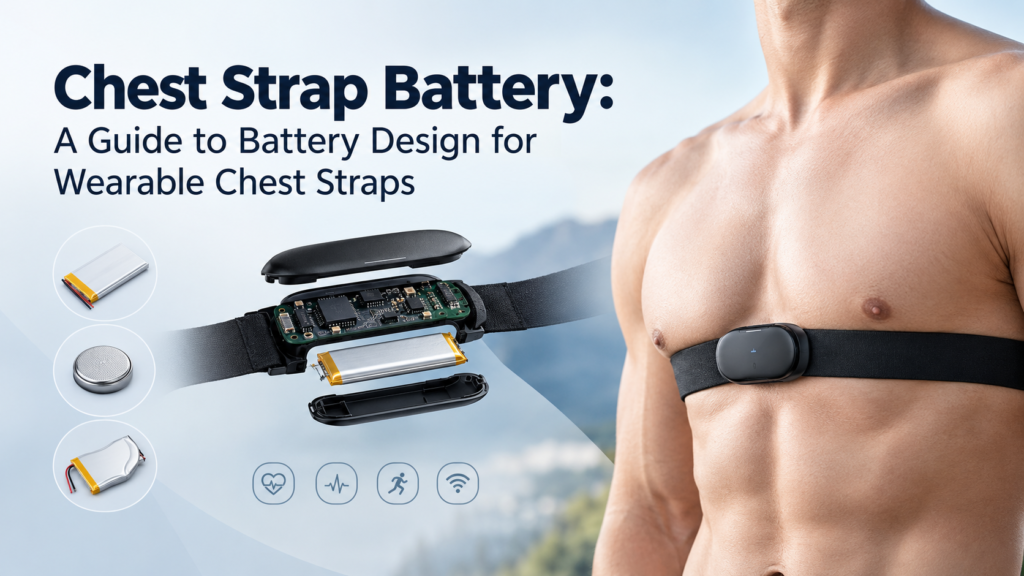
While chest straps look simple, fitting sensors, MCUs, and RF modules into shrinking enclosures makes battery design critical. As wearables evolve into ultra-thin clip-ons, patches, and armbands, the battery dictates far more than runtime—it directly impacts thickness, weight, and wearing comfort. Choosing the right power source requires balancing physical space, peak current, and low-temperature performance, not just max capacity.
What Is a Chest Strap?
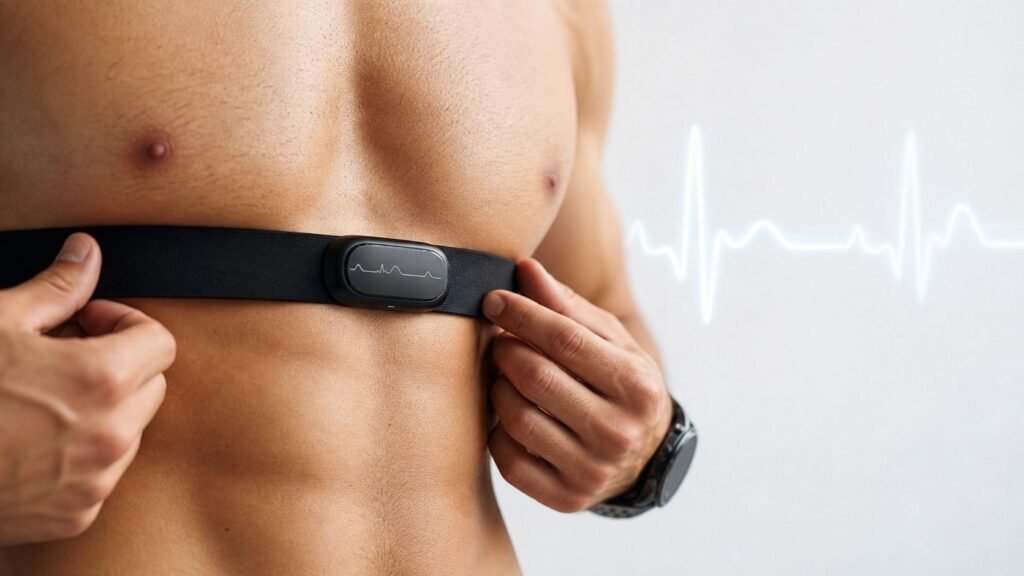
A chest strap is a wearable device designed to be worn around the chest to continuously collect physiological or activity-related data. The most common type is the heart rate chest strap, which is widely used for running, cycling, fitness training, football, basketball, and other high-intensity sports.
Unlike smartwatches, which typically use optical sensors on the wrist to monitor heart rate, chest straps are positioned directly against the chest and can use electrodes or other sensing technologies to capture physiological signals.
Depending on the product design, chest straps can be used to monitor:
- Heart rate
- ECG / EKG
- HRV (heart rate variability)
- Respiration rate
- Activity data
As sports technology, remote health monitoring, and wearable sensing continue to develop, chest straps are being used in a wider range of applications. At the same time, users are demanding more comfortable, thinner, and less intrusive devices, which creates new requirements for the battery inside the product.
How Does a Chest Strap Work?
A typical chest strap consists of sensors, a processing chip, a wireless communication module, and a battery.
The basic workflow can be illustrated as:
Body → Sensors → MCU → Bluetooth / ANT+ → Smartphone or Smart Device
The sensors first collect physiological signals such as heart rate or ECG data. The MCU then processes the raw signals before the data is transmitted to a smartphone, sports watch, or another device through Bluetooth, ANT+, or a similar wireless technology. The battery provides continuous power to the entire system.
Although the battery is often not the largest component inside a chest strap, it can have a significant impact on the overall product design. A battery that is too thick may increase the thickness of the electronics module. A heavier battery can affect wearing comfort, while insufficient capacity may lead to inadequate runtime.
For this reason, the battery should be treated as an important part of the overall hardware architecture rather than simply a power source.
What Battery Does a Chest Strap Use?
Different chest strap products use different battery technologies.
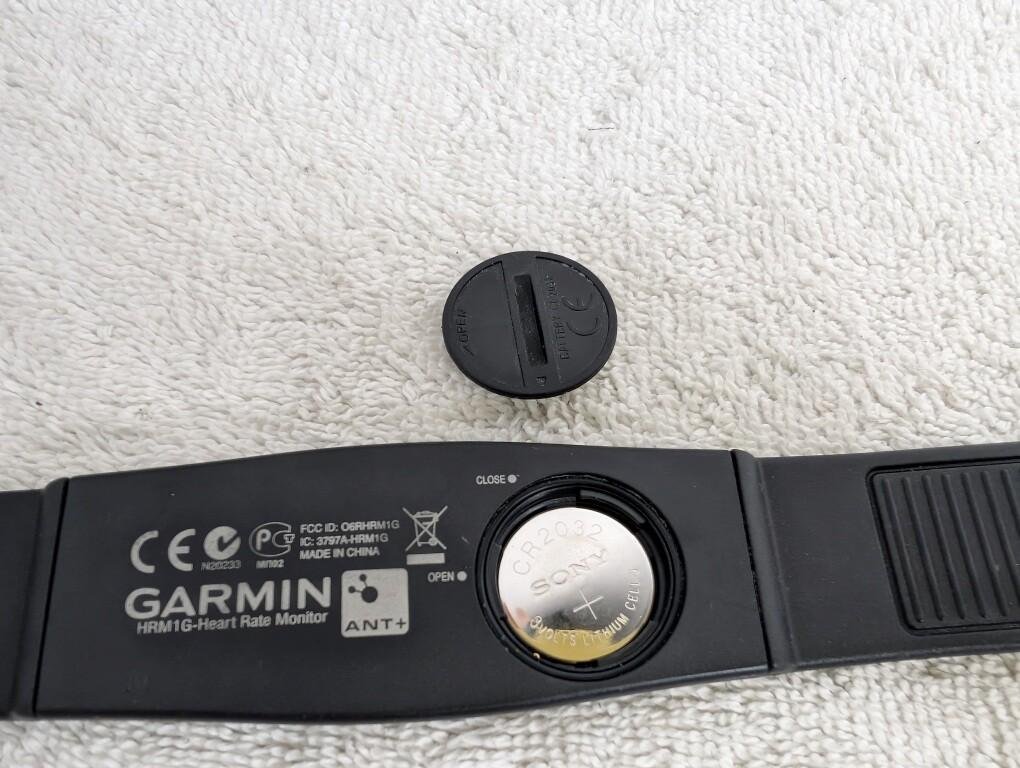
Some basic heart rate chest straps use coin-cell batteries such as CR2025 or CR2032. These batteries are compact, relatively inexpensive, and well suited to low-power devices.
For rechargeable products that require higher capacity or support more advanced functions, rechargeable LiPo batteries can offer greater flexibility.
| Battery Type | Advantages | Limitations | Typical Applications |
|---|---|---|---|
| CR2032 | Compact, low cost, widely available | Non-rechargeable | Basic heart rate chest straps |
| CR2025 | Thin and compact | Limited capacity | Compact wearable devices |
| Rechargeable LiPo | Rechargeable, high energy density | Requires charging circuitry | Advanced wearable devices |
| Custom LiPo | Customizable size, thickness, and shape | Higher development cost | Space-constrained wearable devices |
For next-generation chest straps that need additional sensors, longer runtime, or a slimmer enclosure, LiPo batteries can provide significant design advantages.
Why Are LiPo Batteries Attractive for Chest Straps?
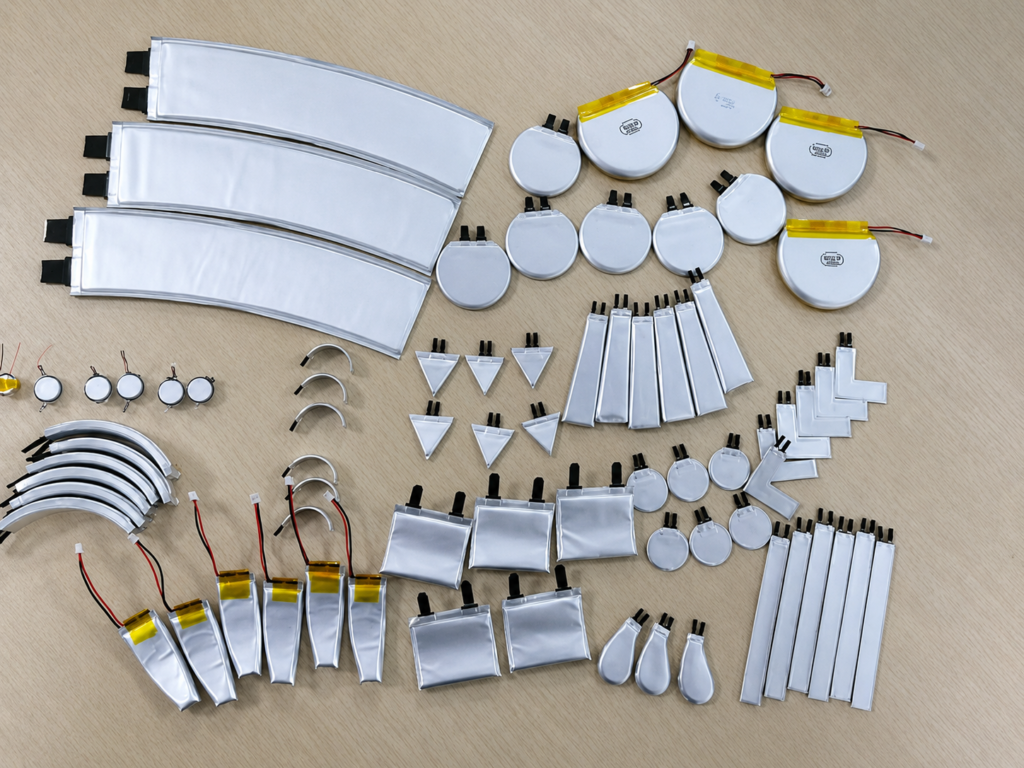
One of the biggest advantages of LiPo batteries over standard cylindrical or coin-cell batteries is their greater freedom in size and shape. The internal space of a chest strap is rarely a simple rectangular cavity. The PCB, sensors, connectors, antenna, and other components may occupy different areas, leaving behind narrow or irregular spaces.
Standard batteries are typically available in fixed dimensions, which can make it difficult to use every available part of the enclosure. A custom LiPo battery, on the other hand, can be designed around the actual internal geometry of the device.
The battery can be optimized across:
Length × Width × Thickness × Capacity
This allows developers to make better use of limited internal space.
This flexibility becomes particularly valuable as chest straps move toward flatter and more body-conforming designs. Traditional coin cells are mature and convenient, but their fixed geometry can become a limitation when manufacturers want to reduce the thickness of the sensor module.
Custom pouch LiPo cells can be developed around the available space. For some ultra-thin wearable designs, battery thickness can be reduced to around 1.5–2.0 mm, or even lower depending on the required specifications and cell architecture. Custom curved or irregular-shaped cells can also be considered when the battery needs to follow the shape of the enclosure.
This can help reduce unwanted protrusions and create a more comfortable, low-profile device.
For wearable products, the goal is often not simply to maximize battery capacity. Instead, designers need to balance:
Smaller Size + Lower Weight + Longer Runtime
Why Does Battery Design Matter in Chest Strap Development?
1. Battery Size
The electronics module of a chest strap is typically compact, meaning the battery must share limited space with the PCB, sensors, and wireless components. If the battery dimensions do not match the internal layout, valuable space may be left unused.
This becomes even more important as devices move toward clip-on and patch-style form factors. The battery does not only determine how much space it occupies; it can also influence how the PCB and other components are positioned around it. A well-designed battery should therefore fit the product architecture instead of forcing the product to accommodate a fixed battery format.
2. Battery Thickness
Battery thickness is one of the most important parameters in chest strap design. Traditional chest straps often have a noticeable sensor module, but as users demand greater comfort during long periods of wear, manufacturers are exploring flatter designs.
A thick battery can become a direct barrier to reducing the overall thickness of the electronics module. For body-worn devices, particularly those designed for extended use, reducing the module thickness can help minimize pressure and the sensation of having a bulky object against the body.
For this reason, some next-generation chest straps may prioritize ultra-thin batteries rather than simply maximizing capacity. An ultra-thin pouch LiPo battery can provide greater flexibility by optimizing thickness together with length and width, making it suitable for extremely flat sensor modules.
3. Battery Weight
Chest straps are often worn continuously during exercise, so weight is another important consideration. The battery can account for a meaningful portion of the device’s total weight, which means developers need to balance battery capacity against weight. A larger battery may provide more energy, but adding unnecessary weight can reduce comfort during long training sessions.
The goal is therefore to find the right balance between required runtime and overall device weight.
4. Runtime
If a chest strap continuously monitors heart rate and regularly transmits data through Bluetooth or ANT+, the battery must provide enough energy for the intended operating time. For sports wearables, users generally expect a single charge to support multiple training sessions without requiring frequent recharging.
As ECG, HRV, and multi-sensor data collection become more common, the device may need to process and transmit more information. This can make battery life an increasingly important part of the overall product experience.
5. Peak Current
Although most chest straps are low-power devices, wireless communication, sensor activation, and data processing can still create short-duration current peaks. During Bluetooth or ANT+ transmission, for example, current consumption may fluctuate rather than remain constant.
This means battery selection should not be based only on average current. Developers should also consider:
Peak Current + Internal Resistance + Voltage Stability
If the battery has relatively high internal resistance, a sudden increase in load can cause a noticeable voltage drop. In some cases, this can affect system stability or trigger low-voltage protection. This becomes particularly relevant for devices that continuously transmit HRV, activity, or multi-sensor data.
6. Low-Temperature Performance
Low-temperature performance can be another important consideration for chest straps designed for outdoor sports. During winter running, cycling, skiing, and other cold-weather activities, the battery temperature may fall significantly. At lower temperatures, battery internal resistance generally increases, while available capacity and instantaneous power capability may decrease.
If the device is transmitting data wirelessly or operating multiple sensors at the same time, the resulting voltage drop can become more significant. This can contribute to problems such as unexpected disconnections or even shutdowns under demanding conditions.
For chest straps intended for cold-weather applications, developers should therefore evaluate not only nominal runtime at room temperature, but also discharge performance and voltage stability under low-temperature conditions.
For example, testing at temperatures such as -20°C can help engineers understand how the battery behaves under both cold conditions and load changes.
7. Battery Safety
Because chest straps are worn directly against the body for extended periods, battery safety is another critical consideration. Battery safety depends not only on the cell itself, but also on the protection circuit, charging system, temperature management, overcharge and over-discharge protection, short-circuit protection, and mechanical design.
Sweat and moisture also create additional challenges for sports wearables.
Traditional replaceable coin-cell designs generally require an access door or battery cover. This can add complexity to the sealing structure, particularly when the product is expected to provide a high level of water resistance.
As a result, some product designs are moving toward:
Rechargeable LiPo + Wireless/Magnetic Charging + Sealed Enclosure
This approach can reduce the need to repeatedly open the device and may enable a more integrated sealing architecture. For rechargeable LiPo-based chest straps, the battery itself must also be suitable for this product concept. Long-term stability under heat and humidity, storage performance, and control of swelling or gas generation become increasingly important considerations.
Why Standard Batteries May Not Be Enough for Chest Straps
Standard coin cells work for basic trackers, but struggle as devices add ECG, multi-sensor fusion, and slim form factors. Fixed round shapes waste space in irregular cavities, while removable battery doors compromise sweat and water resistance.
Next-gen wearables are shifting toward custom rechargeable LiPo batteries with wireless or magnetic charging. This enables fully sealed, waterproof enclosures while turning the battery into an integrated structural component rather than an awkward add-on.
- Standard Battery: Fixed Dimensions and Wasted Space
- Custom LiPo: Tailored Geometry and Maximum Space Utilization
For ultra-thin patches, clips, and armbands, custom LiPo batteries deliver the exact balance next-gen hardware demands: Ultra-Thin Profile + Custom Shape + Low Weight + Reliable Output.
Custom Chest Strap Battery Solutions
As chest straps evolve from simple heart rate monitors into multi-sensor and intelligent health monitoring devices, their batteries also need to meet increasingly demanding requirements.
For space-constrained chest straps, a custom LiPo battery can be designed around the actual product architecture, allowing developers to balance size, thickness, capacity, weight, pulse discharge capability, and low-temperature performance.
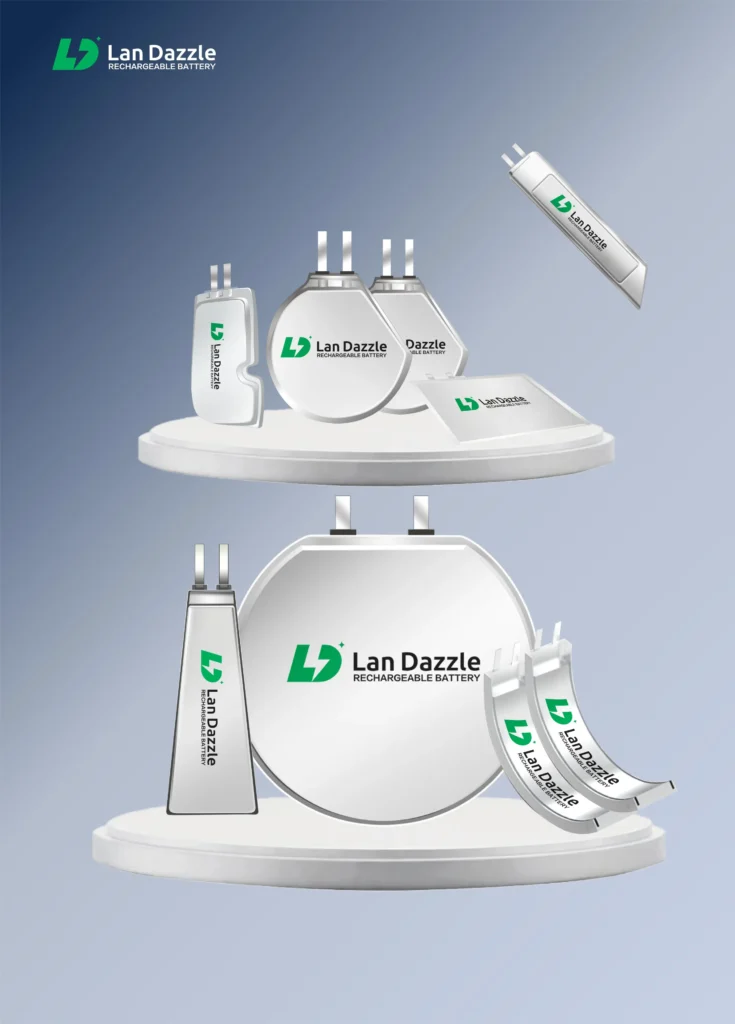
LanDazzle specializes in custom lithium polymer batteries for wearable and space-constrained applications. Our battery solutions can be developed around specific device requirements, including ultra-thin batteries, irregular-shaped batteries, curved batteries, and other customized form factors.
From initial dimensional evaluation to cell design and prototype development, the battery can be optimized around the product rather than forcing the product to adapt to a standard battery format.
For chest straps that require a thinner sensor module, better use of internal space, stable wireless transmission, or a rechargeable sealed architecture, battery design can become an important part of the overall product development process.
Need a Custom Battery for Your Chest Strap?
If your chest strap needs to be thinner, lighter, or provide longer runtime—or if you are considering replacing a coin-cell design with a rechargeable sealed architecture—battery development should be considered early in the product design process.
Providing the following information can help battery engineers evaluate a suitable solution more efficiently:
Device Dimensions + Available Battery Space + Target Capacity + Average/Peak Current + Required Runtime + Operating Temperature
Based on these parameters, engineers can evaluate the appropriate battery dimensions, shape, capacity, and configuration to develop a power solution that fits your chest strap design.
Email: info@landazzle.com
Whatsapp: +8618938252128