As health monitoring, sleep tracking, gesture control, and other features continue to be integrated into smart rings, components such as PPG sensors, temperature sensors, IMUs, Bluetooth SoCs, and miniature lithium batteries are all packed into a ring-shaped space measured in millimeters. Yet beyond these highly integrated components, there is another challenge that is often overlooked:
How do you charge something as small as a smart ring?
Unlike smartphones, which can be charged directly through a USB-C port, smart rings do not have enough space for a traditional charging interface and are also exposed to sweat and moisture during long-term use. As a result, the main smart ring charging methods are magnetic contact charging, inductive wireless charging, and NFC wireless charging.
1. Magnetic Charging
Magnetic charging is one of the more practical charging solutions currently used for smart rings.
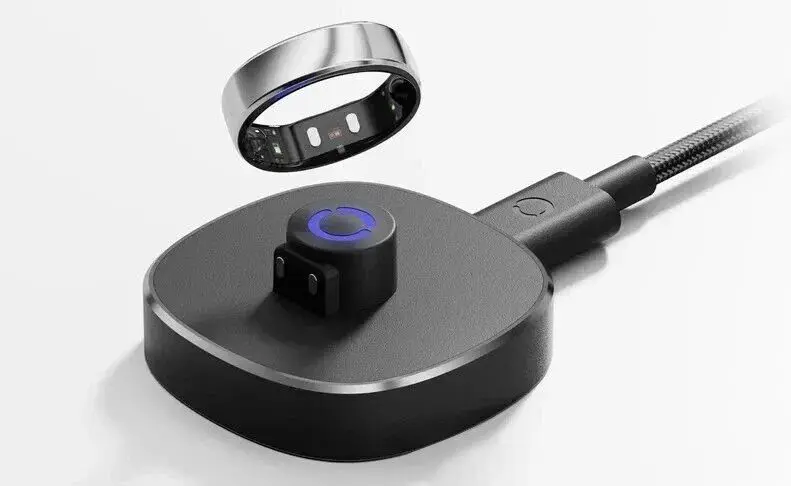
The basic structure is relatively simple: magnets or magnetic components are integrated into the ring and charging dock so that the ring can automatically attach to and align with the dock when placed on it. Electrical connection is then established through metal contacts, spring contacts, or Pogo Pins.
Looking more closely at the internal structure, RingConn’s charging solution is a typical example of magnetic alignment combined with contact charging. Charging contacts are built into the post of the charging dock, while corresponding metal charging contacts are positioned on the inner surface of the ring. The charging PCB then establishes the electrical connection through structures such as Pogo Pins and metal spring contacts.
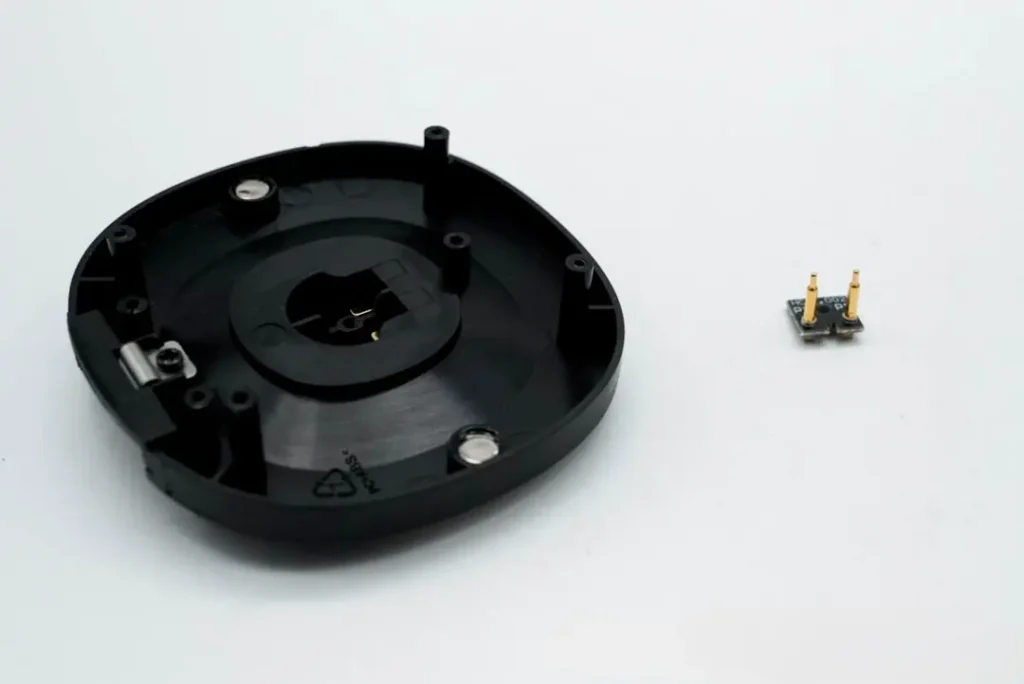
The biggest advantage of this approach is its relatively straightforward design. Once the contacts are connected, power can be supplied directly to the battery management circuit. Unlike wireless charging, it does not require an additional wireless charging receiver coil inside the ring, which can help save valuable internal space.
However, the limitations are also clear. Smart rings are constantly exposed to skin, sweat, and moisture during everyday use. If the charging contacts are directly exposed on the inner surface of the ring, issues such as sweat corrosion, oxidation, contact contamination, and long-term wear need to be carefully considered. When designing the waterproof structure, the area around the charging contacts also requires particular attention.
2. Inductive Wireless Charging
To eliminate exposed metal charging contacts, some smart rings have adopted true contactless wireless charging. Its basic principle is similar to that of conventional inductive wireless charging.
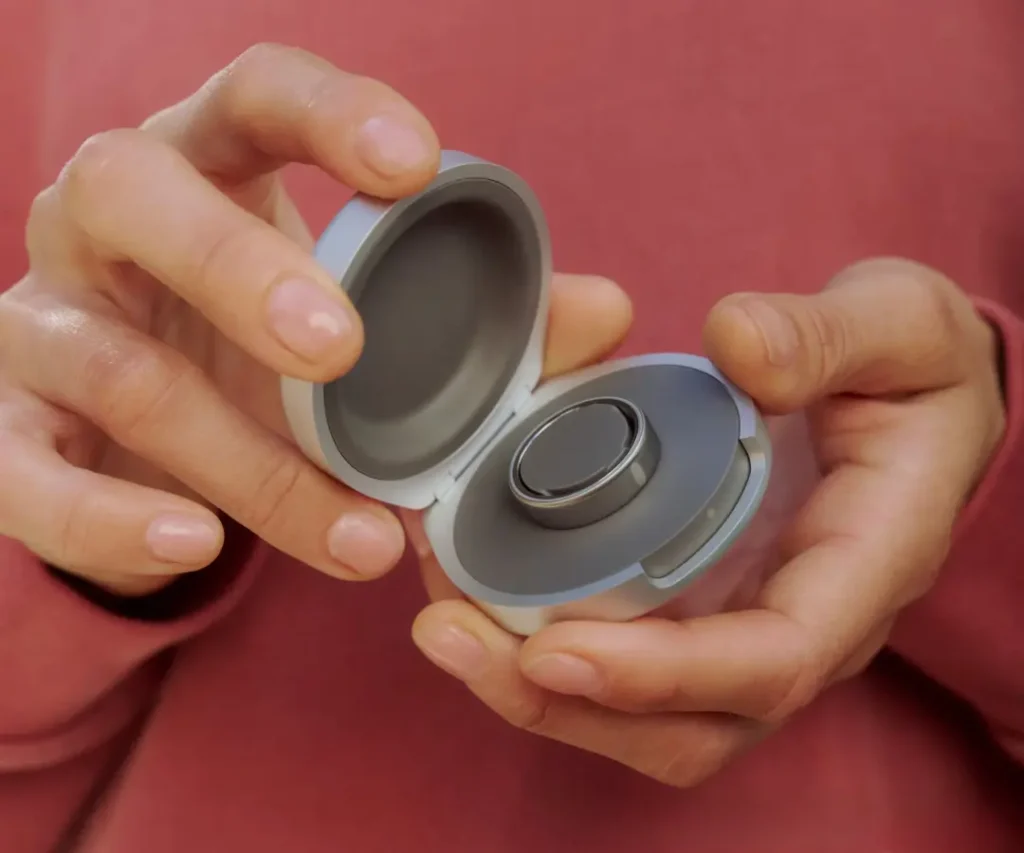
A transmitter coil is built into the charging dock, while a receiver coil is integrated into the ring. When the two coils are brought close together, the transmitter generates an alternating magnetic field, and the receiver coil captures energy through electromagnetic induction. The energy is then processed through rectification and power management circuits to charge the lithium battery inside the ring.
A teardown of the Oura Ring 4 provides a closer look at how this works internally. The charging dock contains a wireless charging induction coil, while the ring itself contains a corresponding wireless charging receiver coil and FPC structure. The receiver coil is sealed inside the ring using materials such as resin.
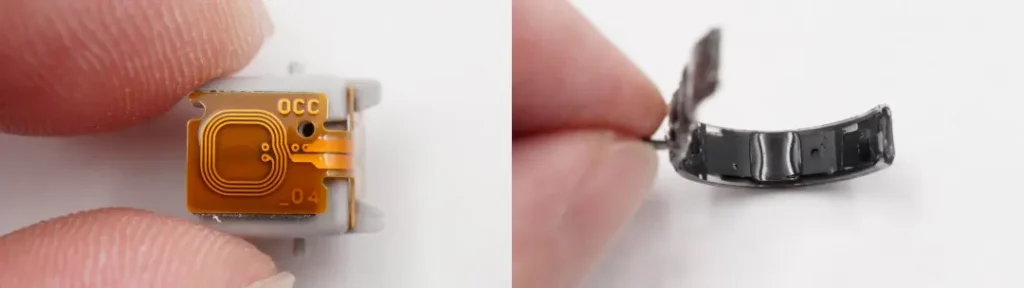
The biggest advantage of this design is that the ring itself does not need exposed charging electrodes.
Smart rings may need to be worn while washing hands, exercising, swimming, or even throughout the entire day. By eliminating exposed charging contacts, the electronic components can be more easily enclosed within a relatively complete sealed structure, helping reduce the risks associated with moisture, sweat, and corrosion.
3. NFC Wireless Charging
Another charging approach worth watching in the smart ring industry is NFC wireless charging.
NFC is commonly used for payments, access control, authentication, and data exchange. However, the near-field magnetic coupling used by NFC can also be used to transfer energy.
NFC charging is no longer just a concept. Some smart rings have already adopted this technology. Japan-based SOXAI, for example, states that its SOXAI RING 2 uses contactless NFC wireless charging. The ring features a rechargeable lithium-polymer battery and takes approximately 60–120 minutes to charge.
Based on currently available products, magnetic contact charging and dedicated inductive wireless charging remain two of the most common charging solutions for smart rings, while NFC wireless charging is gradually moving from chip-level solutions and reference designs into real-world products.
The compact form factor of NFC wireless charging makes it a technology worth continuing to watch as smart rings become smaller and more feature-rich.
Conclusion
Overall, magnetic contact charging offers a mature and straightforward design; inductive wireless charging eliminates exposed electrodes, making it better suited to waterproof and fully integrated designs; while NFC wireless charging enables greater miniaturization and can combine charging with communication, demonstrating strong potential for further integration and making it a technology worth watching.
Designing a Smart Ring? Start with the Battery.
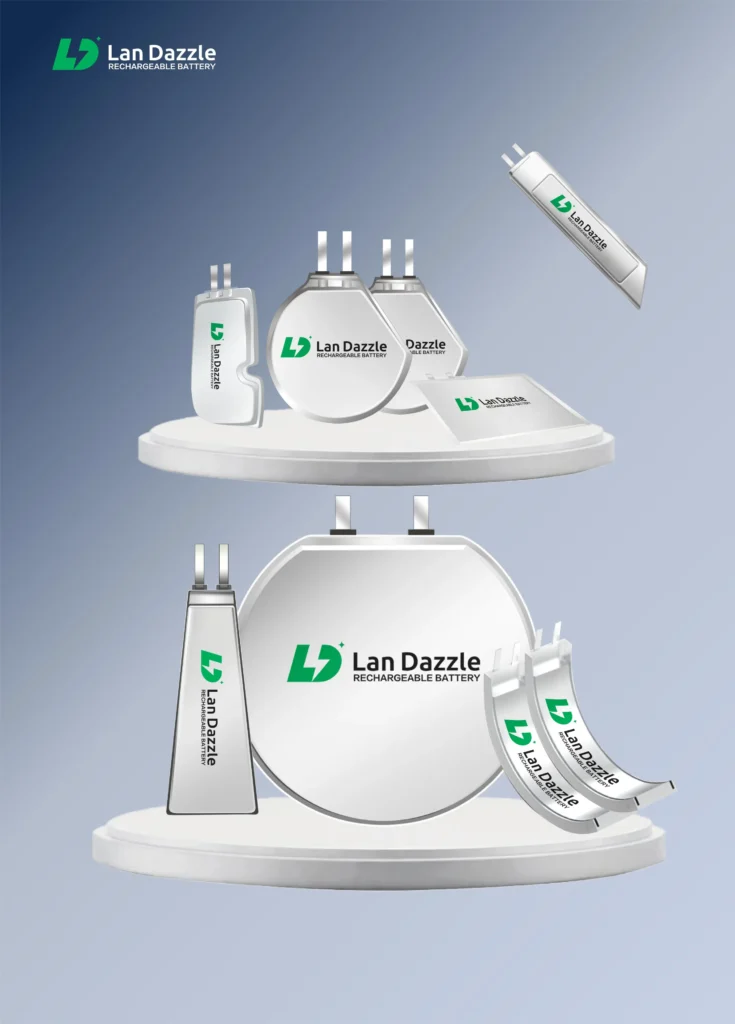
Choosing the right charging method is only one part of smart ring design. The battery’s shape, thickness, capacity, and placement also have a direct impact on the ring’s size, runtime, waterproofing, and overall user experience. If you’re developing a smart ring and need a battery that fits your specific space constraints, LanDazzle can help design a custom LiPo battery around your device architecture.
Have a smart ring battery project in mind? Contact our engineering team to discuss your requirements.
Email: info@landazzle.com
Whatsapp: +8618938252128