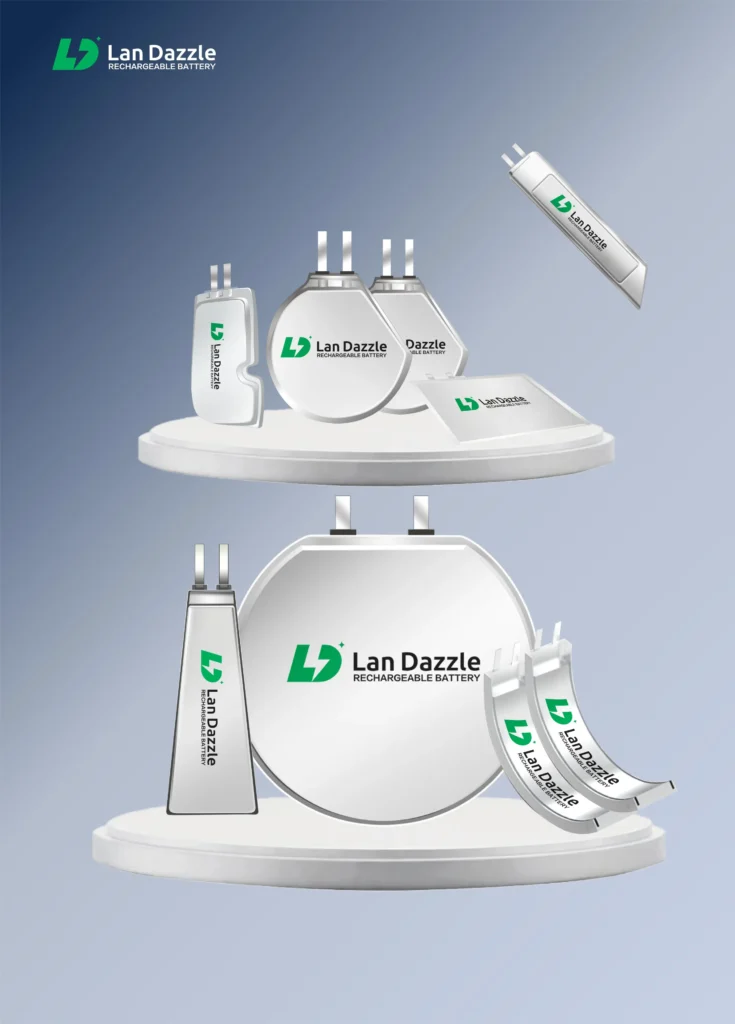
Designing power systems for next-generation AI wearables presents a persistent engineering paradox: users demand smaller, lighter form factors and multi-day battery life, while enclosure space remains severely restricted.
Standard off-the-shelf rectangular LiPo cells waste up to 35% of the usable volumetric space in non-rectangular or curved wearable enclosures. LanDazzle serves as a specialized, turnkey battery engineering and manufacturing partner for B2B hardware teams (CTOs, NPI Leads, and Mechanical Engineers). By combining high-voltage electrochemical systems, advanced stacking lamination, and custom-shaped pouch packaging, we empower teams to maximize battery capacity without compromising mechanical design, thermal safety, or wearing comfort.
Performance & Customization Limits
- Cell Thickness Envelope: Ultra-thin designs from 0.6 mm to 9 mm (accuracy ±0.05 mm)
- Narrow-Bar Width Limit: Down to 5.0 mm (optimized for smart glasses temple arms)
- Volumetric Energy Density: Up to 800 Wh/L (utilizing High-Voltage LCO & Silicon-Carbon Anodes)
- Operating Voltage Range: 3.0V – 4.45V nominal plateau
- Cycle Life Performance: ≥ 500 cycles to 80% capacity (standard); up to 1,000 cycles for premium formulations
- Global Safety Compliance: UN38.3, IEC 62133-2, UL 1642, MSDS, and ISO 13485 / IEC 60601-1 (medical-grade baseline)
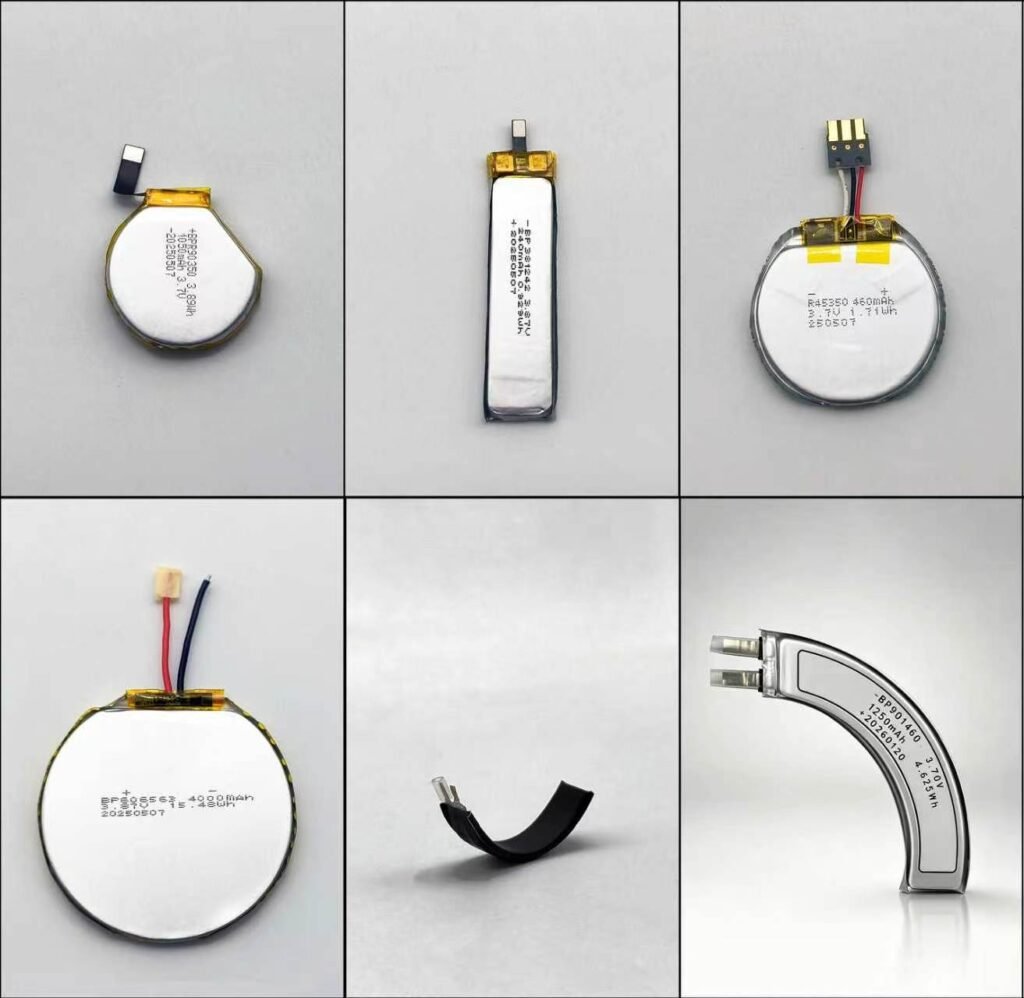
Quick Selection Matrix by Application Form Factor
To streamline early-stage architectural trade-offs, use the selection table below to evaluate key battery specifications across primary wearable categories:
| Wearable Category | Target Geometry | Typical Capacity | Critical Dimensions | Electrochemical & Safety Architecture |
| Smart Rings | Arc-Curved Pouch | 15 – 30 mAh | Thickness 1.5–2.5 mm (ID: 17–22 mm) | Stress-free curved lamination, flex-PCB PCM, zero internal deformation |
| Smart Glasses / AR | L-Shape / Trapezoid | 80 – 250 mAh per side | Width ≥ 5.0 mm Thickness 2.0–3.5 mm | Dual-cell balanced charging, ultra-narrow geometry, low internal resistance |
| Smartwatches & Bands | Prismatic / Round | 250 – 500 mAh | Thickness 0.6–4.0 mm | 4.45V High-Voltage LCO, 2C fast-charge capability, high pulse current support |
| TWS & Hearing Aids | Pin / Micro Pouch | 30 – 80 mAh (Bud) 400–700 mAh (Case) | Custom Pin / Micro-pouch | Low self-discharge (<1.5%/month), biocompatible aluminum-plastic pouch |
| Medical Devices & Sensors | Thin Flexible Pouch | 100 – 2,000 mAh | Thickness 1.0–3.0 mm | ISO 13485 manufacturing control, skin-contact thermal isolation (<43°C), extended shelf life |
| Smart Cards & Payment Tags | Ultra-Thin Flat | 10 – 40 mAh | Thickness 0.6–0.9 mm | Sub-millimeter lamination, bend-resistant separator, long-term standby retention |
Real-World Engineering Applications of Custom-Shaped Batteries
Different wearable form factors present unique physical and electrical stress profiles. LanDazzle formulates custom cell architectures tailored to specific mechanical and operational constraints.
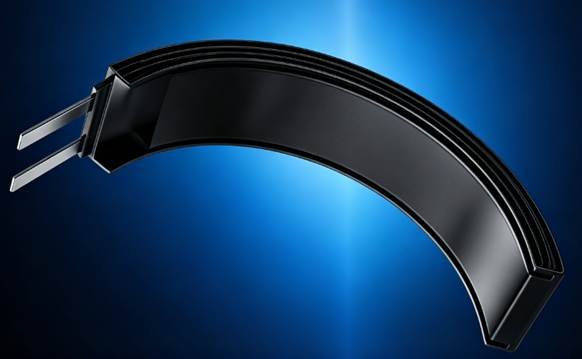
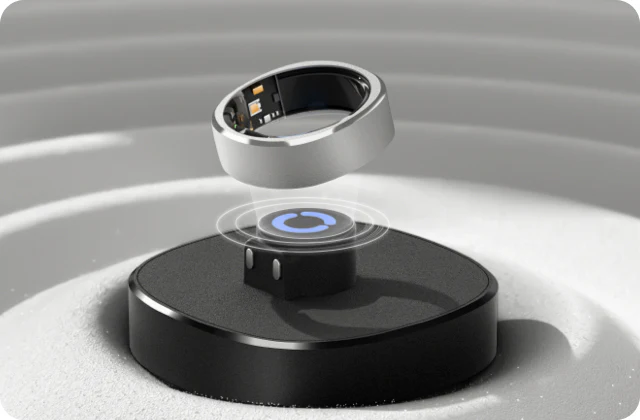
1. Smart Rings: Precision Arc-Curved Pouch Cells
- Engineering Challenge: A smart ring requires a battery cell that can precisely follow a smooth circular arc (typically with a 17–22 mm inner diameter). Traditional winding or post-assembly bending methods can introduce mechanical stress into the electrode stack, potentially causing electrode deformation, separator damage, internal micro-shorts, and accelerated capacity degradation.
- LanDazzle Solution: We use a customized stacking process followed by precision thermoforming. The electrodes and separators are first assembled into a flat stacked cell structure, then formed into the required arc shape through controlled heat pressing before electrolyte filling and vacuum sealing. This approach minimizes internal mechanical stress while maintaining stable impedance performance and long cycle life.
2. Smart Glasses & AR Headsets: Ultra-Narrow & L-Shaped Cells
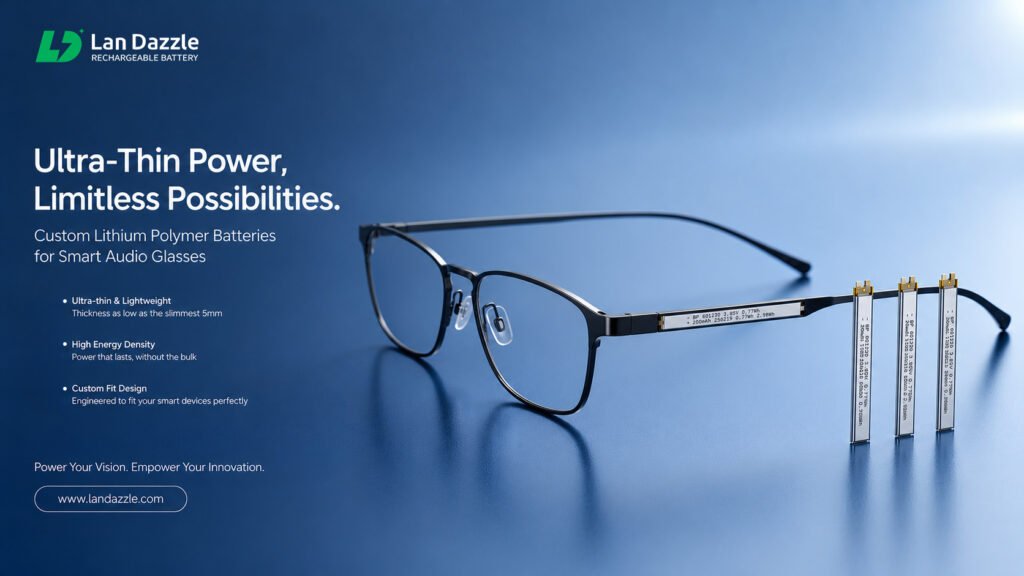
- Engineering Challenge: Glasses temples offer long, narrow, and tapered cavities (often tapering down to 5 mm in width). Standard rectangular cells leave significant empty spaces at the corners.
- LanDazzle Solution: We engineer dedicated trapezoidal, L-shaped, and ultra-narrow strip batteries. Furthermore, for systems utilizing dual batteries (one in each temple arm), we provide matched-pair cells with tight internal resistance (IR) and voltage tolerances (±2mV) to ensure balanced discharge and prevent premature system cut-offs.
3. Smartwatches & Fitness Trackers: High Energy Density & Fast Charging
- Engineering Challenge: Modern smartwatches pack power-hungry components—continuous optical PPG heart rate sensors, dual-band GPS, AMOLED displays, and cellular radios—into a slim casing.
- LanDazzle Solution: By utilizing 4.45V High-Voltage Lithium Cobalt Oxide (HV-LCO) mixed with nano-scale silicon-carbon anode material, we push volumetric energy density up to 800 Wh/L. Our cell chemistry supports fast-charging profiles (0 to 80% charge in 35 minutes) without compromising cycle longevity or triggering thermal runaway.

4. Biocompatible Medical Wearables & Continuous Body Monitors
- Engineering Challenge: Wearables used for continuous health monitoring (e.g., ECG patches, glucose monitors) stay in direct skin contact for days or weeks. They demand absolute zero-leakage security, biocompatibility, and tight thermal regulation.
- LanDazzle Solution: Manufactured under ISO 13485 standards, our medical-grade cells feature medical-grade outer aluminum-plastic films and redundant PCM protection circuits. Thermal dissipation is engineered so that even during high power transmission or fast charging, outer surface temperature rises stay strictly below 43°C, fully compliant with IEC 60601-1 requirements for skin-contact safety.
Core Electrochemical & Process Technologies
Our manufacturing capabilities are grounded in material science and precision assembly techniques explicitly engineered for micro-battery formats.
Advanced Electrochemical Formulations
- Silicon-Carbon (Si-C) Composite Anodes: Increases theoretical anode capacity beyond pure graphite, allowing higher energy storage in 20% less volume.
- High-Voltage LCO (4.4V – 4.45V): Raises the operating voltage plateau to unlock additional mAh per unit mass without sacrificing structural crystal stability during repeated cycling.
- Low-Temperature Electrolyte Additives: Ensures robust power delivery even in cold environments, retaining up to 85% capacity at -20°C.
Precision Manufacturing & Micro-Packaging
Integrated Ultra-Thin PCM / BMS: Micro-protection circuit modules (PCM) can be directly integrated onto the battery tab head using laser micro-welding and high-density epoxy potting, creating an all-in-one plug-and-play module that saves precious millimeters inside the device.
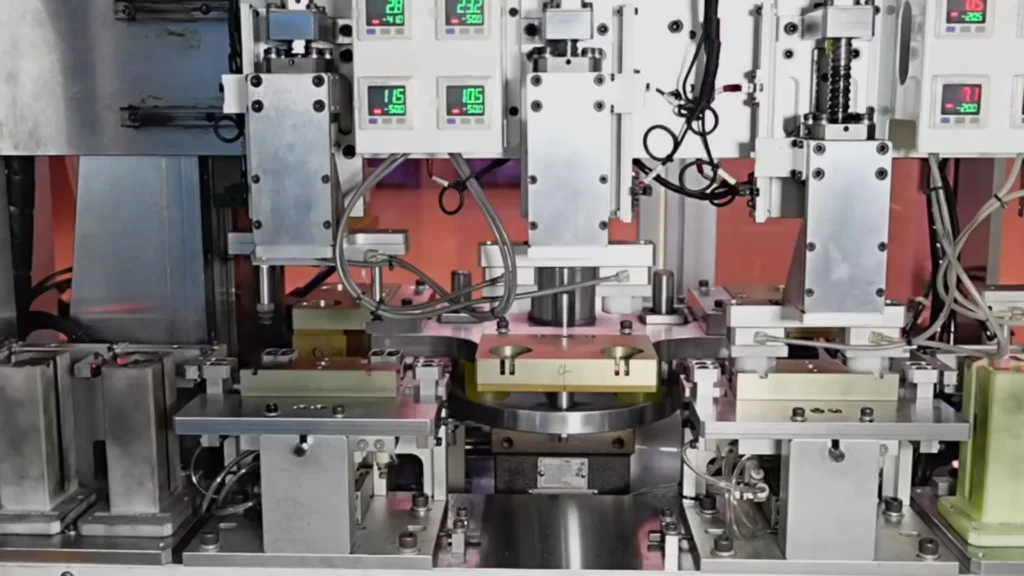
Stacking vs. Winding: Traditional winding creates bulky, uneven edges and high internal stress points. Our automated Z-stacking lamination places positive, separator, and negative layers flatly, optimizing corner utilization, reducing internal resistance, and eliminating mechanical edge strain.
FAQs about Wearable Device Battery Solutions
The questions we hear most often from product engineers and procurement teams when they start a custom wearable battery project.
How long does a typical wearable device battery last per charge?
Runtime depends on capacity (mAh) and average draw. A typical smartwatch (300mAh) lasts 2–7 days with always-on display, a fitness band (100–200mAh) lasts 7–14 days, and TWS earbuds (50mAh per bud + 500mAh case) deliver 5–7 hours of playback plus 24+ hours from the case. Smart rings with 20–30mAh cells typically need a charge every 4–6 days.
How thin can a wearable battery actually be made?
Mass-production LiPo cells today reach down to 0.5–1mm in thickness with stacked-lamination construction. For most wearables, 1.5–3mm is the practical sweet spot — thinner cells reduce capacity faster than they save space. For specifics, see our analysis of 0.6mm thin battery feasibility.
Are wearable batteries safe for continuous skin contact?
Yes, when designed correctly. Wearable cells use biocompatible aluminum-plastic film pouches, integrated PCM/BMS protection, and pass UN38.3, IEC 62133, and (for medical-adjacent products) IEC 60601 safety testing. Skin-contact temperature stays below 43°C even during fast charge thanks to thermal isolation in the enclosure.
Can wearable batteries be made in custom curved or irregular shapes?
Yes — that is the main reason wearables use pouch-format LiPo instead of rigid cylindrical cells. Curved (smart ring), L-shaped (smart glasses temple), trapezoidal (watch case), and even hollow-center geometries are all manufacturable. Custom tooling is amortized within the first production run for orders above ~5,000 units.
How many charge cycles does a wearable battery last?
Quality stacked-lamination LiPo cells deliver 500+ full cycles to 80% of original capacity, which translates to roughly 2–3 years of daily-charge use. Premium formulations push this to 800–1,000 cycles. Cycle life drops significantly if the device routinely charges in temperatures below 0°C or above 45°C.
Quality Control & Global Regulatory Compliance
Every custom battery batch leaves our factory backed by stringent quality verification and complete compliance packages required for worldwide distribution:
Testing Suite Breakdown
Regulatory Certification Support: Full documentation provided for UN38.3 (air/sea transport), IEC 62133-2, UL 1642, CE, RoHS, REACH, and MSDS.
Electrical Performance: Automated 100% impedance screening, capacity grading, voltage retention (shelf-life verification), and fast C-rate discharge evaluation.
Mechanical & Environmental Stress: drop test, nail penetration/puncture resilience, high-temperature storage, thermal shock, and vibration resistance.
Safety Protection Circuit Verification: Overcharge cut-off, overdischarge protection, short-circuit response time (<100 microseconds), and thermal fuse activation.
Accelerate Your Wearable Hardware Development
Stop compromising your mechanical designs around rigid standard batteries. Partner with LanDazzle to build a custom power source tailored precisely to your product’s spatial boundaries and performance metrics.
Email: info@landazzle.com
Whatsapp: +8618938252128