Table of Contents
As a manufacturer that has been deeply involved in custom lithium battery manufacturing for over ten years, we talk to product engineers and designers every day. And most of them face the same problems:
Standard batteries either don’t fit the device space and simply can’t be installed,
or their performance is not good enough—they can’t meet the required runtime or discharge power.
As a result, product development is delayed, and mass production becomes difficult.
In fact, custom lithium batteries are not as complicated as many people think.
In this guide, we’ll share our real manufacturing experience to clearly explain the basics of custom lithium batteries—from why customization is needed, to how custom batteries are designed, as well as key components and safety certifications.
Everything here is practical and easy to understand. Even beginners can quickly grasp the essentials, avoid common mistakes, and speed up product development with more confidence.
Why Do You Need Custom Lithium Batteries?
Limitations of Standard Battery Packs vs. Advantages of Custom Solutions
Standard batteries are designed for general-purpose products, such as power banks or simple toys. But for products with special design or performance requirements, they are often not enough. That’s exactly why custom batteries exist.
Limitations of Standard Batteries
1. Fixed size
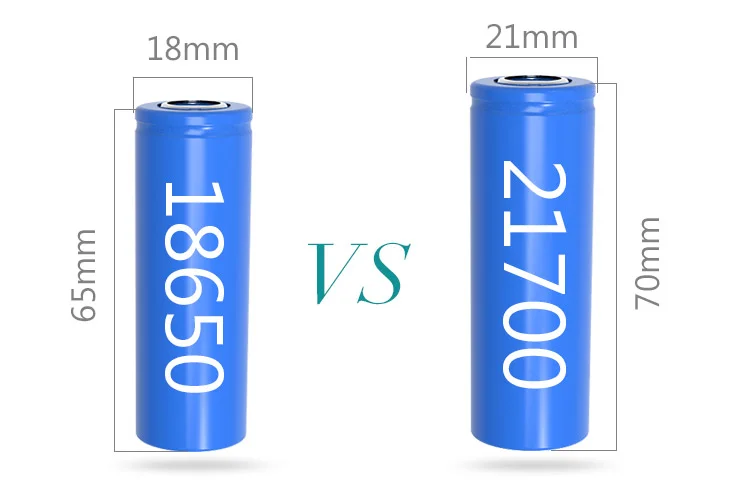
Standard batteries come in fixed shapes and sizes, such as 18650 or 21700 cylindrical cells, or regular rectangular Li-polymer batteries.
If your device has an irregular shape, an ultra-thin design, or very limited internal space—like smart glasses or compact inspection devices—a standard battery simply won’t fit.
Changing the core structure of your product just to fit a battery would increase cost and hurt the user experience.
2. Fixed performance
Standard batteries also have preset specifications—capacity, discharge rate, and operating temperature.
However, many products have very specific needs:
- Industrial equipment may require high discharge current
- Outdoor devices may need to work reliably at –40°C
- Wearable devices often require ultra-thin batteries with high energy density
These requirements are beyond what standard batteries can offer.
Advantages of Custom Batteries
The biggest advantage of customization is solving these problems precisely.
At our factory, customization means “designing the battery around your exact needs.”
- Size: We can control dimensional tolerance within ±1 mm, so the battery fits perfectly into your device—no redesign needed.
- Performance: Capacity, discharge rate, operating temperature range, and cycle life can all be adjusted based on your application.
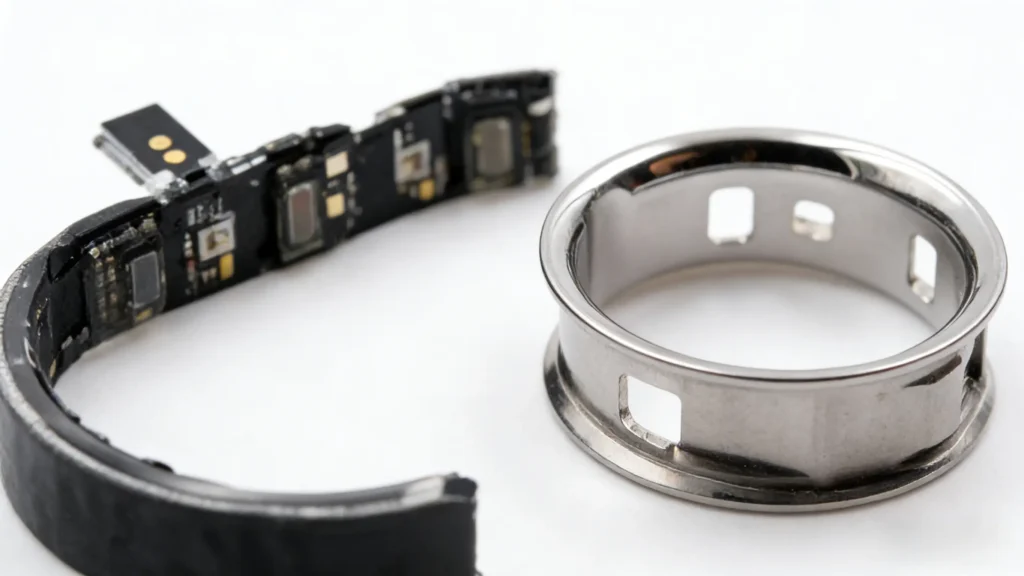
- For example, smart rings may need 1.7 mm ultra-thin batteries, which we produce using stacked cell technology.
- Outdoor devices that face extreme cold use optimized cell materials for low-temperature performance.
Lower Cost, Better Products
Custom batteries can also reduce cost and improve product competitiveness.
Some customers originally use two standard batteries connected together, which takes more space and adds extra weight. By switching to one custom-shaped battery, they can:
- Reduce the number of components
- Make the device lighter and thinner
- Avoid paying for unused capacity or unnecessary size
After all, extra size and extra capacity both mean extra cost—and custom batteries help you pay only for what you actually need.
Typical Application Scenarios for Custom Batteries
Based on our real factory orders, the use of custom lithium batteries is growing quickly. Most projects come from the following fields—all very familiar to product engineers and designers.
1. Wearable Devices
Examples include smart glasses, smart rings, and smart bands.
The key requirements for these products are ultra-thin size, very small volume, and lightweight design.
The thinnest custom battery we’ve produced is only 0.6 mm, and the narrowest is 5mm. These batteries fit perfectly into tiny device spaces while still delivering reliable battery life and high safety.
2. Industrial Equipment
This includes industrial instruments, inspection devices, and AGV robots.
These devices often face one or more challenges:
- Very limited internal space
- Harsh environments (high temperature, low temperature, dust, oil)
- High discharge current requirements
For example, AGV robots start and stop frequently, which requires high-rate discharge batteries to ensure fast response and stable power output.
We once customized an AGV battery for a logistics company that supported 12 hours of continuous heavy-load operation, greatly improving work efficiency.
3. Medical Devices
Such as portable diagnostic equipment and compact medical monitors.
These devices have extremely high requirements for safety and stability. Any risk—leakage, overheating, or fire—is unacceptable.
At the same time, they still need to be small in size and long-lasting.
For these projects, we develop medical-grade custom batteries and carry out strict safety testing to ensure safe and stable operation throughout their service life.
More Applications
Custom batteries are also widely used in new energy equipment, outdoor devices, and defense-related equipment.
Simply put, if a standard battery can’t meet your needs, customization is an option.
Our factory handles custom battery projects, giving us strong experience across many use cases. No matter what type of device you’re developing, there’s usually a practical custom battery solution to match it.
Custom Battery Design and Manufacturing Process
Many customers think custom batteries are made by “building a sample first and then fixing problems later.”
In reality, that’s not how we work.
In our factory, the custom battery process is well-structured and fully controlled, from the first discussion to mass production delivery. Every step follows clear rules. This helps ensure the final battery meets all requirements and avoids repeated changes that waste time and money.
1. Requirement Analysis & Specification Definition
This is the first and most important step.
If the requirements are not clearly defined, everything that follows can go wrong.
We assign experienced engineers to communicate one-on-one with the customer and confirm every detail in advance. Late changes are expensive and often delay the project.
Key parameters we confirm include:
- Available space: length, width, thickness, and any special internal structure
- Capacity requirement: how long the device needs to run, converted into battery capacity
- Discharge rate: maximum working current of the device
- Operating temperature: room temperature, –40°C cold, or up to 60°C high temperature
- Safety requirements: such as waterproofing or explosion protection
- Special functions: battery level display, communication interface, etc.
After this discussion, we prepare a detailed specification document with all parameters clearly listed.
Only after the customer confirms it do we move to the next step. This prevents misunderstandings like “what you expected” vs. “what we delivered.”
2. Simulation & Prototype Design
Once requirements are confirmed, we move into the design stage.
This step answers two key questions: Can it be done? And how can it be done better?
We use professional simulation software to:
- Simulate battery performance at different temperatures
- Check whether the battery structure fits the device space
- Identify potential design risks early
After simulation approval, we produce prototype samples in small quantities.
These prototypes are built exactly according to the final design, including:
- Cell selection
- Mechanical structure
- BMS integration
Before sending samples to the customer, we run internal tests to confirm size and performance. Then the customer installs the battery into the device for real testing.
If any issue appears, we adjust quickly until the result is satisfactory.
A quick reminder:
During the prototype stage, don’t hesitate to give feedback.
Whether you want the battery thinner or need longer runtime, early changes are much easier and cheaper than late-stage modifications.
3. Production & Testing Process
After the sample is fully approved, we enter formal production.
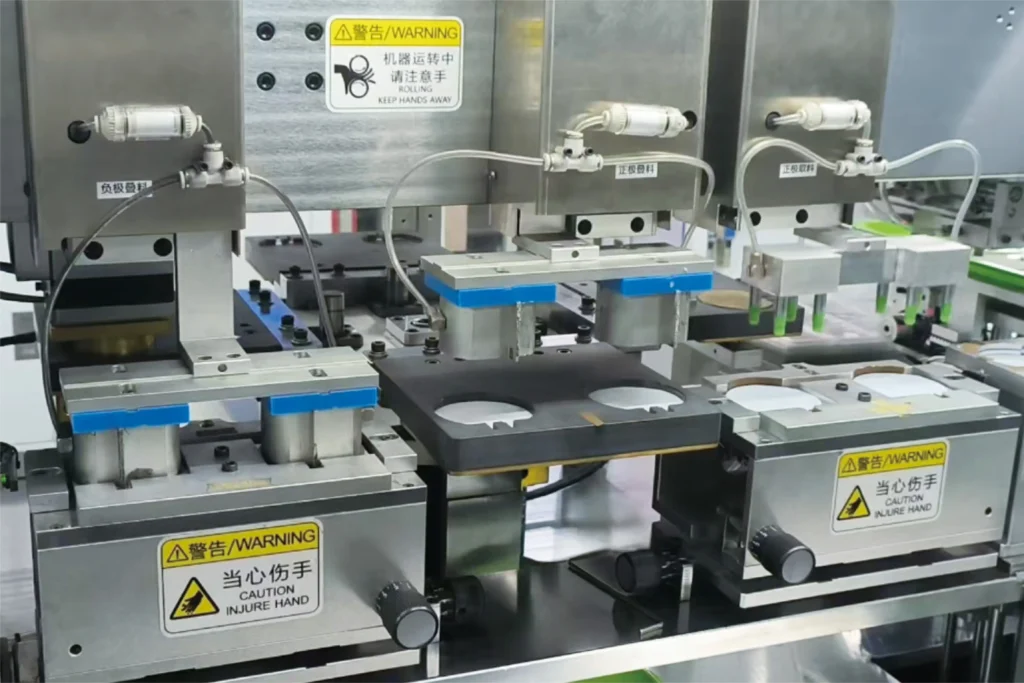
Our factory uses semi-automated production lines. From cell selection and assembly to welding and packaging, each step is handled by trained staff and is fully traceable.
During production, we perform multiple tests, such as:
- Cell testing: only Grade-A cells are used
- Welding inspection: to ensure strong connections and avoid poor contact
- Packaging checks: to prevent leakage or short circuits
After production, all batteries go through final testing, including:
- Capacity test
- Discharge rate test
- Safety test
- Environmental test
Only batteries that pass all tests can move forward.
Many customers ask how long testing takes.
- Standard tests usually take 3–5 days
- Special tests (low-temperature, explosion-proof, etc.) may take longer
We always plan testing carefully to minimize impact on mass production schedules.
4. Preparation for Mass Production
Once final testing is complete, we prepare for large-scale production.
This includes:
- Optimizing production processes
- Calibrating production equipment
- Preparing raw materials (cells, housings, connectors) to avoid supply interruptions
Before full production, we run a small trial batch (usually a few hundred units).
After another round of testing confirms stability, we proceed with mass production.
During mass production:
- We perform regular sampling inspections
- Keep detailed production records for full traceability
We also communicate closely with customers about delivery schedules, adjusting production plans based on order volume to meet their timeline as efficiently as possible.
Key Components of a Custom Lithium Battery
The quality of a custom battery mainly depends on three key components:
the battery cell, the Battery Management System (BMS), and the mechanical housing & connectors.
All three are essential. If any one of them has a problem, battery performance and safety will be affected. That’s why our factory follows strict standards when selecting and designing each component.
1. Battery Cell (Chemistry & Shape)
The battery cell, also called the cell, is the core of the battery—the “heart” of the system.
Its chemical type and physical shape directly determine key factors such as capacity, energy density, operating temperature, and safety.
Cell chemistry
The most commonly used chemistries include:
- Ternary lithium (NCM):
High energy density and light weight. Best for devices that need long runtime in a small space, such as wearables and compact instruments. - Lithium iron phosphate (LFP):
Very high safety and long cycle life—often thousands of cycles. Ideal for industrial equipment, medical devices, and outdoor products. - Silicon–carbon anode cells (our latest focus):
By adding silicon–carbon material to NCM or LFP cells, energy density can be improved without sacrificing safety. These are suitable for devices that require extra-long battery life.
Cell shape
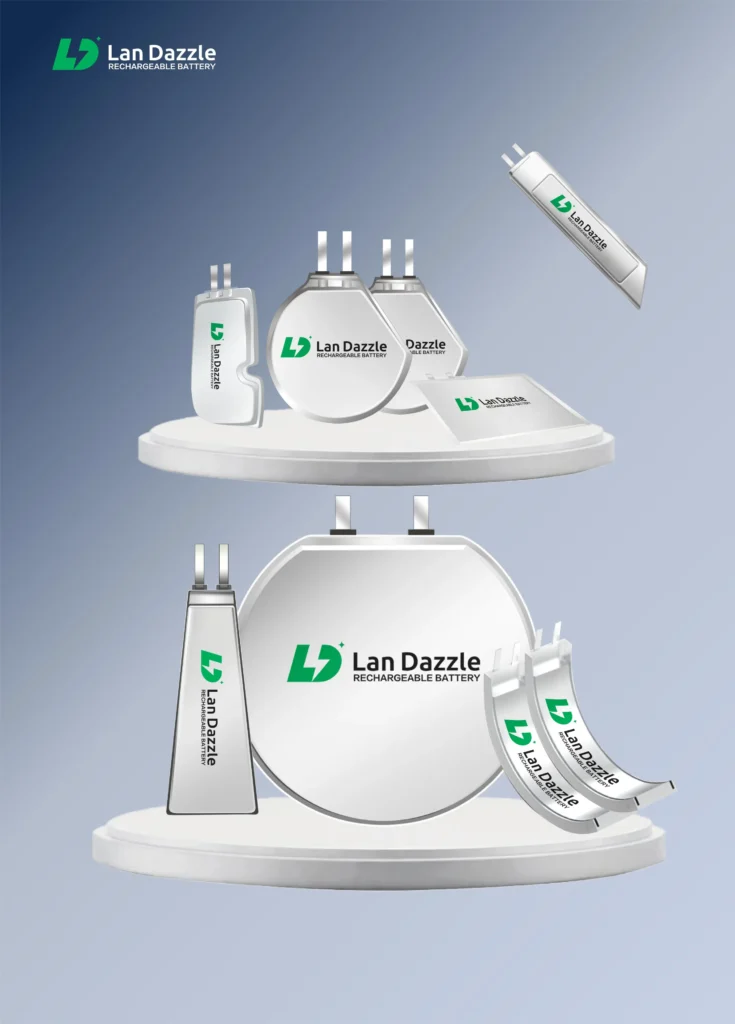
Custom batteries offer great flexibility in shape. Based on device needs, we can design:
- Rectangular
- Round
- Curved
- Irregular shapes
- Ultra-thin or ultra-narrow designs
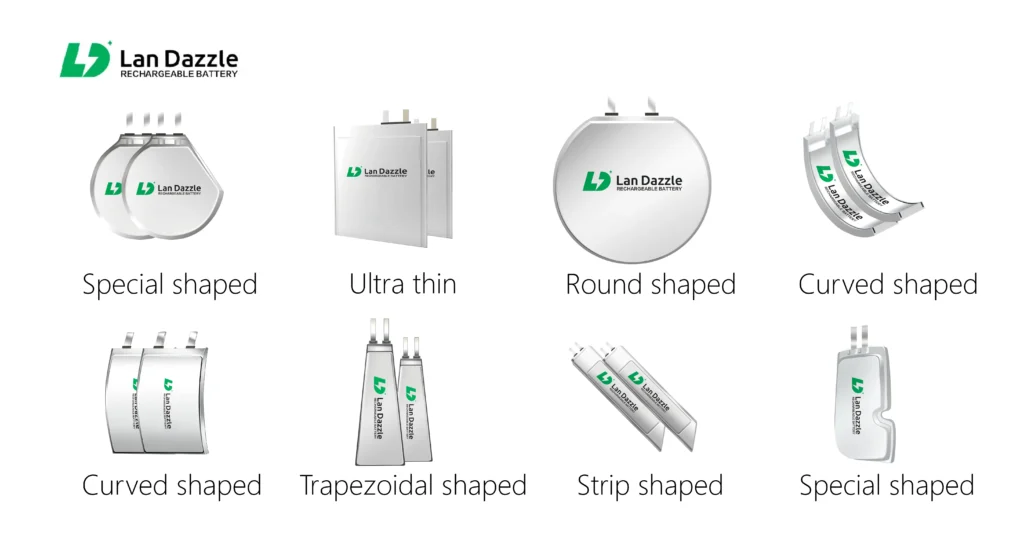
For example, smart rings require curved batteries. We use stacked cell technology to match the ring’s curved structure perfectly.
2. Battery Management System (BMS)
If the cell is the heart, the BMS is the brain of the battery.
It monitors and protects the battery to ensure safe and stable operation. A custom battery without a BMS is dangerous, as it can easily suffer from overcharge, over-discharge, short circuit, or overheating.
Our BMS designs are customized for each project, and the core functions include:
- Overcharge and over-discharge protection to extend battery life
- Short-circuit protection to instantly cut off power in abnormal conditions
- Temperature protection, stopping operation if the battery gets too hot or too cold
- Battery level monitoring for real-time status display
Depending on customer needs, we can also add:
- Communication functions for remote battery monitoring
- Cell balancing to keep all cells at the same voltage and extend pack life
- Thermal management features for stable operation in extreme temperatures
3. Mechanical Housing & Connector Design
Although the housing and connectors are not energy-related components, they have a direct impact on compatibility, protection, and long-term reliability. Many problems in real use come from poor design in these areas.
Housing design
The housing must fit the device’s internal space precisely while protecting the cell and BMS.
We choose materials based on the application:
- Lightweight housings for wearable devices
- More robust protection for industrial or outdoor equipment
Connectors
Connectors are the bridge between the battery and the device.
We select connectors with stable contact and high reliability, and customize the type and size based on the device interface. This ensures steady power delivery and prevents issues like poor contact or unexpected power loss.
Together, these three components form a safe, reliable, and application-ready custom battery solution.
Certifications & Safety Standards
For custom lithium batteries, safety always comes first—especially for export products.
Without the required certifications and safety tests, batteries cannot pass customs or enter the market. This is why safety is the top priority in our factory.
Every custom battery we produce goes through strict certification and testing to make sure it meets both local and international safety standards.

Common Certifications (UL, CE, UN38.3, etc.)
The most common certifications for custom lithium batteries include UL, CE, UN38.3, and RoHS.
Each certification applies to different regions and use cases. We help customers choose the right certifications based on where the product will be sold and how it will be used.
- UL certification
A safety certification for the U.S. and North American market. Batteries must pass UL testing to be sold in the United States. It mainly checks battery safety under conditions such as overcharge, short circuit, and overheating. - CE certification
Required for products sold in the European Union. A battery must pass CE certification before it can enter any EU country. - UN38.3 certification
A global transportation safety standard. Any lithium battery shipped internationally—by air, sea, or land—must pass UN38.3 testing. - RoHS certification
An EU environmental standard that limits hazardous substances such as lead, mercury, and cadmium. Without RoHS compliance, products may be banned from sale in the EU.
Our factory can assist with all required certifications based on your needs. We support customers throughout the entire process—from document preparation to testing—so certification does not delay product launch.
Battery Safety Testing
(Puncture, Short Circuit, Thermal Shock)
In addition to formal certifications, we also perform strict safety tests on every batch of custom batteries to ensure real-world safety.
Common safety tests include:
- Puncture test
A sharp needle is used to pierce the battery, simulating damage from sharp objects. A qualified battery must not catch fire, explode, or leak. This is one of the most demanding safety tests. - Short-circuit test
Simulates a direct short between the positive and negative terminals. A safe battery will cut off the circuit immediately and will not overheat or ignite. - Thermal shock test
Tests battery stability under extreme temperatures. The battery is cycled between –40°C and 60°C to check performance and structural stability.
Other tests, such as crush and compression tests, may also be applied depending on the application.
Contact & Consultation
This concludes our Basic Guide to Custom Lithium Batteries, based entirely on over ten years of real factory experience—no unnecessary theory, only practical knowledge. We hope it helps product engineers and designers better understand custom battery solutions.
If your device cannot use standard batteries—whether due to size, performance, safety, or certification requirements—feel free to contact us anytime.
Our professional engineering team provides one-on-one support, covering everything from requirement analysis and prototype design to production, delivery, and after-sales support.
We’re here to help you solve battery challenges faster, shorten development time, and bring your product to market with confidence.
Email: info@landazzle.com
Whatsapp: +8618938252128