Many customers ask this question right at the beginning:
“If it’s the same lithium battery, why can other suppliers offer a 2-week lead time at $1, while you need 6 weeks and charge $3? Are you overcharging us?”
The truth is: no, we’re not.
The difference is not about “being expensive” —
it’s about the difference between “quick and easy” and “professional and reliable.”
What looks cheaper and faster at first often skips key steps.
What we do takes more time because it’s designed to be safer, more stable, and ready for real mass production.
Why can the price of a “lithium battery” differ by 2–3 times?
First, you need to understand one key point:
a standard battery and a custom battery are not the same thing at all.
A standard battery is mass-produced and off-the-shelf — like ready-made clothing.
No redesign is needed. You take it and use it. That’s why the cost is low.
A custom battery, on the other hand, is like a tailored suit.
It has to be designed around your device size, your application, and your usage conditions, starting from scratch. Naturally, the cost is very different.
More importantly, many customers think “the cell price equals the total battery cost.”
This is the biggest misunderstanding.
As a manufacturer, we can say this clearly:
the cell is the largest cost part, but it is never the whole cost.
For example:
- Design cost is not just drawing a simple diagram.
Engineers must calculate voltage and capacity matching, ensure compatibility with your device, and reduce safety risks. This requires experienced engineers and repeated verification. - Testing cost cannot be skipped.
Functional tests, aging tests, and environmental tests all require equipment, time, and labor.
All of these costs are shared across every battery produced.
That’s why, even though both are called “lithium batteries,” the final price can be very different.
Why do some manufacturers promise 2 weeks, while others need 6 weeks?
The difference in lead time mainly comes down to “off-the-shelf solutions” vs. “true custom development.”
Manufacturers who claim a 2-week lead time usually fall into one of these cases:
- They already have an existing solution that is very close to your requirements, so they only change the housing or adjust a few parameters. No redesign, no new samples, no full testing — so it’s fast.
- Or they don’t fully consider later validation and certification. They take the order first, and deal with problems later.
When we quote 6 weeks, it reflects the real, full development process.
If your project starts from zero, we need time to:
- Design a new battery solution
- Open new molds
- Build and test multiple samples
- Validate performance and safety
In some cases, this even involves new welding or packaging processes.
For example, with custom-shaped pouch batteries, mold development alone can take about 30 days. Add prototyping and testing, and this time simply cannot be skipped.
A lithium battery is a core component.
We believe it’s better to be a little slower — and make sure it’s stable, safe, and reliable.
What factors determine the cost of custom lithium batteries?
For most buyers, cost is the top concern.
But many people focus only on the unit price and ignore the hidden costs — and in the end, they actually spend more.
As a manufacturer, we break the cost down into five key parts.
We’ll explain each one clearly, so you know exactly where your money goes.
1. Cell cost
The cell is the core of the total cost. Price differences mainly come from three factors:
- Brand
Branded cells usually cost 20%–30% more, but they offer better consistency and longer cycle life, which reduces risk in long-term use. - Performance
High energy density, high discharge rate, or long-life cells are more expensive than standard cells. - Consistency
Better cell consistency means lower failure rates in the final battery pack.
The upfront cost is higher, but after-sales issues are reduced — making it more cost-effective over time.
2. Structure and process cost
This part is often overlooked, but the differences can be significant.
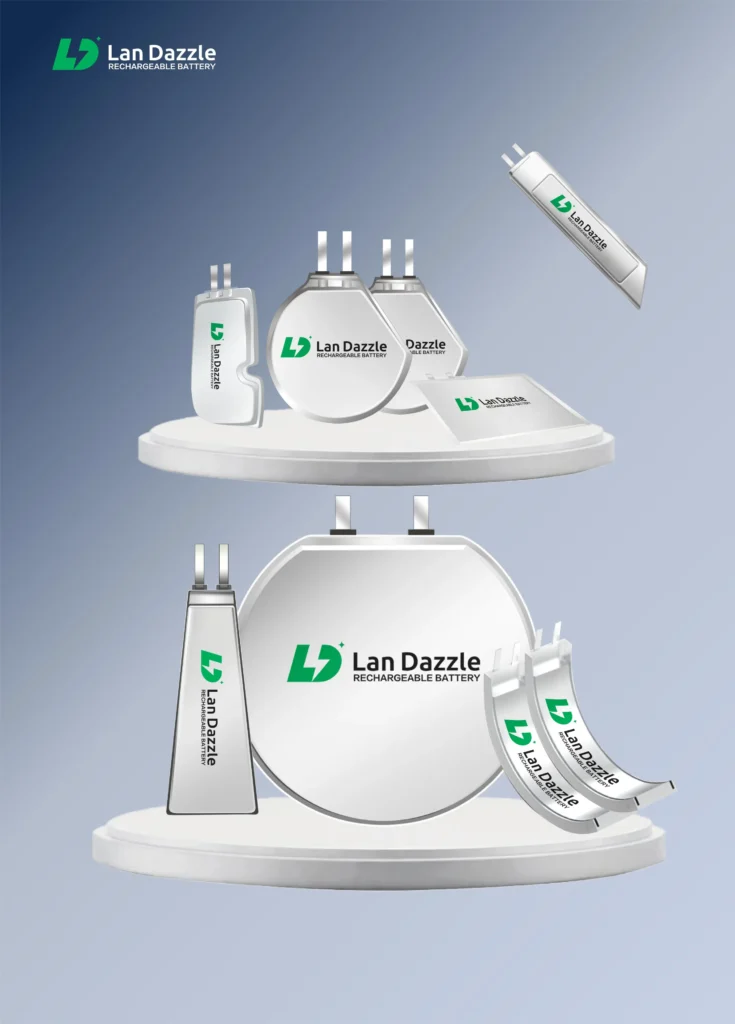
- Battery shape
Standard square or cylindrical batteries use mature processes and have lower costs.
Custom shapes, ultra-thin designs, or curved batteries require new molds and adjusted packaging processes, which increases cost. - Welding method
Spot welding is simple and low-cost.
Laser welding offers higher precision and stability, ideal for complex structures, but usually costs 15%–25% more. - Packaging
Aluminum or steel cases are more cost-effective.
Pouch packaging is more flexible in design, but slightly more expensive.
3. BMS and protection circuit cost
The BMS (Battery Management System) is the “brain” of the battery.
- Basic BMS
Provides overcharge, over-discharge, and short-circuit protection at a lower cost. - Smart BMS
Supports voltage, temperature, and capacity monitoring, and communication protocols such as I²C, SMBus, and UART, which increases cost.
4. Testing, certification, and compliance cost
These are hidden costs that many customers underestimate.
- Certification fees
A single certification can cost anywhere from thousands to tens of thousands of dollars.
If certifications can be shared across multiple models, the cost can be spread out. - Sample loss
During prototyping and testing, sample loss is unavoidable — especially for complex custom designs.
These losses are also included in the final unit price.
5. Small batch vs. mass production
Many customers feel that small-batch pricing is too high — but this is normal in the industry.
The real purpose of MOQ is to spread fixed costs such as tooling, design, and testing:
Large volumes: fixed costs are spread out, and the unit price drops significantly.
Small batches: fixed costs are shared by fewer units, so the unit price is higher.
How can you shorten lead time and control cost without sacrificing quality?
Many customers ask the same question:
Is it possible to ensure quality, shorten lead time, and reduce cost at the same time?
The answer is yes — the key is good preparation upfront and a phased approach.
Here are two practical tips.
1. Clearly define all requirements at the very beginning
As a manufacturer, we usually ask customers to provide the following information:
- Key parameters: voltage, capacity, size, discharge rate
- Application conditions: temperature range, humidity, vibration
- Export requirements: target markets and required certifications
- Order quantity
- Expected delivery schedule
This may look like a lot, but it helps us lock in the right solution quickly, reduce back-and-forth communication, and avoid repeated changes.
It also allows us to calculate costs accurately upfront, preventing unexpected price increases later.
2. Move step by step — don’t push for the lowest price too early
Many customers try to push the price down at the very beginning.
This often forces manufacturers to cut corners, which leads to quality issues.
A better approach is to move in stages:
- Prototype stage
Focus on feasibility and quality. Price should not be the top priority yet. - Small-batch validation stage
Once samples are confirmed and stable, start discussing pricing optimization. - Mass production stage
With higher volumes, manufacturers can offer much more competitive unit prices.
This approach helps you protect quality first, while still shortening lead time and controlling total cost in the long run.
Conclusion
Custom lithium batteries are not a simple process of
“place an order → produce → deliver.”
They are a system-level project, involving design, cell selection, prototyping, testing, production, certification, and more.
As a manufacturer, we clearly understand this:
a truly reliable supplier is not the one that promises “the fastest” or “the cheapest”,
but the one that makes lead time controllable, cost predictable, and risks visible in advance.
For customers, a stable schedule, controlled cost, and reliable quality matter far more than low price or speed alone.
Ready to start your custom lithium battery project?
If you’re planning a custom lithium battery project and want:
- A professional lead time evaluation
- A realistic, workable cost breakdown
- Fewer revisions and no hidden costs
Feel free to contact us.
👉 Our engineers will work one-on-one with you to quickly evaluate feasibility, match the right solution to your needs, and provide accurate lead time and cost estimates — helping you avoid mistakes, save time, and control costs.
Email: info@landazzle.com
Whatsapp: +8618938252128