Smart glasses have been facing one core problem from the very beginning: the functions are getting more and more powerful, but the battery still cannot last a full day. Whether it is taking photos, AI interaction, or real-time processing, all of these features are increasing power consumption, while the device size remains extremely limited.
Recently, a new idea has started to gain attention — using a “magnetic quick-swap battery” to fix ai glasses battery life. In other words, instead of trying to make the built-in battery bigger, users can quickly attach and replace batteries through a magnetic design, just like swapping a fresh power source.
So the question is: can this solution really solve the battery life problem of smart glasses, or is it just a different way of charging without changing the core limitation?
The Real Battery Life Problem of AI Glasses
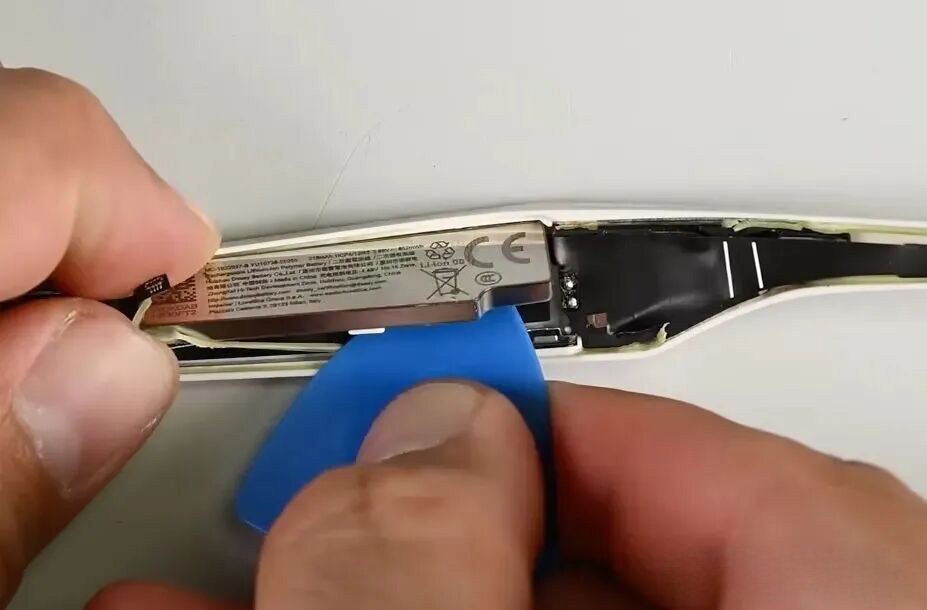
Most current AI glasses on the market claim a battery life of about 2–6 hours. However, in real high-intensity usage scenarios—such as continuous recording, AR navigation, and video capture—the battery often drops much faster, and users may get a low-battery warning in around 2 hours.
Take the Meta Ray-Ban Smart Glasses as an example. Although it comes with a charging case of about 2940mAh, real-world usage shows that because AI processing, camera recording, and wireless data transfer run at the same time, the actual continuous usage time is usually only 2–3 hours. At the same time, to control power consumption and heat, video recording is also limited (about 3 minutes per clip).
This gap between “good-looking specs” and “weaker real experience” mainly comes from a well-known industry trade-off often called the “impossible triangle”:
- Lightweight design: The device must stay light and comfortable for long wear
- High AI performance: Voice recognition, image processing, and real-time interaction all increase power use
- Battery size limits: The small form factor does not allow a large battery like smartphones
What Users Really Want
From the user side, the focus is not just a longer battery number, but a true “all-day seamless experience”, such as:
- Voice interaction during commuting
- Continuous recording and summarizing in meetings
- Long video capture and navigation while traveling
- No frequent charging or device switching
Limitations of Current Solutions
At the moment, most industry approaches are still trade-offs:
- Bigger battery → heavier device, worse comfort
- Lower performance → weaker AI functions or shorter usage time
- Charging case reliance → still interrupts continuous use
As a result, AI glasses are still far from becoming a true “all-day wearable device.”
Can Magnetic Quick-Release Battery Fix Ai Glasses Battery Life?
The core advantage of magnetic quick-swap batteries is “no power interruption during swapping.” For example, the Quark AI Glasses S1 uses a dual-temple design. When the main right-side battery is hot-swapped, the small left-side battery seamlessly takes over power supply, ensuring that calls or recording do not stop.
In real-world use, users of INMO GO3 report that a battery swap can be completed in about 5 seconds at the fastest. Combined with a charging case, this allows a continuous battery cycling system that can basically support a full day of heavy usage.
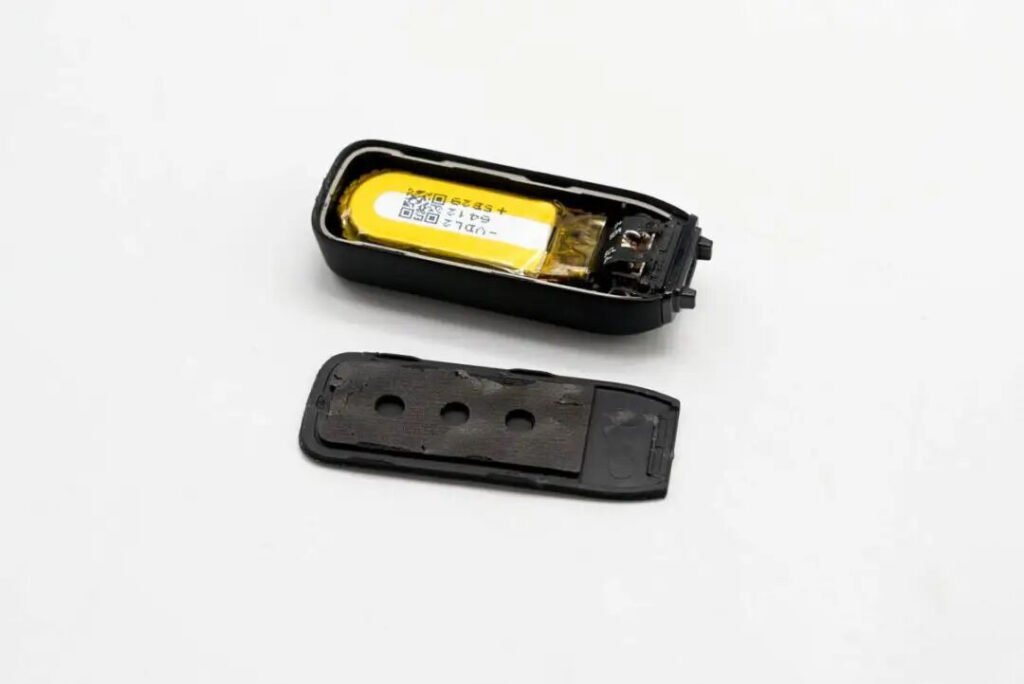
However, this “always-on power” experience also comes with some clear trade-offs:
- Increased overall weight
Extra batteries and charging cases need to be carried, which significantly increases the total system weight. For example, some setups with a mini charging module can reach nearly 200 grams in total, which is much heavier than an ideal single lightweight glasses device. - Heavily depends on user operation skills
In outdoor environments such as strong sunlight, movement, or shaking conditions, magnetic alignment is not always stable. “Blind swapping” can easily fail and often requires both hands to adjust, reducing smoothness of use. - Long-term reliability concerns
Frequent detaching and magnetic contact may accelerate wear on the connectors. Some users have reported that after long-term use, dust buildup or wear on magnetic interfaces can lead to reduced charging efficiency or unstable contact.
Therefore, this solution is more suitable for heavy users who are willing to accept an “external battery system” concept, such as high-frequency content creators or professional use cases. For daily commuters who prioritize lightweight and seamless wearing experience, it still presents a relatively high barrier.
Comparison of Battery Solutions
| Product Model | Full Battery Life (Typical Use) | Charging / Power Supply Method | Supports Use While Charging | Device Weight (Excluding Lenses) | Extra Accessories |
|---|---|---|---|---|---|
| Quark AI Glasses S1 | ~4 hours (single battery) | Magnetic hot-swappable battery + charging case | Yes (no interruption during swap) | 51g | MiniBag charging module (~80g) |
| INMO GO3 | 10–12 hours (dual-battery cycling) | Magnetic quick-swap + charging dock | Yes | 54g | Charging dock (3–4 charging cycles) |
| Li Auto Livis | 18.8 hours | AirPods-style wireless charging case | No (must be placed in case) | 36g | Wireless charging case (~70g) |
| Rokid Max 2 | ~6 hours | Magnetic fast charge / external capsule battery | Yes (via external power) | 48g | Capsule battery (1200mAh, ~30g) |
From the comparison, it is clear that different AI glasses take very different approaches to battery strategy.
The magnetic quick-swap solutions (such as Quark AI Glasses S1 and INMO GO3) are mainly focused on “continuous usage ability.” By quickly swapping batteries or cycling through multiple batteries, they can provide almost uninterrupted use. This is especially useful for high-intensity tasks like continuous recording and real-time interaction.
However, this approach also has a clear trade-off:
Lower portability. Users need to carry extra batteries or charging modules, which increases both total weight and system complexity.
In contrast, Li Auto Livis Smart Glasses follows a completely different approach.
It focuses on an ultra-light design (around 36g) and long battery life (about 18.8 hours). This makes it more suitable for all-day wear with lighter usage, such as commuting, meetings, or casual recording. With a wireless charging case, it offers a simple “put down and charge” experience, similar to smartphones.
Rokid Max 2 takes a middle-ground approach:
- Supports magnetic fast charging for quick power backup
- Can use an external capsule battery to extend usage time
- Offers more flexibility between battery life and usability
But as a result, the system becomes more complex, and users need to understand and manage more components.
Conclusion
Overall, magnetic quick-swap batteries do not truly “solve” the battery life problem of AI glasses. Instead, they shift the problem into how users manage their time and carry extra devices.
If the following conditions are met:
- Daily usage is more than 6 hours
- Frequent use in outdoor, factory, or environments without easy access to charging
- Willingness to carry extra batteries or a charging module
Then products like Quark AI Glasses S1 or INMO GO3 are more suitable choices.
Otherwise, at the current stage, a more practical and stable solution is still the “large built-in battery + wireless charging case” approach. Products like Li Auto Livis Smart Glasses follow this direction, offering a lighter wearing experience and more reliable all-day battery life, which can cover most daily use cases.
In the end, the value of technology is always about serving real user needs, not just chasing better specifications.
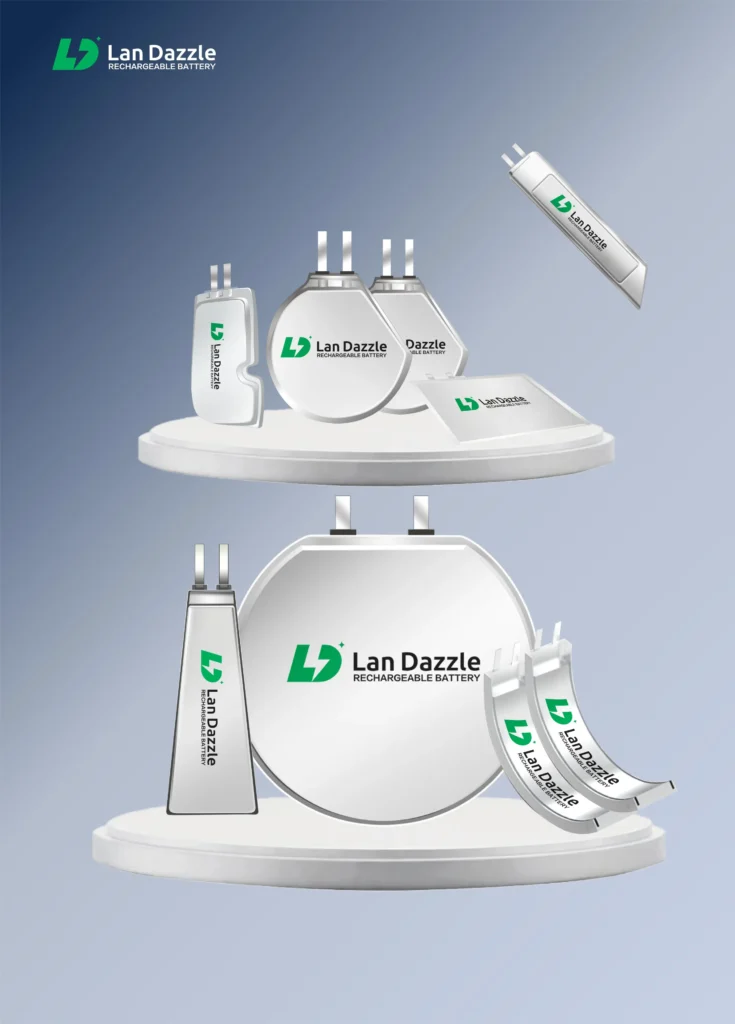
Our Smart Glasses Battery Solutions
We provide custom battery solutions designed specifically for AI smart glasses, focusing on two key technologies:
- Irregular stacked battery design
By using custom-shaped, stacked cell structures, we maximize energy density within extremely limited internal space—without increasing thickness or weight. - Silicon-carbon anode technology
Compared to traditional graphite anodes, silicon-carbon anodes significantly improve capacity, enabling longer battery life while maintaining safety and cycle stability.
If you are developing next-generation AI glasses and struggling with size, weight, or battery life constraints, our smart glasses battery solutions are built to help you go further.
Contact us to explore wearable device battery solutions tailored to your product.
Email: info@landazzle.com
Whatsapp: +8618938252128