By 2026, smart bands have added more and more features—health monitoring, fitness tracking, NFC payments, and independent GPS—but battery anxiety remains the biggest pain point for users.
Traditional lithium-polymer batteries are already close to their theoretical limits. Power consumption keeps rising as more sensors are added, while internal space is pushed to the extreme. Simply “increasing battery capacity” is no longer a workable solution.
This year, the approach has clearly shifted from single-component upgrades to a system-level strategy that combines materials, structure, power management, energy harvesting, and supply-chain collaboration. The goal is not only to fit more energy into a body thinner than 10 mm, but also to use every 1 mAh as efficiently as possible.
Below, we break down the most practical and forward-looking battery solutions for 2026 from three angles: key challenges, technical solutions, and real-world implementation paths.
Current State of Smart Band Battery Technology and Key Challenges
1. Technical Bottlenecks of Current Battery Materials and Structures
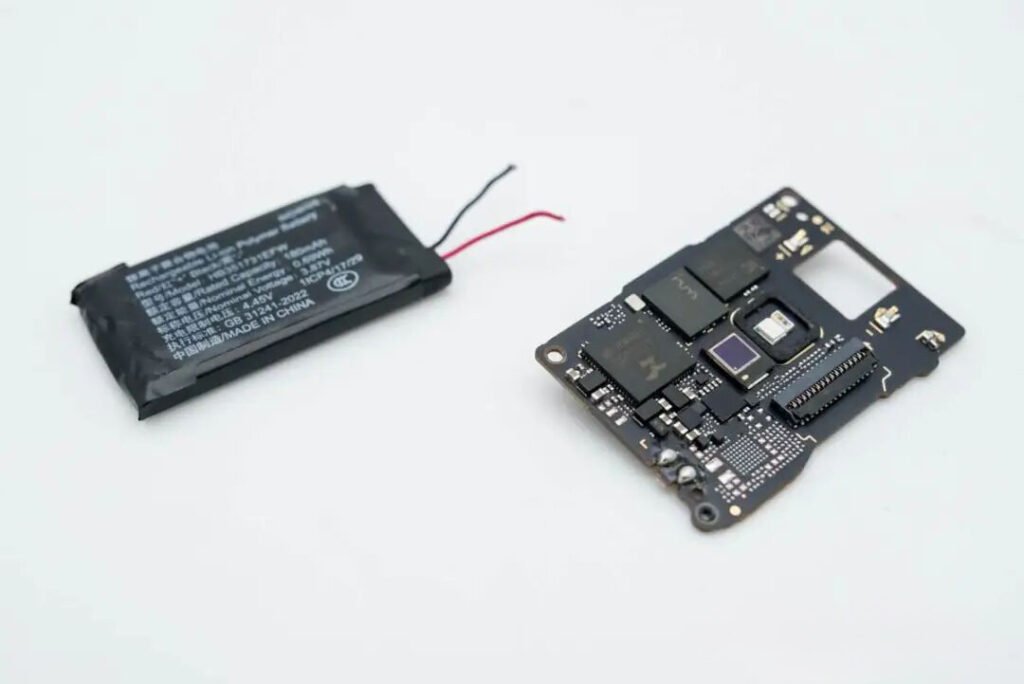
Mainstream lithium-polymer batteries are already close to their theoretical energy density limit of around 300 Wh/kg.
With device thickness limited to 7–15 mm and display widths of 20–40 mm, battery capacity is typically constrained to the 100–300 mAh range.
There is very little room left for improvement with graphite anodes and traditional cathode materials. Annual energy density growth is only about 2–3%, far behind the increase in power consumption driven by new features.
At the same time, the industry faces structural issues such as the trade-off between fast charging and cycle life, performance loss in low temperatures, and inefficient use of internal space.
2. System-Level Power Consumption from Hardware Components
Multiple sensors—such as heart rate, blood oxygen (SpO₂), GPS, and NFC—working together create a cumulative power drain.
Continuous monitoring functions like heart rate and SpO₂ account for a large share of total power use.
Baseband chips, sensors, and communication modules have become the main power-consuming components. As features are upgraded, total device power consumption increases by 30–50%, creating a serious conflict with the demand for thinner designs and longer battery life.
3. Limitations in Power Management and Software Algorithms
Traditional power management strategies are static and coarse, unable to dynamically adjust hardware operation based on user behavior and real usage scenarios. This leads to significant power waste during standby and idle states.
Poor coordination between software algorithms and hardware further worsens battery life. Monitoring frequency, sampling accuracy, and communication connections are often not intelligently optimized, amplifying battery performance limitations.
4. Lack of Synchronization Across the Industry Supply Chain
Materials, battery cells, mechanical structures, algorithms, and end products evolve at different speeds.
New materials require long validation cycles, while structural design and packaging processes lag behind. Software optimization often falls behind hardware upgrades.
As a result, new technologies are slow to reach the market, costs remain high, and mass production becomes difficult.
5. Conflicting User Demands and Fragmented Experience
Users want more features, thinner devices, longer battery life, faster charging, and high safety—all at the same time.
However, current technologies struggle to balance all these requirements.
Most smart bands offer only 3–7 days of typical battery life, with even shorter endurance under heavy monitoring. Frequent charging, battery anxiety, and fast aging have become common pain points.
More than 60% of users report that battery life directly affects their willingness to use the device.
Smart Band Battery Solutions in 2026
1. Innovation in New Battery Material Systems
- Silicon–carbon composite anodes: Nano-silicon coating combined with a porous carbon framework helps control volume expansion. Energy density breaks 350 Wh/kg, while cycle life improves to 800+ cycles.
- High-nickel / lithium-rich manganese cathodes: Higher capacity and higher voltage further raise the energy density limit, while balancing cost and battery lifespan.
2. Irregular Battery Structures and Space Redesign
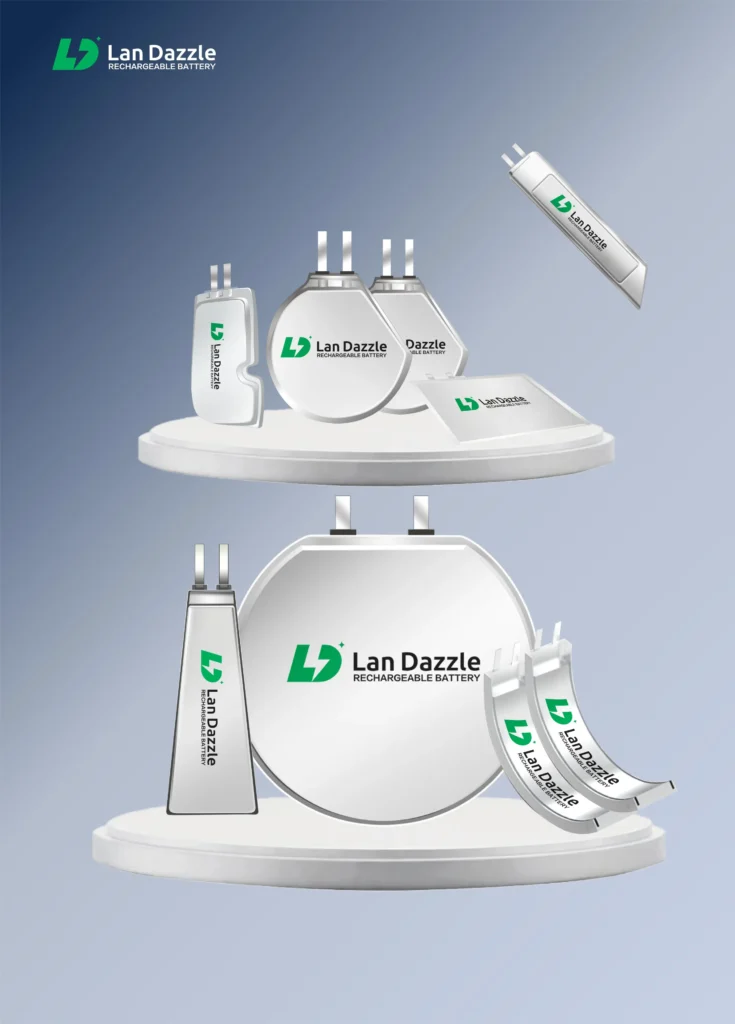
- Irregular shapes, stacked cells, and ultra-thin packaging are used to fully utilize the limited space inside smart bands, increasing space efficiency by 15%+.
- Integrated designs reduce unnecessary components, increasing capacity without adding thickness, achieving a better balance between slim design and long battery life.
3. Deep Optimization of Smart Power Management Algorithms
- Based on AI and user behavior models, smart bands can adjust power use by scenario: intelligent sensor on/off control, adaptive sampling rates, dynamic adjustment of communication and chip frequency, and lightweight task scheduling.
- These methods reduce overall power consumption by 20–40%, significantly extending both daily battery life and long-term battery health.
4. Industry Chain Collaboration
This alignment shortens testing cycles, lowers mass-production costs, and enables integrated solutions that combine material innovation, structural optimization, algorithm tuning, and system integration—speeding up real-world adoption. Promote coordinated development across the full chain: materials, cells, structure, algorithms, and end devices.
Practical Implementation Path for Smart Band Brands
For smart band brands, the most effective battery strategy in 2026 is no longer a single technical breakthrough, but a phased system upgrade.
In the short term, brands can improve battery life through customized cell shapes, better space utilization, and low-power hardware configuration. In the mid term, they can combine smarter power management algorithms with optimized charging strategies to reduce energy waste in daily use. In the long term, the key lies in co-developing battery systems, structural design, and device software from the very beginning of product planning.
This means battery selection should no longer be treated as a final component decision, but as a core part of product definition.
What Smart Band Manufacturers Should Focus on Next
To truly improve battery performance, manufacturers should pay attention to four priorities: energy density, safety, space efficiency, and system-level power control.
A high-capacity battery alone is not enough. The battery must also fit the product structure, support stable performance during long-term use, and work well with the device’s sensors, display, and communication modules. Only when hardware, software, and battery design are developed together can smart bands achieve a better balance between slim design and long endurance.
Conclusion
In 2026, smart band battery innovation is no longer about chasing higher capacity numbers. The real breakthrough comes from system-level optimization—combining advanced materials, space-efficient battery structures, intelligent power management, and close collaboration across the supply chain.
For smart band brands and device manufacturers, battery design should start at the earliest stage of product development. A well-matched battery solution can directly determine device thickness, feature stability, charging frequency, and long-term user satisfaction.
If you are developing a next-generation smart band and facing challenges such as limited internal space, rising power consumption, or battery life targets that are difficult to achieve, working with a battery partner experienced in custom-shaped lithium polymer batteries and wearable power systems can significantly reduce development risk and time to market.
Talk to our engineering team to explore a battery solution tailored to your smart band’s structure, power profile, and usage scenarios—and turn battery performance into a competitive advantage rather than a limitation.
Email: info@landazzle.com
Whatsapp: +8618938252128