With features such as heads-up displays (HUDs), rear-view radar, Bluetooth Mesh intercoms, 4K cameras, and infrared night vision, smart helmets and tactical gear are evolving from simple protective equipment into wearable smart devices.
But more features also mean higher power consumption. Hardware teams face several key challenges when designing the power system:
- Limited space: The inside of a helmet is made of 3D curved surfaces, leaving very little room for the battery.
- Safety requirements: Helmets must pass strict impact tests such as ECE 22.06, DOT, and CPSC. The battery cannot take up space needed for the protective layer.
- Weight balance: Uneven weight can cause neck strain and user fatigue.
Standard rectangular pouch cells or cylindrical batteries often force teams to make helmets thicker, reduce the protective layer, or add extra weight.
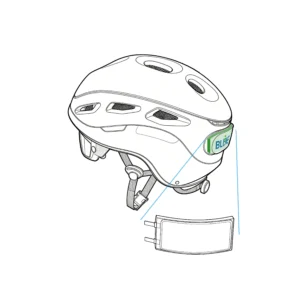
Custom-shaped batteries provide a better solution, allowing the battery to fit the available space more closely while improving runtime, weight balance, and safety.
Custom Batteries for Smart Helmets: Increase Space Utilization and Runtime
In traditional hardware design, engineers often have to choose from standard rectangular batteries available on the market. However, placing a rectangular battery inside the curved space of a helmet can lead to significant wasted space.
Eliminate “Dead Space”
As shown above, a flat rectangular battery can leave large gaps between the battery and the curved helmet shell. To achieve a capacity of 1,000mAh, a traditional battery design may require physical space equivalent to around 1,500mAh.
Higher Volumetric Energy Density with Custom-Shaped Batteries
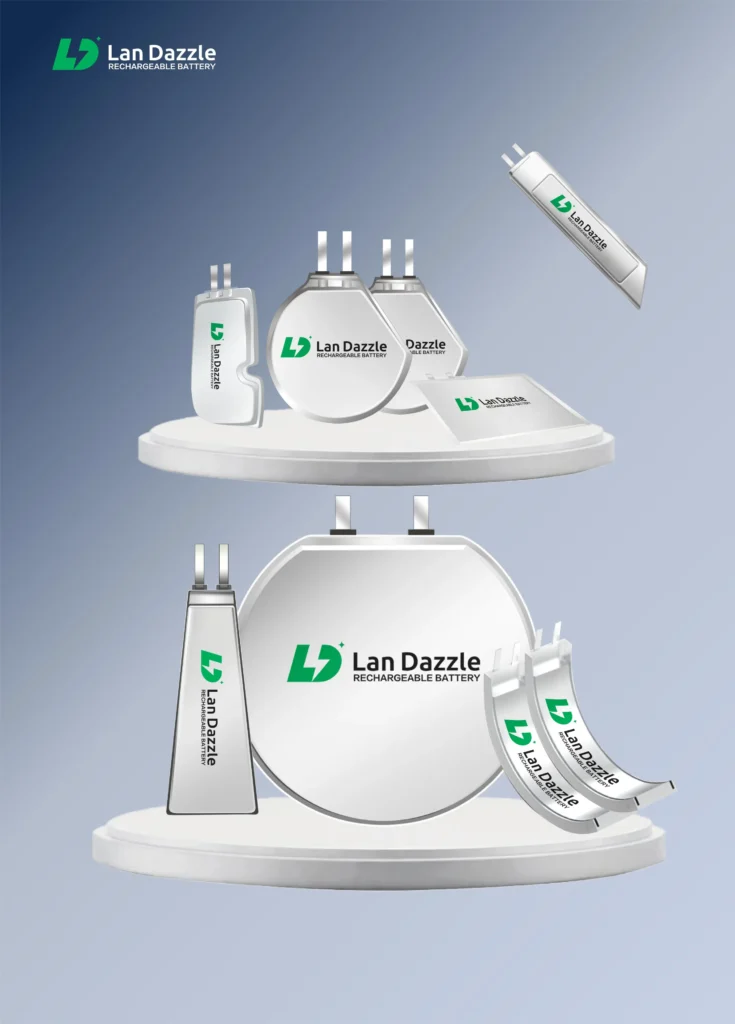
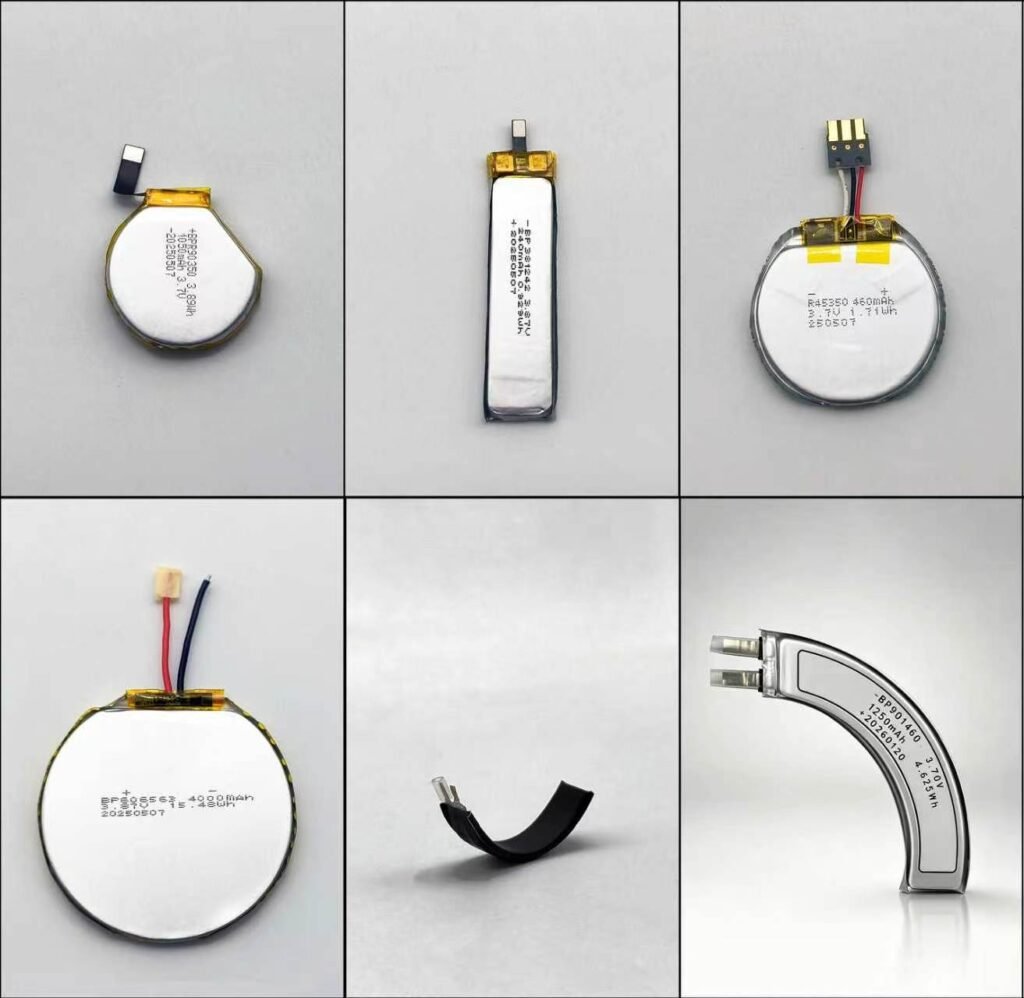
By using curved, C-shaped, polygonal, or stepped battery designs, custom-shaped cells can make better use of the available space inside a helmet:
Battery thickness can be precisely controlled at around 3mm–5mm, combining high energy density with a low-profile, built-in design.
The battery can closely follow the natural curve of the helmet.
Dead space can be turned into useful battery space, increasing effective battery capacity by 30% to 50% without making the overall helmet larger.
Better Ergonomics — Smart Helmet Batteries for Better Weight Balance
Helmet comfort is not only about total weight. Where the weight is placed also matters. The human head and neck are very sensitive to changes in the center of gravity (CoG).
Problems with Traditional Rigid Batteries
If a large rectangular battery is placed on the forehead or top of the helmet, movement can increase its dynamic force and cause neck pain and fatigue. If it is placed on one side, it can make the helmet feel unbalanced.
A hard, flat battery placed close to the head can also create uncomfortable pressure points.
How Custom-Shaped Batteries Improve Weight Balance
Natural Fit Around the Occipital Area:
A curved custom battery can be placed in the recessed area at the lower back of the helmet, allowing its weight to stay closer to the head’s natural support line.
Symmetrical Dual-Cell Design:
Small custom-shaped cells can be connected in parallel through a Rigid-Flex PCB and placed symmetrically on both sides of the helmet, helping achieve a balanced 50:50 weight distribution.
A Barely Noticeable Fit:
Thin cells that follow the helmet’s curved surface take up less space and reduce pressure on the scalp. Combined with the helmet padding, they can provide a more comfortable, barely noticeable wearing experience.
Protect the Core Impact Structure — Without Damaging the EPS Layer
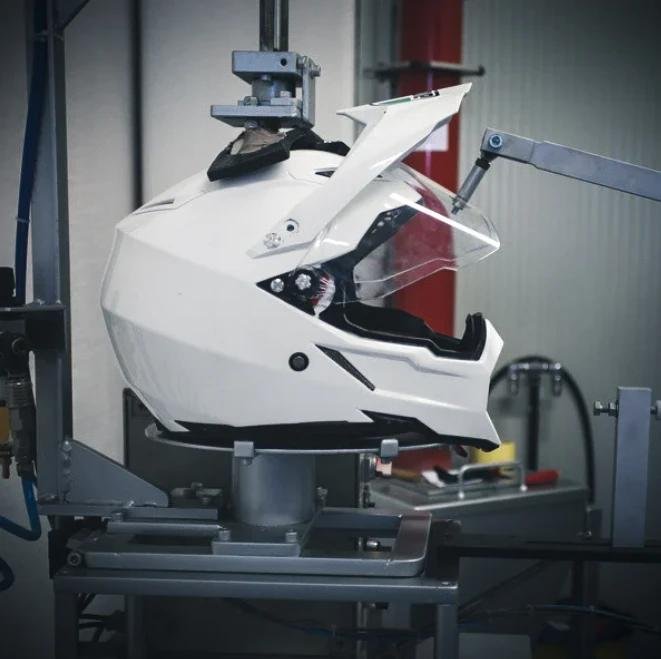
The main purpose of a helmet is to protect the wearer’s life. Standards such as ECE 22.06 and DOT have strict requirements for how helmets absorb impact energy during a crash.
| Comparison | Standard Rectangular / Cylindrical Battery | Custom Ultra-Thin Shaped Battery |
|---|---|---|
| EPS Layer | Requires deep cutouts in the EPS, which can damage its continuous structure | Fits into the thin space between the outer shell and EPS with minimal structural impact |
| Impact Stress | Hard batteries can create “hard spots,” leading to stress concentration | Thin curved cells can help distribute impact forces more evenly |
| Crush Zone | Limited space may cause the battery to be directly compressed during impact | Allows dedicated Crush Zones to be preserved around the battery |
| Safety Validation | Battery integration may make it harder to meet strict impact requirements | Helps preserve the helmet’s original impact protection structure and supports safety testing |
Three Layers of Impact Protection
1. Crush-Zone Clearance
Ultra-thin custom-shaped cells can leave a 2–3 mm cushioning gap between the helmet shell and EPS layer. During minor impacts, the EPS can absorb the deformation and reduce the force transferred to the battery cell.
2. Lightweight Protective Pod
A high-strength PC or carbon-fiber protective case can be designed around the custom-shaped cell. It helps protect the battery from sharp debris if the helmet shell cracks during an impact.
3. Thermal Isolation
The battery cell can be fully covered with a UL94-V0 flame-retardant layer and combined with a low-thermal-conductivity aerogel insulation pad. This helps reduce heat transfer toward the wearer’s head.
Highly Integrated Design for Vibration and Harsh Outdoor Conditions
Outdoor sports and tactical operations can expose helmets to high-frequency vibration, water, and extreme temperatures. Custom battery design is not just about the cell shape. It can also include the BMS, wiring, and packaging process as a complete system.
4.1 Vibration Resistance and Strain Relief
Traditional wire-to-board connectors can experience brief power interruptions or metal fatigue under continuous vibration from cycling, running, or jumping.
Custom-Shaped BMS:
The protection circuit module (PCM) can be designed as a slim, curved board and mounted along the side of the battery without increasing the overall thickness.
Rigid-Flex Direct Connection:
A flexible PCB (FPC) can be directly welded to the battery tabs, followed by injection molding for strain relief. This reduces the risk of loose connections and power interruptions caused by vibration.
4.2 Waterproofing and Thermal Management
IP67 Sealing with Pressure Balance:
For helmets exposed to sweat and rain, the battery can use full sealing protection combined with a micro-porous waterproof venting membrane. This helps balance pressure differences between the inside and outside of the battery under changing temperatures.
Custom Chemistry for High and Low Temperatures:
For applications such as skiing at -20°C or summer riding with road surface temperatures reaching around +60°C, specialized cell chemistry can be developed for high- and low-temperature conditions, helping maintain stable discharge performance in extreme environments.
Conclusion: Custom-Shaped Batteries — A Catalyst for Smart Helmet Innovation
For hardware engineers developing smart helmets and tactical gear, the battery should not be a limitation. Instead, it should help unlock new product possibilities.
With custom-shaped batteries:
- Structural engineers no longer need to compromise the EPS impact protection layer or make the helmet unnecessarily bulky.
- Electronics engineers get more usable battery capacity to support power-hungry features such as NPUs, HUDs, and wireless communication.
- Industrial designers and ergonomics teams can create more advanced designs with better weight balance and a more comfortable, barely noticeable fit.
About LanDazzle
As a professional custom-shaped lithium battery manufacturer, LanDazzle provides customized battery solutions for smart wearables, medical devices, IoT sensors, smart helmets, and more.
We offer end-to-end support, from cell chemistry and battery shape design to BMS development, helping engineering teams find the right power solution for their products.
If you are developing a new generation of smart helmets or tactical gear, contact our engineering team to discuss your battery requirements and explore customized solutions and sample support.
Email: info@landazzle.com
Whatsapp: +8618938252128