Table of Contents
A New Kind of AI Pendant at IFA 2026: A Wearable That Records What You Eat
At IFA 2026 in Berlin, OdyssLife showcased its still-in-development smart pendant, the ODYSS N1. Unlike many AI wearables that focus on voice assistance or general life logging, the N1 targets a much more specific use case: food tracking.
The device uses a built-in camera to automatically detect when the wearer is eating and capture images. Its companion app then organizes the footage into a food diary and estimates nutritional intake. In theory, users simply eat as usual without having to take out their phones to take photos or manually log every meal.

From an industrial design perspective, the N1 uses a split architecture. The camera module sits on the wearer’s chest, while the battery module is positioned at the back of the neck. The two are connected by a liquid silicone neckband that also serves as the electrical connection between the modules.
The entire device weighs around 25 grams. The pendant itself features a distinctive metallic, mushroom-shaped design, combining a stainless-steel body with sapphire glass for a more industrial, high-tech look.
On the hardware side, the N1 features a 120° wide-angle camera, dual microphones, and a gravity sensor. It comes with 64GB of onboard storage and supports both Bluetooth and Wi-Fi connectivity. Charging is handled through POGO pins.
The device packs a 300mAh battery, with OdyssLife claiming up to 18 hours of battery life on a full charge. However, that figure is likely based on ideal or limited-use conditions. With the camera running continuously, real-world battery life would likely be considerably shorter.
The Real Challenge Isn’t Capturing the Food — It’s Getting It Right
Food tracking is a high-frequency habit. In theory, every bite should be logged, but doing this day after day can quickly become tedious. People may remember to record full meals while forgetting smaller things like an afternoon coffee or snacks at work.
Before the N1, apps such as Mint Health, Kaimai Health, and MyFitnessPal were already using image recognition to simplify food logging. MyFitnessPal, for example, lets users take a photo with its Meal Scan feature, automatically suggests food options, and allows users to review and adjust portions before saving the entry.
The N1 takes this idea one step further by removing the need to take a photo manually. Users can simply eat as usual while the device handles the image capture, recognition, and logging automatically.
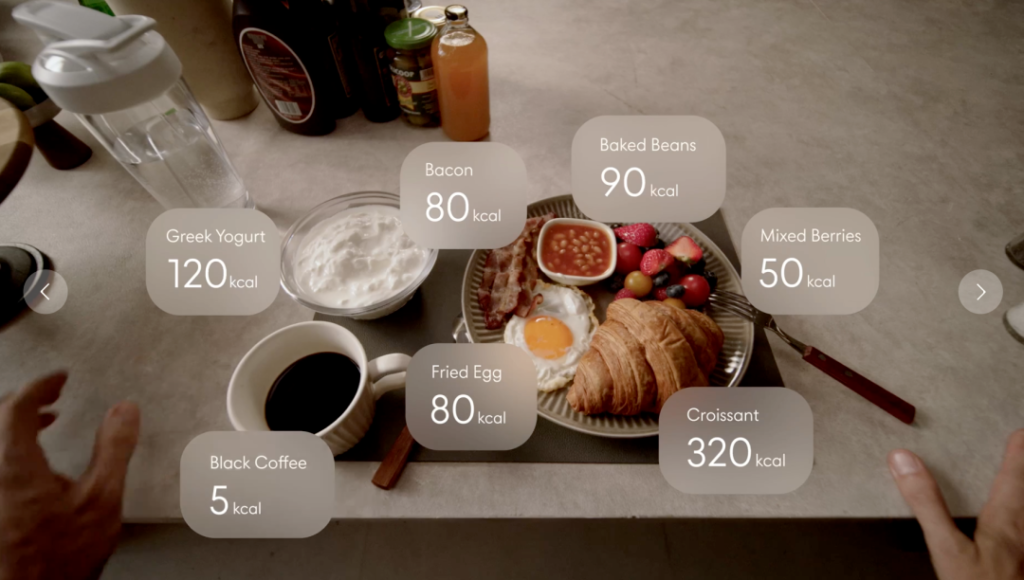
But that convenience makes accuracy even more important.
Real-world eating situations are complicated. At a shared meal, food disappearing from a plate does not necessarily mean the wearer ate it. Even if the system correctly identifies a dish such as braised pork, a camera alone cannot easily determine how much oil, sugar, or food was actually consumed.
To estimate calorie intake accurately, the system needs to understand not only what the food is, but also how much the wearer actually ate. That is a major challenge for visual-based food recognition.
There is also the issue of privacy. A chest-mounted camera may capture other people sitting nearby, especially during group meals.
OdyssLife says users can activate a privacy mode through the button or app to pause image capture, processing, and transmission. The company also says original images are deleted after analysis, are not used by default to train general-purpose models, and that health data is not sold or used for advertising.
Still, for users who do not want to capture other people, the simplest solution may be to remove the pendant during group meals — which also means missing that meal from the food log.
The Overlooked Challenge: Battery for AI Pendant
Accuracy and privacy are the two issues most often discussed around AI wearables, but there is another factor that is just as important and often overlooked: battery life.
The N1’s design already highlights this trade-off. To keep the pendant compact and lightweight, the camera module needs to stay small, while the battery is placed separately at the back of the neck. Even with this split design, the device only packs a battery of around 300mAh.
At the same time, the camera, motion and audio recognition, Bluetooth, and Wi-Fi all consume power. So the claimed 18-hour battery life is likely based on intermittent use rather than continuous camera operation.
This is not unique to ODYSS N1. It is a common engineering challenge for AI pendants: the thinner and lighter the device becomes, the less physical space is available for the battery, and that space may also have an irregular shape. Yet users still expect all-day battery life.
No one wants a wearable device that needs to be charged twice a day — or dies in the middle of a meal.
Food tracking itself is a habit that requires long-term consistency. As mentioned earlier, too much effort can make users give up. But frequent charging can create the same problem. If the device constantly needs to be charged, or users simply forget to put it back on, the habit can easily be interrupted.
For AI wearables, the battery is more than just a hardware specification. It can directly affect whether the product can truly become an effortless, everyday device.
Battery Engineering in Irregular Spaces: Why Custom Batteries Matter
Standard cylindrical or rectangular cells can be difficult to fit into a lightweight, irregularly shaped device like a 25-gram metal pendant. The challenge becomes even greater with a split design like the N1, where the camera and battery are separated and connected through a silicone neckband.
For products like this, battery design goes beyond simply selecting an off-the-shelf cell. Instead, the battery may need to be designed around the available space and the overall product structure. This is where custom lithium-ion and LiPo battery manufacturers such as LanDazzle can play a role.
For AI pendants, smart collars, and other wearable AI devices, battery engineers typically need to balance several requirements at the same time:
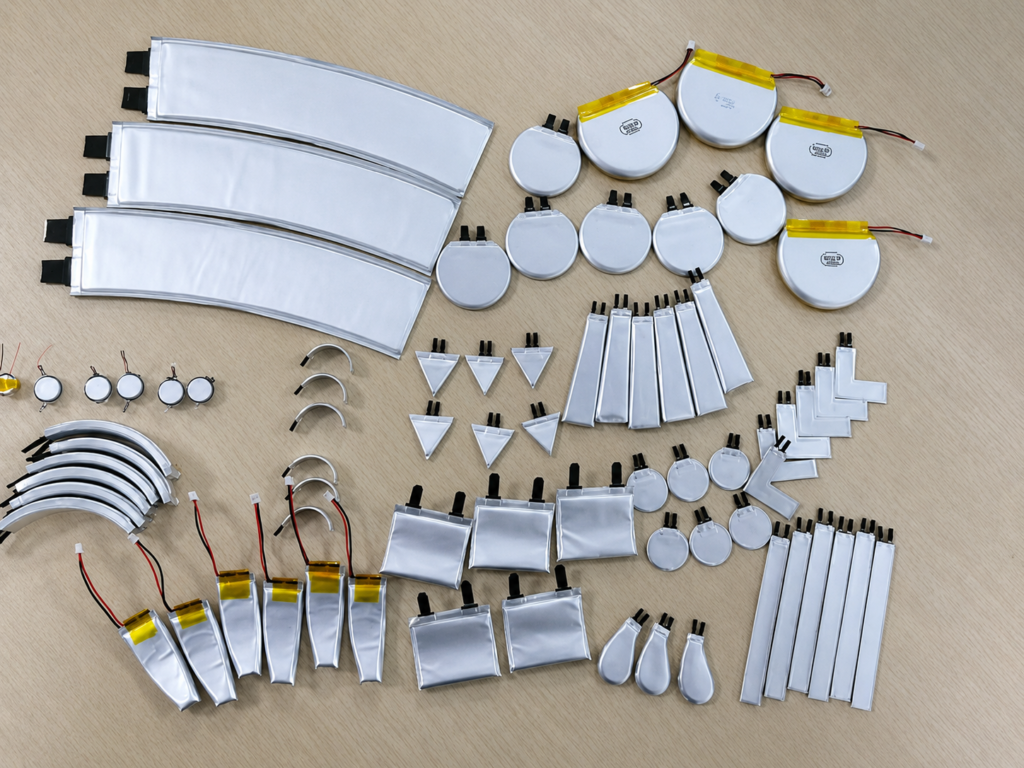
- Shape and curved-space fit: The battery may need to follow the shape of the available space, rather than forcing the product design to accommodate a standard rectangular cell.
- Energy density and safety: Even with a battery in the few-hundred-mAh range, engineers need to maximize usable energy while meeting safety requirements such as UL, IEC, and UN38.3.
- Stable power in split designs: When the camera and battery are located in different parts of the device, the battery needs to work reliably with flexible wires and PCB modules despite repeated bending and movement during daily use.
- Charging compatibility: A POGO-pin charging system also needs to be matched with the battery’s charging characteristics, rather than treating the battery and charging system as completely separate components.
This is why more AI hardware and wearable teams are considering battery design earlier in the product development process. Instead of waiting until the enclosure is finalized and then trying to find a battery that “fits,” battery performance, shape, and integration need to be considered alongside the overall product architecture.
For a wearable device, battery life, product comfort, and even manufacturing reliability can be influenced by decisions made at this stage.
Conclusion
ODYSS N1 represents an emerging niche in AI hardware: using a wearable pendant to replace the smartphone for food tracking, turning logging from an active task into an automatic process.
The product has addressed the question of how to capture food data. The next challenge is proving how accurate and useful the experience can be. Battery life is an often-overlooked part of that equation, but it can have a direct impact on whether users keep wearing the device every day.
As more companies explore AI pendants, smart collars, and other wearable AI devices, the battery will no longer be just a component to select at the end of the design process. It can become a key factor in whether a product can truly deliver effortless, all-day wear.
LanDazzle develops custom-shaped lithium-ion and LiPo battery solutions for wearable, medical, IoT, and AI hardware applications. For teams working on irregularly shaped or split wearable devices, we can support battery design around the product’s available space and structural requirements.
Email: info@landazzle.com
Whatsapp: +8618938252128