alt="" /> Articles On Lithium Battery Technology

Articles on Lithium Battery Technology

smart band battery solutions

Smart Band Battery Solutions in 2026

By 2026, smart bands have added more and more features—health monitoring, fitness tracking, NFC payments, and independent GPS—but battery anxiety remains the biggest pain point for users. Traditional lithium-polymer batteries are already close to their theoretical limits. Power consumption keeps rising as more sensors are added, while internal space is pushed to the extreme. Simply “increasing battery capacity” is no longer a workable solution. This year, the approach has clearly shifted from single-component upgrades to a system-level strategy that combines

tws earbuds battery

TWS Earbuds Battery Solutions: Beyond Coin Cell & Prismatic Pouch

In recent years, as the TWS earbuds industry has grown rapidly, one very practical issue has become more and more obvious: Earbuds are getting smaller, but they are packing in more and more features, and battery life is under increasing pressure. From a manufacturing point of view, the current mainstream battery solutions for TWS earbuds can be divided into two types: coin cell batteries and prismatic pouch batteries. However, both solutions have clear structural limitations. As product designs continue to

silicon carbon battery for smartwatches

Silicon Carbon Battery for Smartwatches: Enable Longer Battery Life

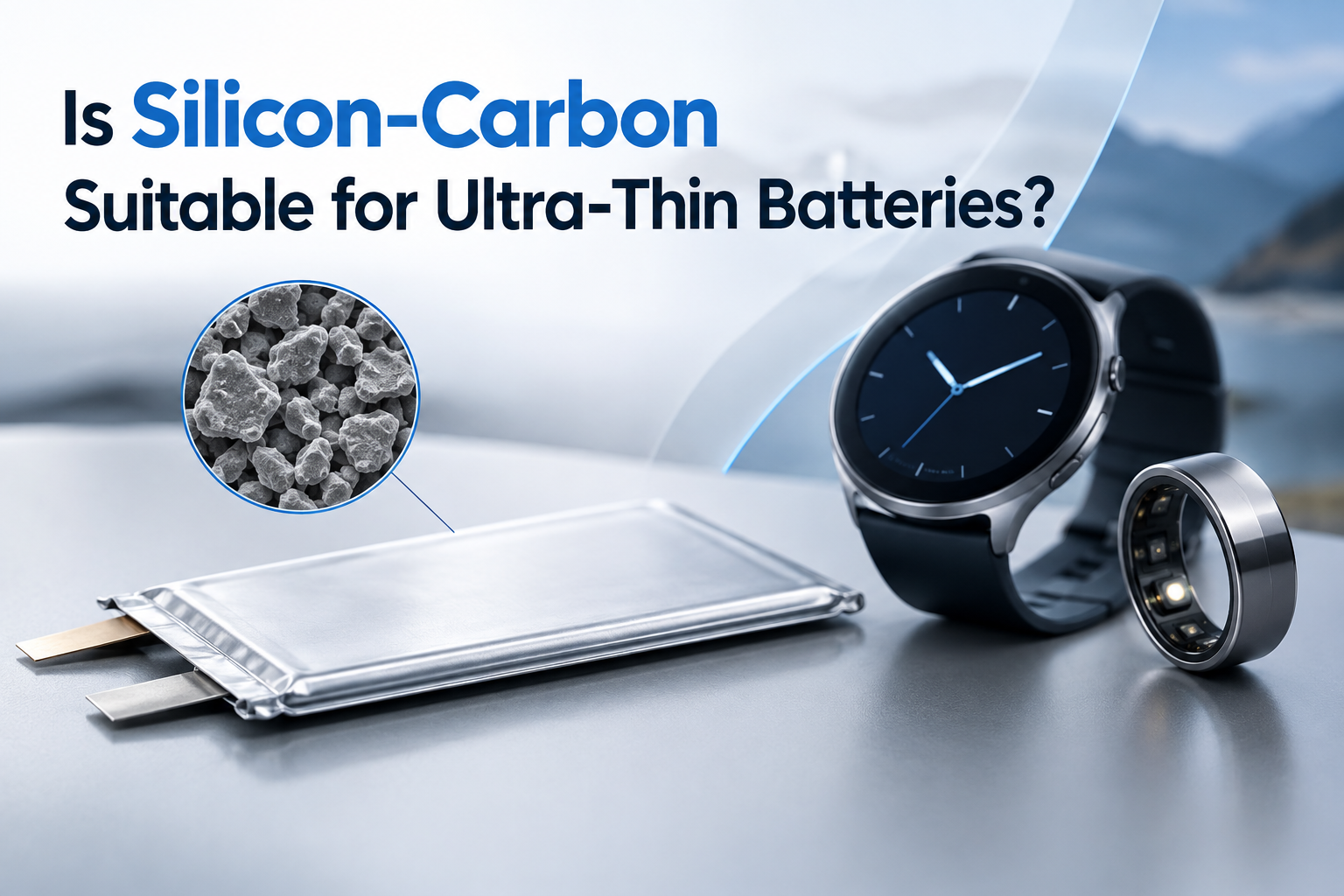
In the highly mature yet extremely constrained form factor of smartwatches, the battery has always been the hardest part to improve. Yet users’ expectations for battery life continue to grow. As a manufacturer that has long provided custom battery solutions for wearable devices, we clearly understand one thing: Competition in smartwatches is no longer about adding more features. It has shifted to how much energy can be packed into a limited space. And it is under this pressure that silicon-carbon

quark ai glasses battery life

Can Magnetic Quick-Release Battery Fix Ai Glasses Battery Life?

Smart glasses have been facing one core problem from the very beginning: the functions are getting more and more powerful, but the battery still cannot last a full day. Whether it is taking photos, AI interaction, or real-time processing, all of these features are increasing power consumption, while the device size remains extremely limited. Recently, a new idea has started to gain attention — using a “magnetic quick-swap battery” to fix ai glasses battery life. In other words, instead of

xiaomi ai glasses and smart glasses battery

Smart Glasses Battery Guide: Shaped Stacked Cells for Slim Temples

The fragmented and highly limited space inside smart glasses temples is a core challenge for hardware engineers during battery selection. Traditional standard batteries cannot fit the long, narrow, and irregular temple structures, leading to wasted space and insufficient battery life. Based on teardown data from mainstream smart glasses, this article explains how shaped stacked battery technology works, how to select the right battery design, and how developers can quickly match the optimal battery solution. The goal is to solve two

vocci ring

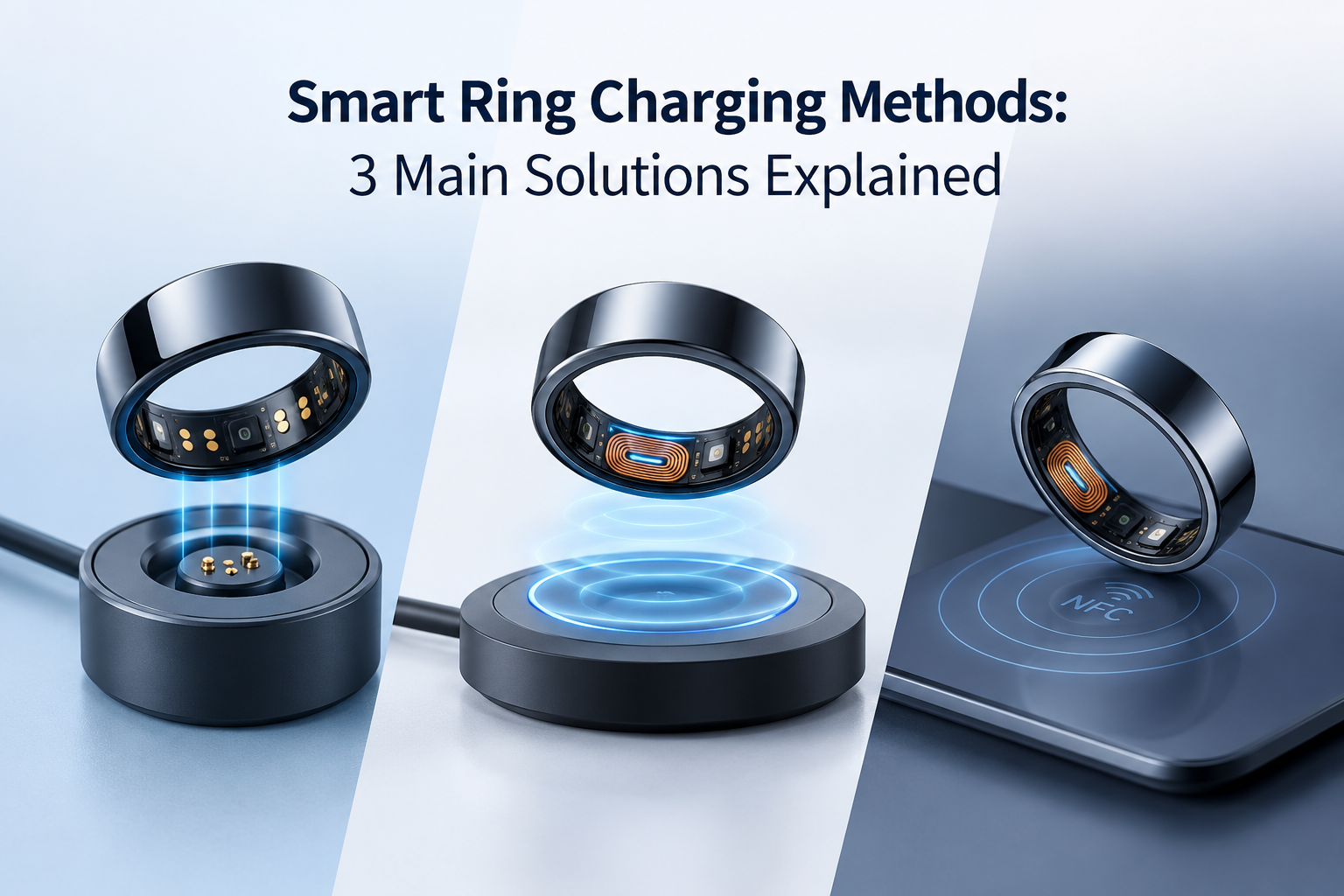
Vocci Ring: A Smart Ring with Built-In Voice Recording

In early 2026, one of the hottest buzzwords in the tech world was “raising lobsters.” Here, “lobsters” do not mean seafood. It is a casual nickname for AI Agent systems. As the open-source framework OpenClaw became popular, AI Agents moved from a technical concept into the public spotlight and gradually became a common way to describe intelligent agents. While most people were “raising lobsters” on computers and smartphones, a wearable technology company called Gyges Labs chose a different path —