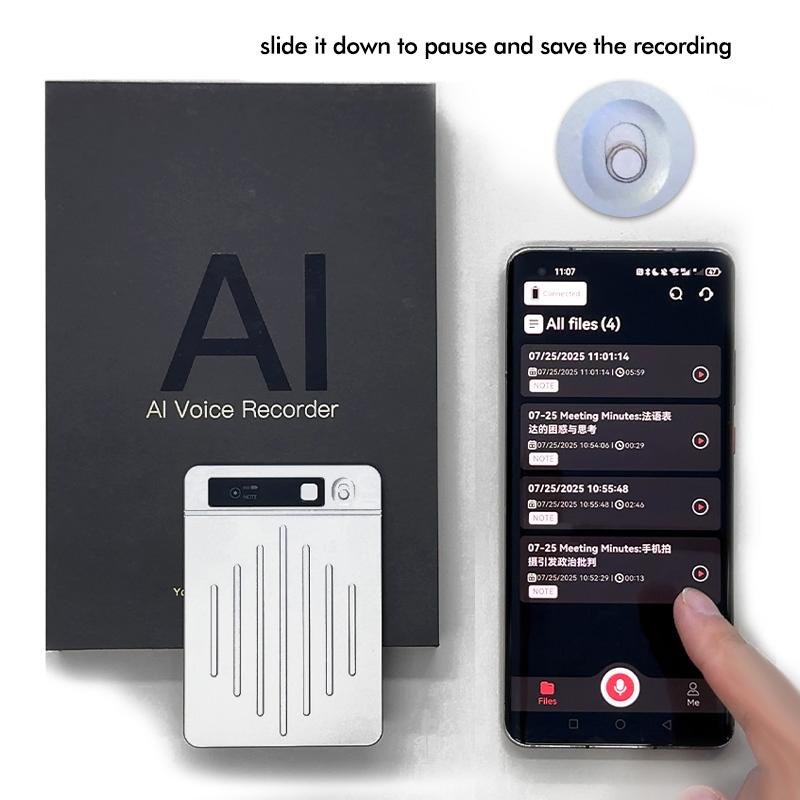
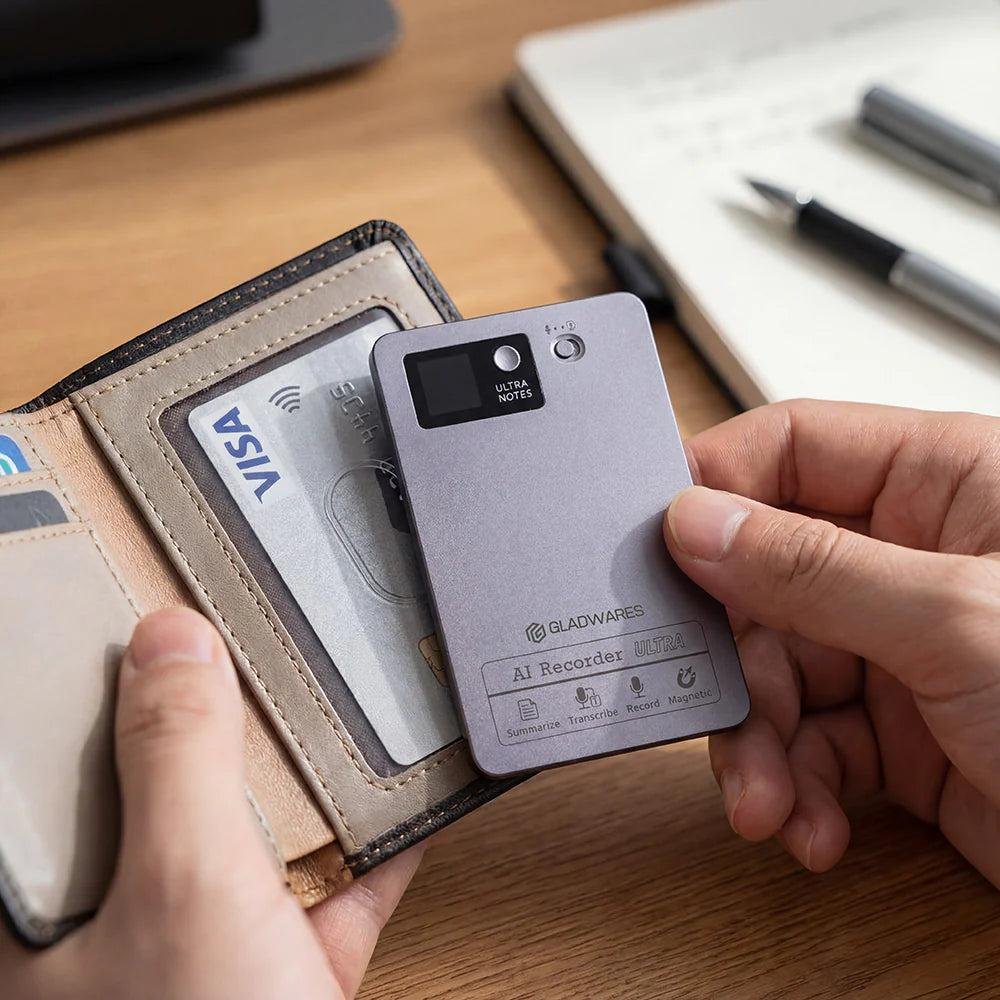
As AI technology continues to develop, AI recording cards are becoming a popular type of smart device. Unlike traditional voice recorders, they are designed to be as thin as a credit card. They can fit into a wallet or attach to the back of a phone, making them useful for meetings, interviews, and classes.
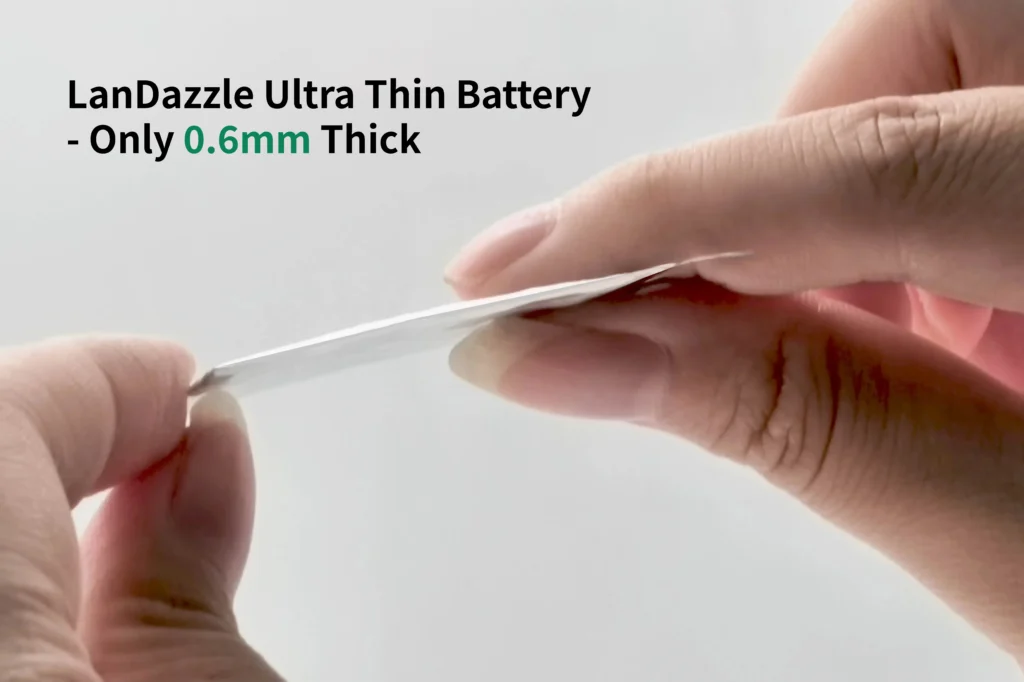
With a device thickness of only 3–4 mm, the card still needs to fit MEMS microphones, an AI chip, Bluetooth, and other components. This makes the battery’s thickness, capacity, weight, and safety critical to the overall user experience. An ultra-thin battery is not simply a regular battery made thinner. It requires careful design of the materials, packaging, heat management, and power system.
Battery Challenges in the Drive for Thinner AI Recording Cards
1.1 Limited Space Inside a Card-Sized Device
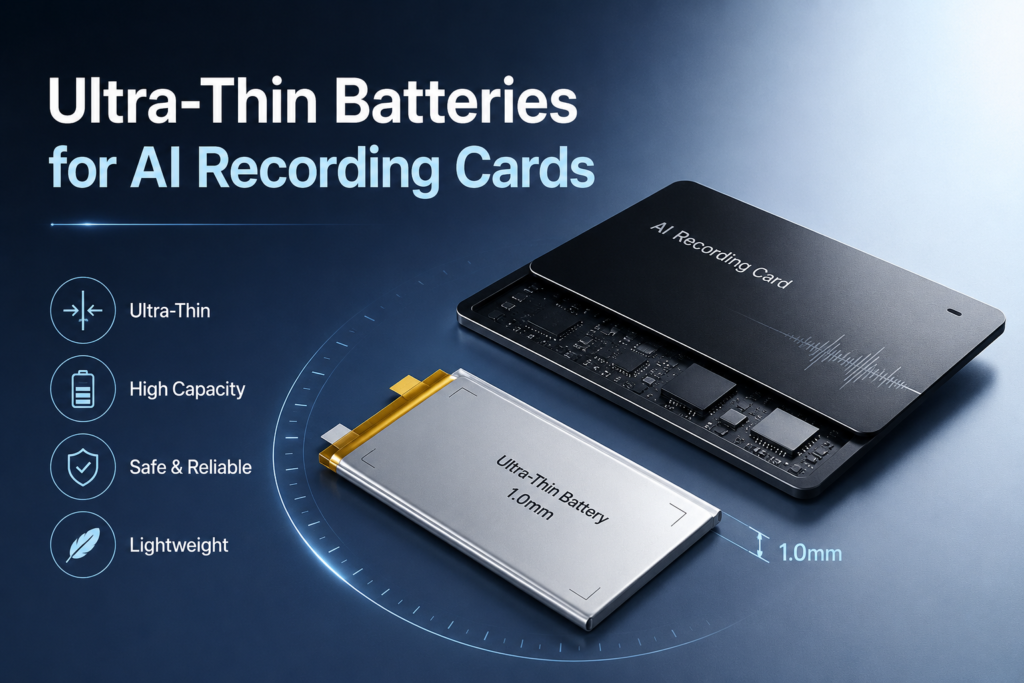
AI recording cards are designed to be as thin as a credit card, with a typical thickness of 2.9–4 mm. Inside this small space, manufacturers still need to fit microphones, an AI chip, storage, Bluetooth, and magnetic components. As one of the largest components, the battery takes up a large part of the internal space, so its thickness directly affects the overall device thickness.
To achieve a thinner design, the battery cell usually needs to be less than 1.5 mm thick, while some high-end products require only 0.8–1.2 mm. However, making the battery thinner also reduces the available space for energy storage and can lower its capacity. As a result, device thickness, battery capacity, and runtime are difficult to maximize at the same time.
1.2 Different Power Demands During Use
AI recording cards usually have two main operating states. During recording, the device may handle recording, noise reduction, voice processing, and Bluetooth transmission at the same time, which creates continuous power demand. In standby mode, the battery needs to use very little power to support long standby time.
Therefore, the battery must provide enough power for continuous operation while also maintaining low self-discharge for long standby periods. In addition, the AI chip generates heat during extended use, and internal temperatures may reach 40–50°C. High temperatures can accelerate battery aging and create higher requirements for the safety and cycle life of ultra-thin batteries.
Four Key Technical Requirements of Ultra-Thin Batteries for AI Recording Cards
2.1 Extreme Thickness Control Without Sacrificing Reliability
Simply making the electrode layers thinner does not automatically produce a qualified ultra-thin battery. The aluminum-plastic film, sealing layers, and edge structure also take up space. Traditional lithium polymer battery processes may not be suitable for card-sized devices, so thinner current collectors, separators, and packaging materials may be required.
Ultra-thin cells are also more difficult to package reliably than standard batteries. Thin electrodes are more likely to wrinkle or lose material during manufacturing. If the sealing process is not well controlled, problems such as gas buildup and electrolyte leakage may occur. For AI recording cards carried in pockets or wallets, high packaging yield and long-term stability are basic requirements.
2.2 High Volumetric Energy Density to Increase Battery Capacity
Since the length and width of an AI recording card are mostly fixed, improving volumetric energy density is one of the main ways to increase battery capacity and runtime. A target of more than 600 Wh/L can help achieve over 400 mAh of usable capacity within a 3 mm-thick device.
However, ultra-thin cells have a natural disadvantage. Non-active materials such as aluminum-plastic film, tabs, and separators take up a larger percentage of the cell. With the same material system, the actual energy density of an ultra-thin battery can be around 30% lower than that of a standard battery. To fit more energy into limited space, improvements in cathode and anode materials are therefore needed.
2.3 Balancing Power Output and Low Self-Discharge
AI recording cards do not operate at full power all the time. They usually work intermittently. The battery needs to provide stable current for AI processing while also maintaining very low self-discharge to support around 30 days of standby time.
The electrolyte formulation and the quality of the SEI layer have a direct impact on self-discharge. If self-discharge is too high, the device may run out of power after sitting unused for only a couple of weeks, reducing the value of having a portable card that is ready to use at any time.
Ultra-thin cells also have thinner electrodes, which can increase the risk of lithium plating during high-current charging. This can shorten battery life and requires more careful charging and discharging strategies.
2.4 High Safety Requirements for Portable Use
AI recording cards are often carried in pockets or wallets, where the battery may experience pressure, bending, or impact. At the same time, the AI chip generates heat during operation, and this heat can be transferred directly to the battery. Because ultra-thin cells have a smaller thermal mass, they can heat up faster than thicker cells.
Therefore, the battery needs to pass safety tests such as crush, nail penetration, overcharge, and over-discharge tests, while maintaining sufficient safety margins. If the battery does not have good thermal stability, portable use may create safety risks. Safety is therefore a requirement that cannot be compromised when designing ultra-thin batteries.
3. Comparison of Mainstream Ultra-Thin Battery Technologies
3.1 Ultra-Thin Lithium Polymer Batteries: The Main Choice for Mass Production
Ultra-thin lithium polymer batteries are currently the main choice for AI recording cards because the supply chain is mature and costs are relatively controllable. By using materials such as high-nickel ternary cathodes, ultra-thin current collectors of 6 μm or less, ceramic-coated separators, and ultra-thin aluminum-plastic film, manufacturers can reduce cell thickness while maintaining good performance.
The main advantages are good energy density, stable charging and discharging performance, and support for custom shapes, making them well suited to the limited and irregular space inside card-sized devices.
3.2 Thin-Film Solid-State Batteries: A High-End Option for the Future
Thin-film solid-state batteries can reach a thickness of only 0.3–0.5 mm. They also offer better safety and some flexibility, making them a promising technology for future portable and wearable devices.
Because solid-state batteries do not use liquid electrolytes, they can reduce the risks of leakage and fire. However, several challenges remain. High interface resistance can limit high-rate discharge performance, making it difficult to support AI processing for long periods. High costs and low production yields also limit their use. For now, they are mainly suitable for small-batch, high-end products rather than mass-market AI recording cards.
3.3 Printed Thin-Film Batteries: Mainly for Low-Power Applications
Printed thin-film batteries can be as thin as 0.1 mm and offer excellent flexibility. However, their energy density and output power are relatively low, so they are mainly suitable for very low-power sensors.
They cannot provide enough power for the recording and AI processing functions of an AI recording card. Therefore, they can only be used as an auxiliary or backup power source rather than the main battery.
Overall Comparison
In the near term, ultra-thin lithium polymer batteries remain the most practical choice for AI recording cards because they offer a good balance of thickness, capacity, performance, customization, and cost. Solid-state batteries are likely to gradually enter the high-end market as the technology and manufacturing process improve.
4. Battery Customization Strategies for AI Recording Cards
4.1 Use Custom-Shaped Cells to Maximize Available Space
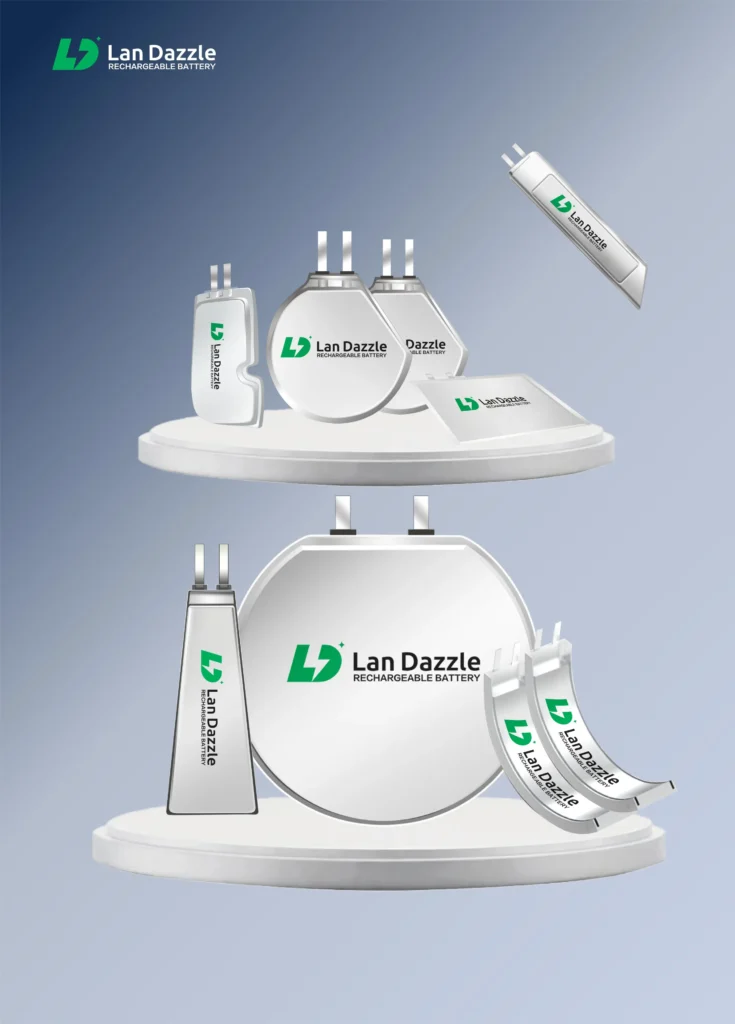
Standard rectangular cells can leave a lot of unused space inside the device. Custom-shaped cells, such as L-shaped, U-shaped, and stepped cells, can avoid internal components and make better use of the available space.
4.2 Improve Energy Density Through Material Upgrades
At the material level, high-nickel ternary cathodes can increase battery capacity. Silicon-carbon anodes are also gradually entering mass production and can provide 20–30% higher capacity within the same volume.
4.3 Manage Heat and Power at the System Level
Battery performance should not rely on the cell alone. The battery needs to be designed together with the entire device. A thermal insulation layer can be added between the battery and mainboard to reduce heat transfer from the AI chip. A metal frame can also help spread and dissipate heat, reducing local hot spots around the battery.
Conclusion
AI recording cards are competing not only on design, but also on battery technology. An ultra-thin battery must balance thickness, capacity, safety, and cost, and standard batteries often cannot fully meet the needs of card-sized devices.
In the future, silicon-carbon anodes, ultra-thin semi-solid-state batteries, and AI-based power management could further improve battery capacity and runtime. As AI devices become thinner and easier to carry, custom ultra-thin batteries will become an important part of product design and differentiation.
Looking for a custom ultra-thin battery for your AI recording card? Contact us to discuss your requirements.
Email: info@landazzle.com
Whatsapp: +8618938252128