On August 20, 2026, Google officially launched the Pixel Watch 5, starting at $399 in the U.S. While the changes to the overall design and core hardware are relatively modest, the most important development is Google’s move to push the smartwatch further toward continuous health monitoring.
The Pixel Watch 5 introduces new Health Guardian features, including insulin resistance trends, blood pressure trends, and sleep breathing quality analysis. It also adds Breathing Emergency Detection, which is designed to identify persistent abnormalities in blood oxygen levels and trigger emergency assistance when certain conditions are met. Google has also expanded Gemini capabilities and upgraded GPS and fitness-related features.
This represents a significant shift in the role of the smartwatch.
In the past, people mainly bought smartwatches to check the time, receive notifications, count steps, and track workouts. Today, more manufacturers are trying to turn smartwatches into long-term health platforms: continuously collecting data, identifying trends, and using AI to help users understand changes in their health.
But this shift raises an important question:
As smartwatches need to operate for longer periods, can battery technology keep up?
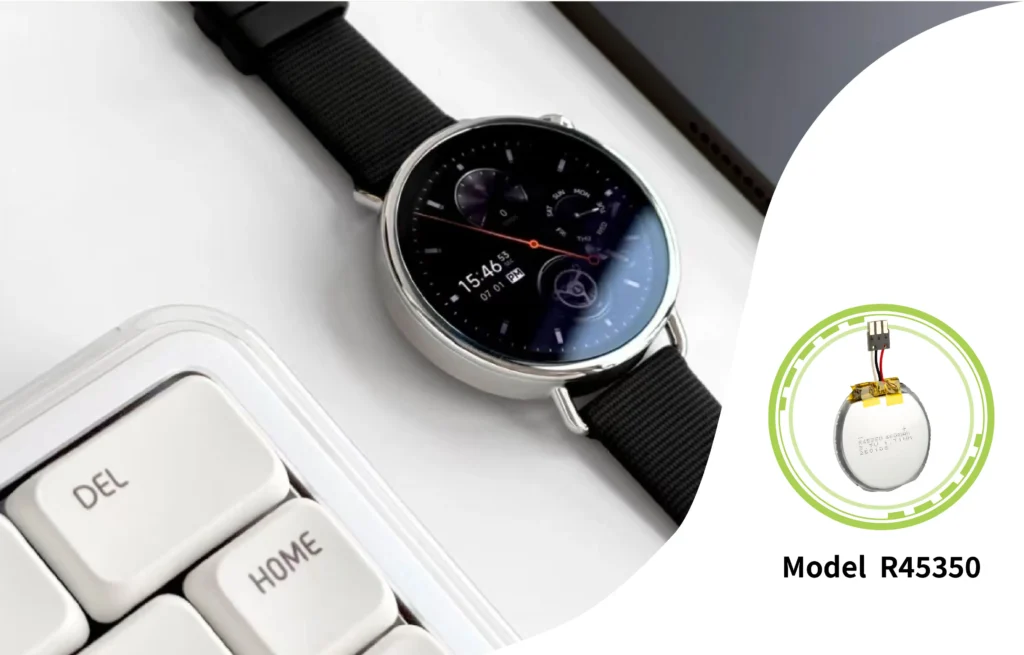
From Data Recording to Continuous Monitoring
This is one of the most important changes highlighted by the Pixel Watch 5. Traditional health features have mainly focused on individual measurements, such as heart rate, blood oxygen, sleep duration, or workout distance. A user checks a result, and the device completes a specific measurement task.
Trend-based health features are different. Google’s latest features place greater emphasis on long-term data collection. For example, insulin resistance trends are not determined from a single measurement. Instead, the system uses physiological data collected over multiple weeks to identify trends. Sleep breathing quality also depends on continuous nighttime monitoring.
This changes the way a smartwatch needs to operate. The device is no longer something that only needs to work when the user actively opens an app. It needs to remain worn and functional for as much of the day as possible.
This is particularly important for health-focused wearables. The longer users remove their watch for charging, the more gaps can appear in their health data. For future smartwatches, the real goal may therefore be more than simply measuring health metrics accurately. It may be keeping the device available for monitoring as continuously as possible.
Why Is Battery Life Becoming More Important?
The Pixel Watch 5 highlights this challenge particularly well.
The Pixel Watch 5 comes in 41mm and 45mm versions, with battery ratings of up to around 30 hours and 40 hours respectively. Reviews have also noted that this generation focuses more heavily on software and health improvements, while battery life and overall hardware performance see more limited changes.
At first glance, one day of battery life may seem sufficient for a typical smartwatch user.
For continuous health monitoring, however, the situation is more complicated.
Imagine a user wearing the watch overnight because sleep, breathing, and blood oxygen data need to be collected during sleep. Charging can then only happen during short windows such as while showering, eating breakfast, or working at a desk.
This creates a simple relationship:
Shorter battery life → more frequent charging → more time without the device → more gaps in continuous health data.
From this perspective, battery life does not simply determine how long a smartwatch can operate. It can also influence how much practical value certain health features can deliver.
More Features Also Mean More Power Demands
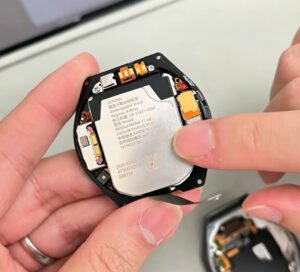
The display is not the only source of smartwatch power consumption. As more health functions are added, a smartwatch may need to support multiple power-hungry components and processes, including sensors, processors, wireless connectivity, GPS, and background algorithms.
Continuous heart-rate monitoring requires sensors to operate for extended periods. Sleep monitoring requires overnight data collection. GPS can significantly increase power consumption during workouts. Wireless connectivity enables continuous synchronization, while AI features can increase local data-processing requirements.
The Pixel Watch 5 also expands its Gemini capabilities and improves GPS functionality, including more accurate route tracking. This creates a new engineering challenge for smartwatches:
How can manufacturers balance more features, higher computing requirements, more continuous sensing, and limited battery space?
That is why simply increasing battery capacity is not always the best answer.
Why Can’t Smartwatches Simply Use a Bigger Battery?
The first challenge is space.
Inside a smartwatch, the battery competes for room with the display, mainboard, processor, sensors, motors, antennas, and charging components. At the same time, the overall thickness and size of the watch are constrained by user comfort. The battery therefore cannot simply keep getting larger.
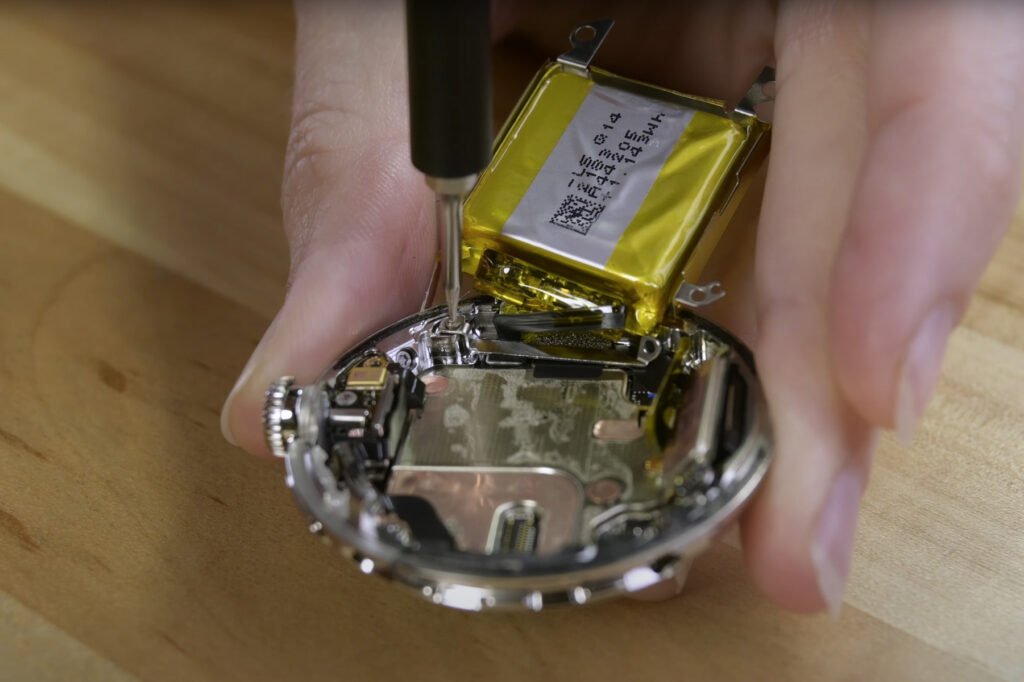
The second challenge is geometry.
The internal space of a smartwatch is not always a simple rectangular volume. Gaps between components, curved structures, and motherboard layouts all affect the usable battery area.
That changes the fundamental design question. Instead of asking:
“How can we fit a larger battery?”
Engineers increasingly need to ask:
“How can we obtain more usable energy from the space already available?”
This is one of the key differences between wearable batteries and batteries used in many conventional consumer electronics.
The Future of Wearable Battery May Be About Space Utilization, Not Just Capacity
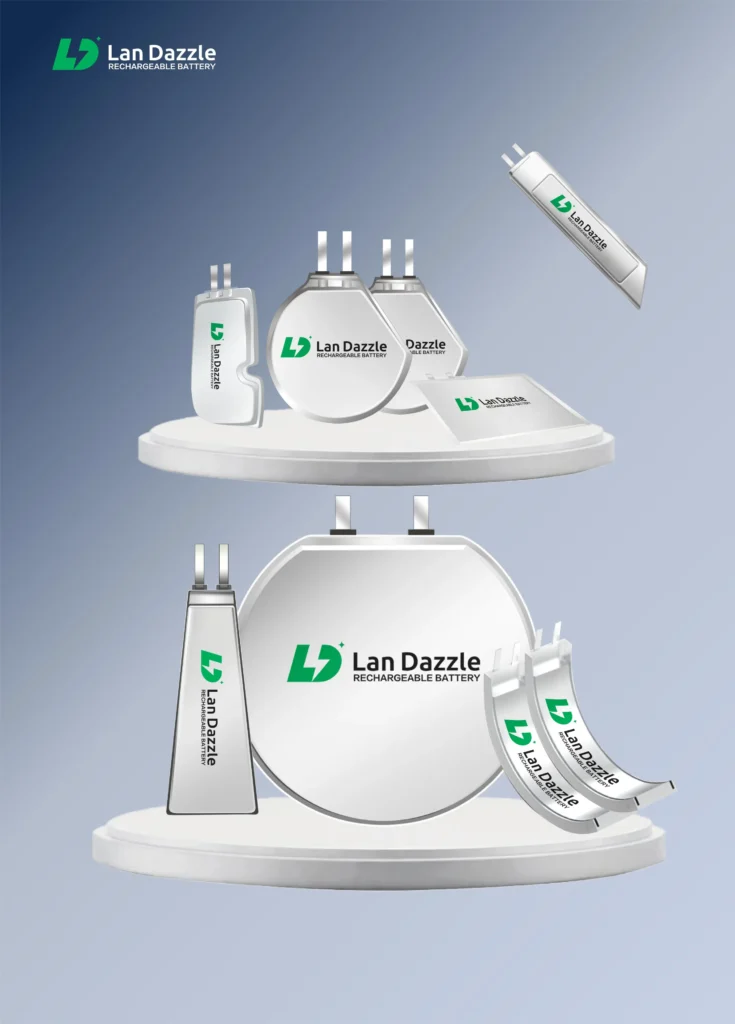
For smartwatches, smart rings, and smart glasses, battery design increasingly needs to balance capacity, thickness, shape, energy density, safety, and cycle life. For example, reducing battery thickness can create additional space for sensors, antennas, or other components.
Similarly, a battery designed around the internal geometry of a wearable device can make use of spaces that would otherwise remain unused. This means future wearable battery design may increasingly focus on:
Custom Shape + High Energy Density + Thin Profile
rather than simply pursuing a higher mAh rating.
For product engineers, a more useful question is:
How can we increase usable energy without changing the overall size of the device?
The answer may come from cell dimensions, structural optimization, and better space utilization—not simply from increasing nominal capacity.

Why Can “Thinner” Matter More Than “Bigger”?
For smartwatches, excessive battery thickness can directly affect the overall product structure. For smart glasses and smart rings, the problem is even more obvious.
The space inside a pair of smart glasses can be extremely narrow, especially in the temple arms, meaning the battery may need to fit into a long and constrained profile. In a smart ring, the battery must fit into a very limited circular structure.
As a result, battery thickness, width, and shape can be just as important as capacity. A 100mAh battery that fits the product architecture efficiently may be more valuable than a larger battery that simply cannot be integrated into the available space.
This is why wearable battery design is increasingly moving toward a simple principle:
Fit the battery to the device, rather than designing the device around a standard battery.
What Does the Pixel Watch 5 Really Signal?
The significance of the Pixel Watch 5 is not simply that Google has added several new health features.
More importantly, it represents a broader trend:
Smartwatches are moving from health-data recorders toward long-term health-monitoring platforms.
As devices begin to track blood pressure trends, metabolic-related trends, sleep breathing quality, and potential health abnormalities, users will increasingly need to wear them continuously. Continuous wear creates greater demands on battery performance. This means wearable hardware competition could change significantly over the next few years.
In the past, discussions focused heavily on:
How bright is the display? How fast is the processor? How many sensors does the device have?
In the future, another question will become just as important:
Can the battery provide enough energy within a highly constrained space to support continuous monitoring for longer periods?
Three Practical Recommendations for Wearable Device Developers
1. Consider the battery early in product development
Battery design should not be treated as something to solve after the rest of the product structure is finished. Battery dimensions, shape, and placement should be considered during the early stages of mechanical and electrical design.
2. Don’t evaluate batteries based on mAh alone
For space-constrained wearables, engineers should look at a combination of factors, including volumetric energy density, thickness, weight, and actual space utilization. A higher-capacity battery is not necessarily a better battery if it cannot fit the device architecture efficiently.
3. Evaluate real-world power consumption
If a product is expected to continuously operate health sensors, AI, and wireless connectivity, its power budget should be evaluated under realistic usage scenarios. Static standby consumption does not tell the full story. Developers should consider real-world patterns such as overnight monitoring, wireless synchronization, GPS usage, background processing, and emergency detection.
Conclusion
The Pixel Watch 5 shows that wearable devices are entering a new stage. The most valuable smartwatch of the future may not simply be the one with more features. It may be the one that can make those features work continuously, reliably, and efficiently. That makes the battery more than a passive component. It is increasingly becoming a key factor that determines what a wearable device can actually do.
As smartwatches become smarter, their batteries also need to become more efficient, thinner, and better integrated with the device structure. The next generation of wearable devices will therefore compete not only on software and AI, but also on battery space utilization, energy density, and continuous power delivery.
Looking for a custom battery for your smart devices? Contact us to discuss your requirements.
Email: info@landazzle.com
Whatsapp: +8618938252128