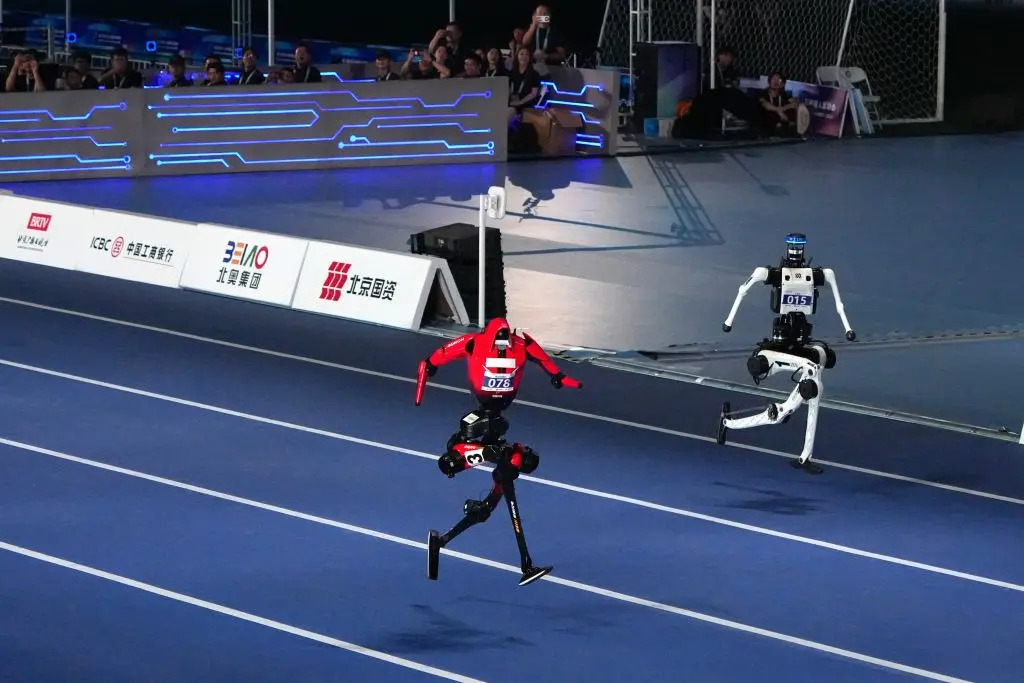
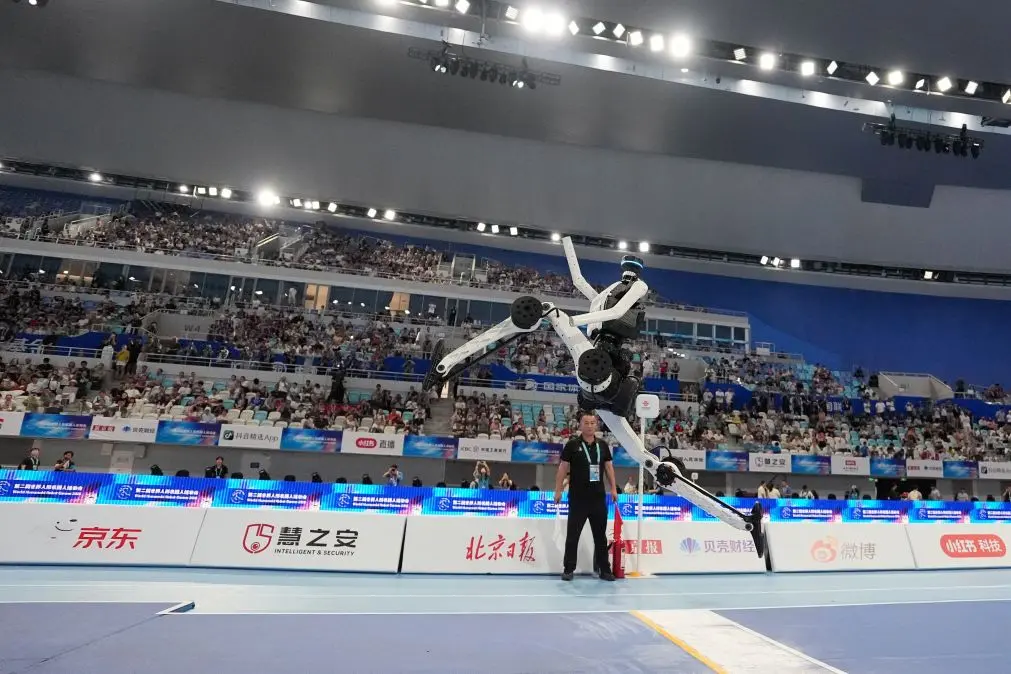
The 2026 World Humanoid Robot Games in Beijing showed humanoid robots moving beyond the laboratory and into high-dynamic scenarios such as running, jumping, football, and combat. Among the highlights, the Tien Kung Ultra humanoid robot completed the 100-meter race in 9.39 seconds, once again raising an important question: as humanoid robots begin to move more like humans, can their batteries keep up?
The answer is not simply to increase battery capacity. Sprinting, jumping, sudden stops, standing up, and kicking all place multiple—and sometimes conflicting—demands on the battery. It must deliver sufficient current instantly, maintain stable voltage under high loads, minimize weight, provide enough energy within limited space, control heat during continuous operation, and withstand frequent charge-discharge cycles.
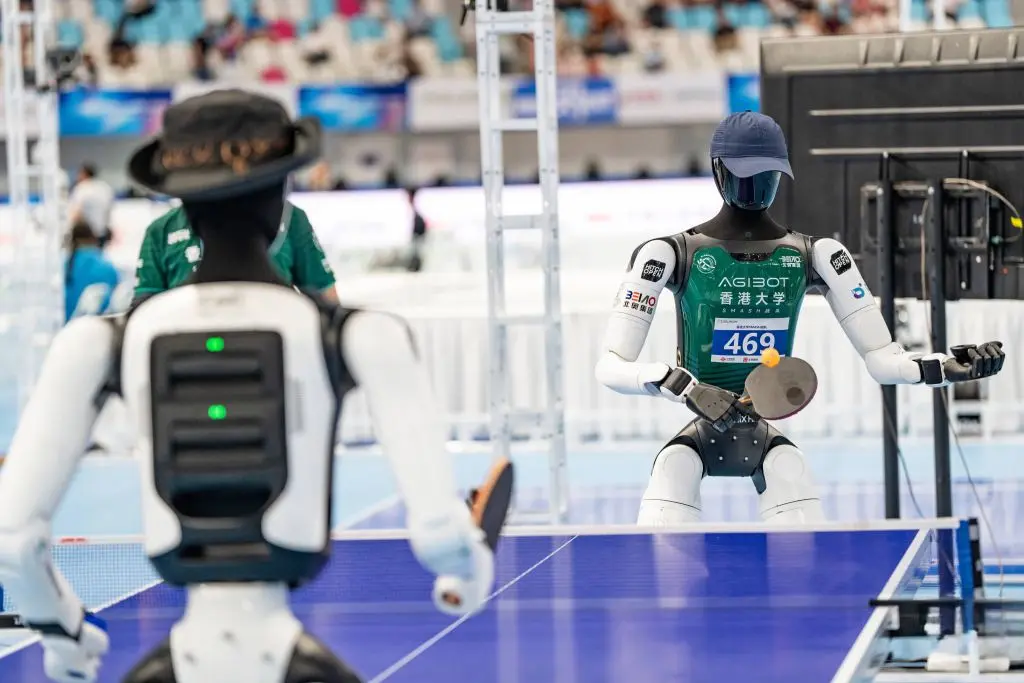
As humanoid robots evolve from simply being able to walk to performing high-speed and dynamic movements, the battery is becoming a critical system component that directly influences robot performance, rather than simply an energy-storage device.
Robots Need More Than Just a Large Battery Capacity
When selecting a battery for a robot, many people still start with a simple question: “How many Ah do we need?” But for humanoid robots, capacity is only one part of the equation. A battery with large capacity may still fail to deliver the required performance if its internal resistance is high or its instantaneous discharge capability is insufficient. When the robot suddenly accelerates, high current demand can cause significant voltage sag, which may affect motor output, drive-system operation, and overall control stability.
For high-dynamic robots, the key factors are Power + Energy + Weight + Thermal + Cycle Life. These five factors—power, energy, weight, thermal management, and cycle life—work together to determine whether a battery can meet the robot’s actual operating requirements.
It is especially important to remember that battery capacity does not directly indicate power capability. Two batteries with the same capacity can perform very differently if their internal resistance, discharge rate, tab design, and pack architecture are different.
Different Robot Movements Create Different Battery Demands
Unlike conventional electronic devices, humanoid robots can experience extremely dynamic changes in power consumption. Within just a few seconds, a robot may stand up, accelerate, sprint, stop suddenly, change direction, jump, and land. Each movement can generate a completely different current profile.
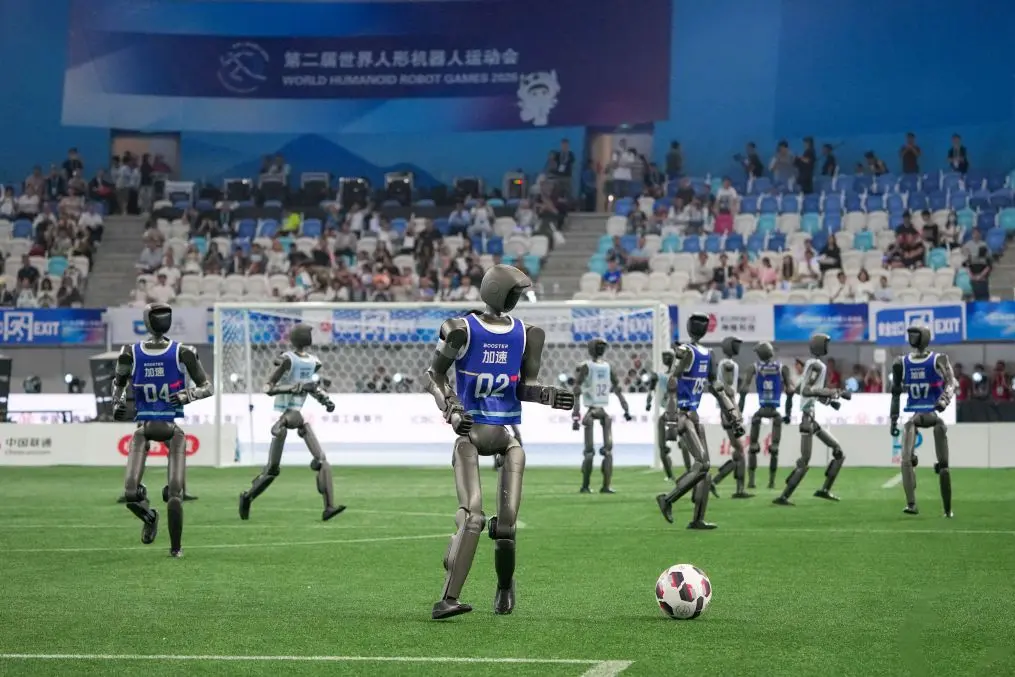
For explosive movements such as sprinting, jumping, kicking, and standing up, the battery must first handle peak current demand. When multiple actuators operate simultaneously, current can rise rapidly within a very short period. Key parameters include maximum continuous discharge rate, peak discharge rate, internal resistance, voltage sag, and BMS overcurrent protection thresholds. If the battery cannot provide sufficient power instantly, the robot may experience delayed movement, reduced torque, or even control-system instability.
As the robot moves from a burst of activity lasting only a few seconds to continuous operation lasting tens of seconds or several minutes, the focus shifts toward continuous power and thermal management. Sustained high current generates heat in the cells, tabs, connectors, and wiring. Since resistive heating is related to the square of current, expressed as Q = I²R, reducing system resistance can help minimize both voltage loss and thermal load under high-current conditions.
This means that robot batteries should not be selected based solely on a maximum discharge rate. A complete current-versus-time profile should be evaluated instead: How high is the peak current? How long does it last? How frequently does it occur? And how much recovery time is available between peaks?
Why Are Humanoid Robot Batteries Becoming Lighter?
This is one of the biggest differences between humanoid robots and many stationary devices. The battery itself is part of the weight that the robot has to carry. Increasing battery capacity to achieve longer runtime also means that the robot must carry more weight, consume more energy during movement, and place greater loads on its joints.
This can create a cycle:
Larger battery → heavier robot → higher power consumption → need for an even larger battery.
For this reason, humanoid robot batteries should be evaluated not only by Ah, but also by Wh/kg and Wh/L. The former indicates how much energy can be delivered per unit of weight, while the latter indicates how much energy can be stored within a limited volume.
For humanoid robots that need to move quickly, high energy density can be particularly valuable. It can reduce battery weight while maintaining the required runtime, or provide more usable energy without significantly increasing the overall weight.
Battery Dimensions Are Becoming Part of Robot Design
In conventional products, batteries can usually be installed in a relatively regular compartment. Humanoid robots are different. Their internal space must accommodate motors, gear systems, controllers, BMS components, sensors, wiring, communication modules, and thermal-management structures. The remaining space available for the battery is often irregular.

This is particularly relevant in areas such as the torso, waist, and legs, where a standard battery can leave significant unused space. As a result, robot batteries are gradually moving from “selecting an off-the-shelf battery” toward “designing the battery around the robot.”
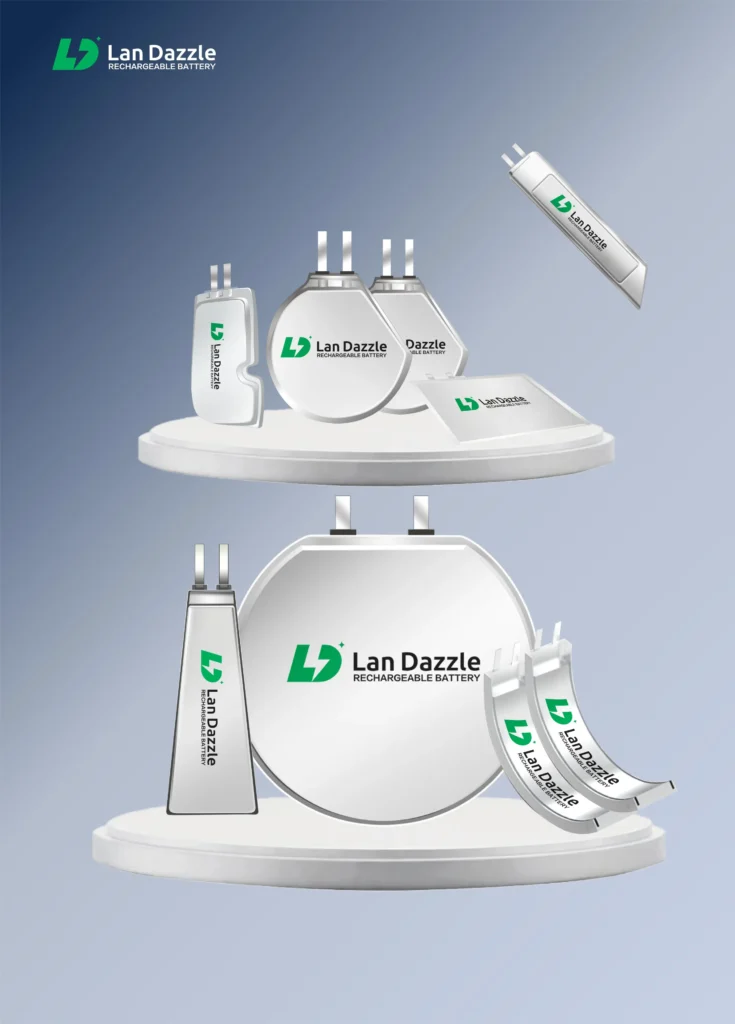
Depending on the available space, batteries can be designed in ultra-thin, elongated, curved, or other custom shapes. The purpose is not simply to make the battery smaller, but to make better use of the robot’s internal geometry and utilize space that would otherwise remain unused.
For highly integrated humanoid robots, battery dimensions themselves are becoming part of the overall mechanical design.
Why Is Stacking Structure Worth Considering?
In addition to external dimensions, the internal cell structure can also affect robot battery performance. For robot batteries that require high power output and customized dimensions, stacked-cell structures offer certain advantages.
Stacked cells are constructed by layering individual positive and negative electrode sheets, allowing the internal structure to be adjusted according to the required cell dimensions. For customized batteries, this structure can provide greater flexibility in cell dimensions, optimize current paths, reduce internal impedance, and support ultra-thin and custom-shaped battery designs.
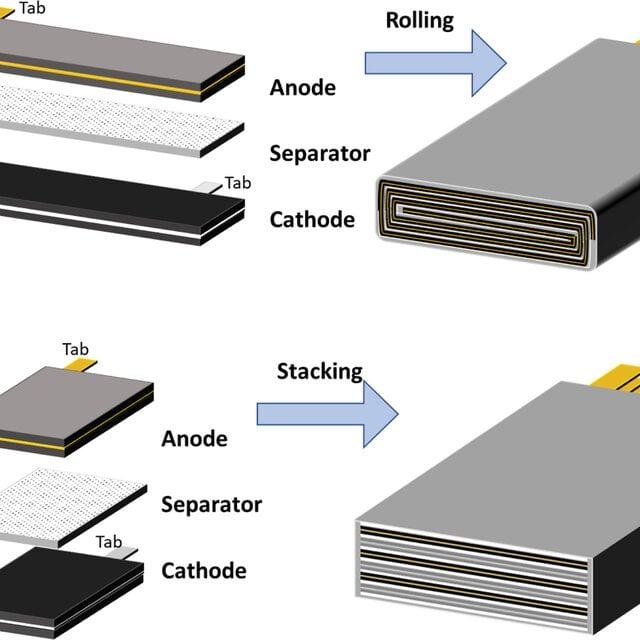
For applications that combine high peak current demand with non-standard dimensions, cell structure is no longer simply a manufacturing consideration. It can directly affect power output, space utilization, and thermal performance.
After High Power Comes Another Challenge: Heat
High power output and lightweight design can often conflict with each other. Higher power may require higher discharge rates, while reducing weight requires the battery to remain as compact as possible. However, as the battery becomes smaller, heat can become more concentrated within the available volume.
Therefore, robot battery design should not focus on the cell alone. The entire energy system should be considered, including the cells, BMS, wiring, connectors, mechanical structure, and thermal paths.
During the design stage, engineers should define peak current, RMS current, continuous operating time, ambient temperature, available space inside the battery pack, thermal paths, allowable temperature rise, and the distance between the battery and other heat-generating components. If excessive battery temperature is discovered only after the prototype is completed, redesign may involve multiple aspects of the mechanical, electrical, and thermal systems.
“Runtime” Cannot Be Evaluated Without the Robot’s Duty Cycle
For a robot, saying that a battery provides “10 hours of runtime” does not mean much unless we know what the robot is doing during those 10 hours.
Ten hours of standby, ten hours of continuous walking, and ten hours of high-frequency training place completely different demands on the battery.
A more effective design process starts by recording the robot’s actual tasks: how many times it walks, sprints, stands up, jumps, or operates its robotic hands during a typical day. Engineers can then obtain a complete current-versus-time profile and use the actual data to determine capacity, peak current, continuous current, voltage range, energy density, and battery weight.
The final validation should also cover the complete Cell + BMS + Wiring + Connector + Cooling + Enclosure system rather than relying solely on individual cell specifications.
Different Robot Applications Require Different Battery Priorities
| Robot Application | Core Battery Requirements | Key Validation Parameters |
|---|---|---|
| Sprinting, jumping, combat | High peak power, low internal resistance | Peak current, voltage sag, temperature rise |
| Inspection, service, long-duration walking | High energy density, long runtime | Wh/kg, weight, cycle life |
| High-frequency training, commercial robots | Power, cycle life, fast recharge | Charging rate, temperature, cycle performance |
| Space-constrained robots | Custom dimensions, high space utilization | Thickness, length, width, shape, Wh/L |
There is therefore no single “universal battery” for all humanoid robots. Competition robots, home-service robots, industrial inspection robots, and commercial entertainment robots may all be humanoid or mobile robotic platforms, but their current profiles, operating times, weight limits, and available installation space can be completely different.
The Next Generation of Robot Batteries Is Not About “Bigger”—It Is About “Better Matched”
Humanoid robots are rapidly moving from demonstration platforms toward real-world applications. When a robot only needs to perform basic walking, a conventional battery may be sufficient. But when it begins to sprint, jump, carry loads, fight, play football, or operate autonomously for extended periods, the battery must simultaneously address energy, power, voltage stability, weight, temperature, and cycle life.
This means robot batteries are evolving from standardized components into customized energy systems designed together with the robot’s mechanical structure, motion algorithms, and operating scenarios.
For humanoid robots with limited and complex internal space, a standard battery is unlikely to achieve the best balance across every requirement. Designing the battery around the robot’s structure and actual load profile may therefore be a more practical direction for the next generation of robot power systems.
Robot Battery Design Should Start with Robot Data
For robot developers, simply saying “we need a 10,000mAh battery” is not enough to support a professional battery design. More useful engineering data includes:
- Operating voltage
- Maximum current
- Continuous current
- Peak current
- Peak duration
- Duty cycle
- Target runtime
- Maximum allowable battery weight
- Available installation space
- Ambient temperature
- Charging time
- Required cycle life
With these parameters, a battery manufacturer can further determine the cell dimensions, cell structure, chemistry, capacity, discharge rate, tab configuration, BMS, and battery-pack architecture.
This approach is far more reliable than simply selecting a standard battery based on capacity.
Conclusion: The Faster the Robot Moves, the More the Battery Becomes More Than “Just a Battery”
The 2026 World Humanoid Robot Games demonstrated more than how fast robots can run or how far they can jump. More importantly, the event highlighted that robots are entering a new stage in which their energy systems face increasingly demanding requirements.
From explosive movements lasting only a few seconds, to sustained power output over several minutes, and eventually hundreds of repeated tasks throughout a day, future robot batteries will need to combine high power, low internal resistance, high energy density, lightweight design, thermal stability, and long cycle life.
For humanoid robots with limited and complex internal space, standard batteries are unlikely to deliver the best performance across every dimension. A more competitive solution starts with the robot’s actual load profile and mechanical structure, followed by coordinated optimization of the cell, battery pack, and thermal-management system.
LanDazzle provides custom LiPo battery solutions based on your robot’s actual power profile, available space, weight limits, and duty cycle. If your robot project is facing challenges such as limited space, insufficient peak power, excessive battery weight, or restricted runtime, start with your actual current profile and available dimensions—not simply a fixed battery capacity.
Email: info@landazzle.com
Whatsapp: +8618938252128