alt="" /> Articles On Lithium Battery Technology

Articles on Lithium Battery Technology

silicon carbon battery energy denisty vs lithium

Comprehensive Guide to Silicon Carbon Battery

What is a Silicon Carbon Battery? In short, silicon-carbon batteries are a major upgrade of the anode material based on traditional lithium-ion batteries. Traditional lithium-ion batteries use graphite anodes, while silicon-carbon batteries adopt composite anodes of silicon and carbon. The reason is simple: graphite has reached its performance limit, and silicon can store far more lithium ions. However, pure silicon has obvious drawbacks. It expands greatly during charging. Without proper control, the battery structure will be damaged and its cycle

battery for smart glasses

How to Choose Battery for Smart Glasses

Smart glasses have changed a lot in recent years. Early models were more like tech showpieces. Packed with full functions and high specs, they cared little about real wearing experience. Short battery life, heavy weight and obvious overheating were easily forgiven as cutting-edge tech flaws. Today is totally different. As smart glasses enter daily use, the focus is no longer on “whether it can be made”, but “whether it can be worn all day long”. Among all factors affecting comfort,

high energy density battery

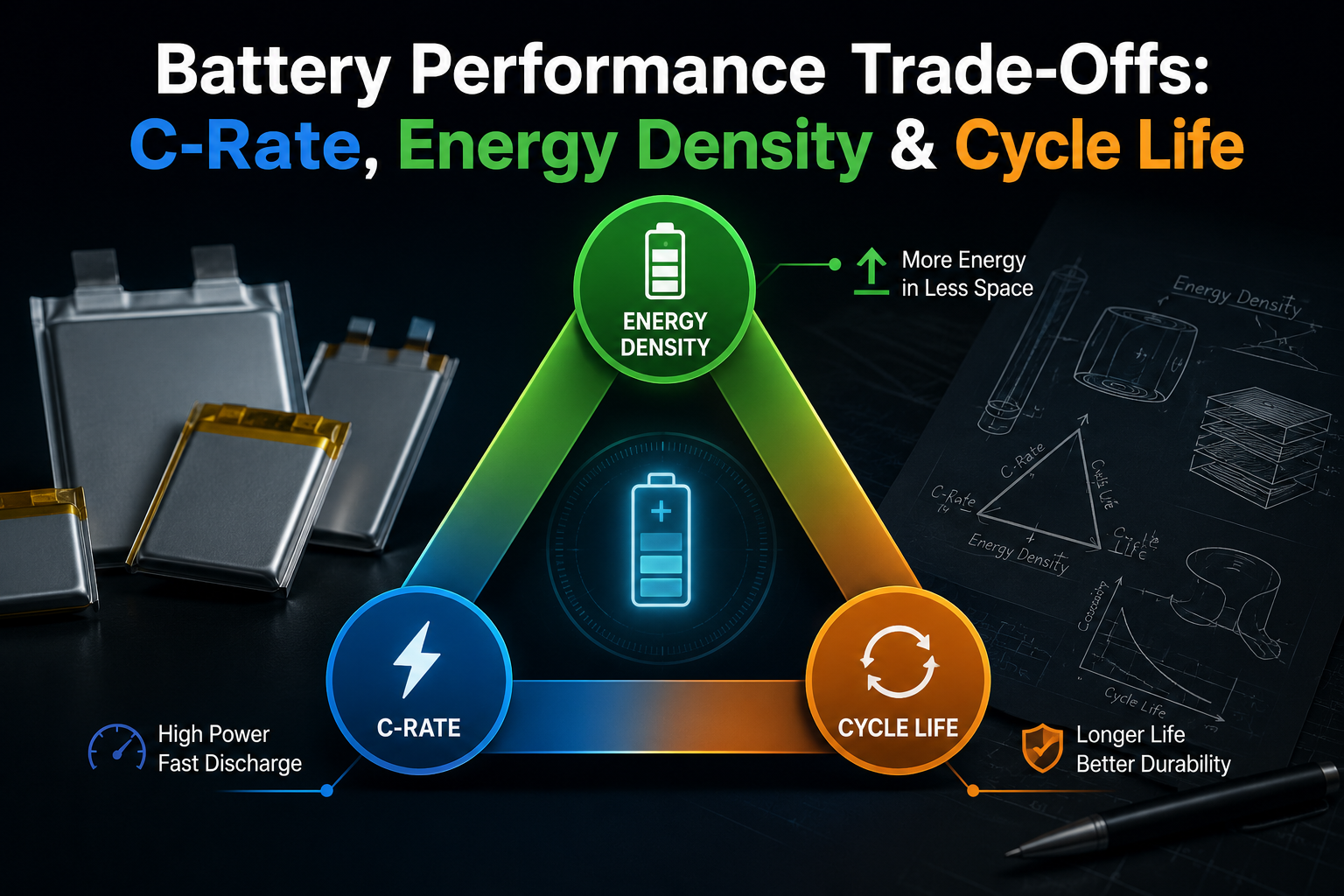
High Energy Density Battery: What You Need to Know in 2026

High energy density batteries are truly transforming many industries. From robots and drones to electric vehicles and medical devices, nearly all products requiring longer battery life, lighter weight and smaller size rely on them. There is one core reason: Pack more energy into a smaller, lighter unit. This directly brings clear advantages: Longer device runtime, lighter structure, and easier performance upgrades. What is a High Energy Density Battery? To put it simply, a high energy density battery stores more power

custom lipo battery 3D

Custom Lipo Battery for Innovative Devices

In today’s fast-changing tech world, products are getting smaller, smarter and more powerful. Drones, robots, medical devices, wearable electronics — almost all industries share the same need: batteries must be light, high-energy, and fit into complex product structures. But here is the real problem. Many design teams find this issue at the late stage of development: standard off-the-shelf batteries no longer match their new product needs. Wrong size, unsuitable shape, or unbalanced performance will hurt user experience, and even stop

curved lipo batteries applications

Custom Curved LiPo Batteries| Made to Your Exact Specifications

More and more products are no longer designed to be square and straight these days. Wearable devices, smart helmets, medical tools, curved consumer electronics… Their shells are becoming thinner, bent, and shaped to fit the human body or inner structures. But the problem often lies in one single part — the battery. Standard rectangular batteries are more and more like parts forced into products, instead of power solutions made for them. This is why custom curved liPo batteries are now

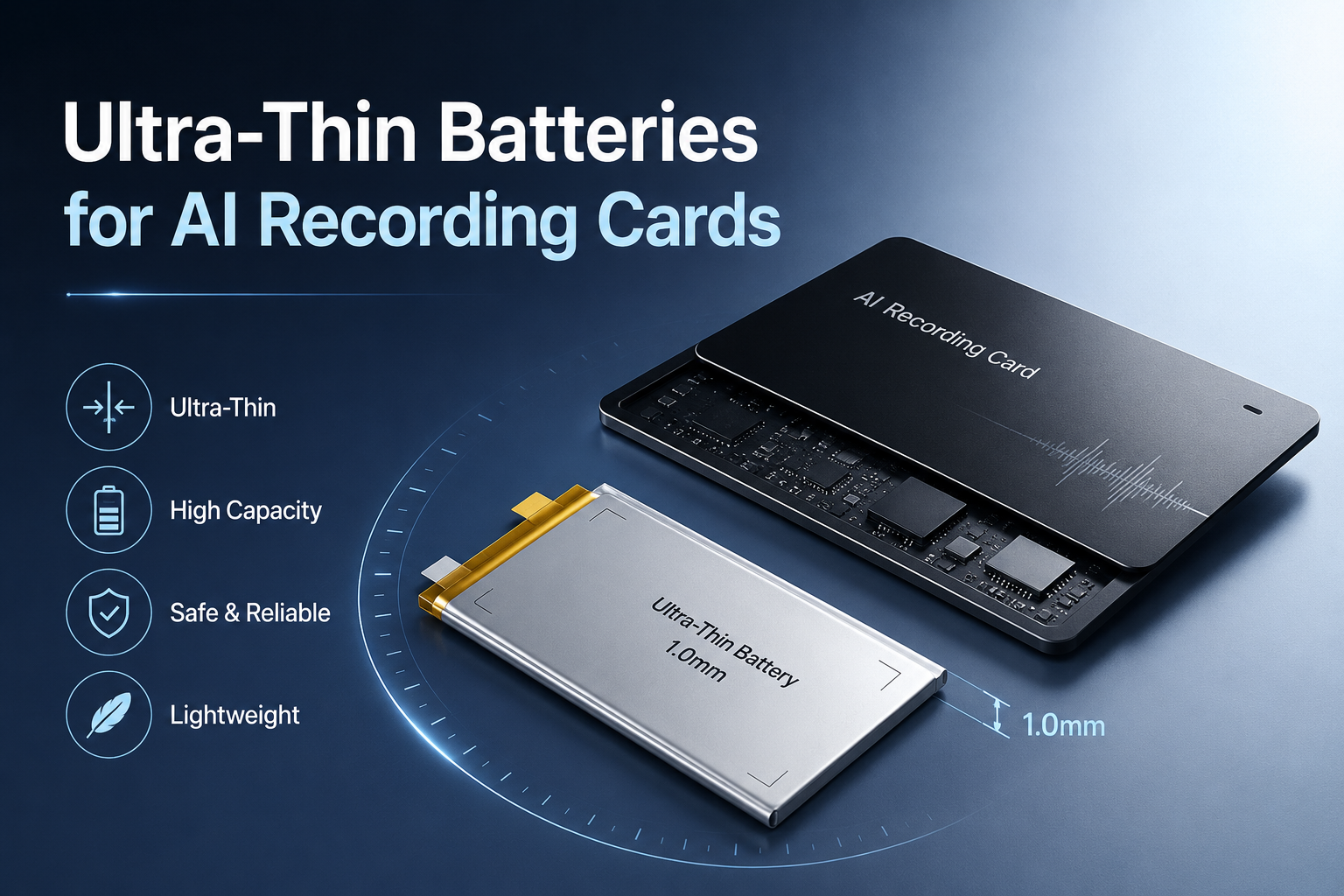
0.6mm thin battery applications

0.6mm Thin Battery, Is It Possible?

Is a 0.6mm Lithium Battery Possible? A 0.6mm thin battery is not only possible—it has already been successfully developed and put into practical application. However, it is far from being as “simple” as many people imagine. This article will cover: 0.6mm Thin Battery: An Engineering Feat at the Limit When many customers first inquire about our 0.6mm ultra-thin battery, their initial intuitive reaction is often: “Just make the battery a bit thinner, right?” If it were really that simple, 0.6mm